Twenty years ago the Bosnian Civil War was coming towards its slow conclusion and the 1995 Dayton Peace Accords instituted an internationally agreed settlement that ended the violence. This conclusion of conflict is probably unique because it was exactly that; there are no definitive incidents of recrimination after the fighting ceased. However whilst bloodshed was […]
Opinions
Can Jomaa’s Caretaker Government Deliver Economic Reform?
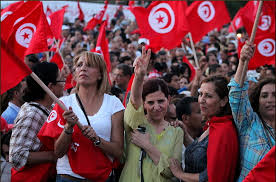
When Mehdi Jomaa assumed the role of Tunisia’s interim Prime Minister in late January, he did not know how disastrous the true economic condition of his country was. He admitted it roughly a month later during a televised interview by saying that the hole in the budget deficit was about 4 billion dinars (2.5 billion […]
Nile Dispute and the Dilemma of National Approaches
Amid deep political turmoil, there is a mounting concern in Egypt as Ethiopia forges ahead with its plan to build the $4.8 billion Grand Renaissance Dam on the Nile’s main tributary. The hydroelectric dam, to be Africa’s biggest, sounded the alarm bell for Egypt due to its possible impact on the flow of the river. […]
Revolution Makes States : The Maghreb Inches Forward (Too) Slowly
Over the past weekend, the Ukrainian government was ousted, Ukraine’s parliament reinstated the 2004 constitution and former President Victor Yanukovich is on the run in Russia. One might be forgiven to think of these developments in isolation. But it is in fact a reminder that reactionary regimes rarely deliver the sort of stability they are […]
Morocco’s Efforts in Africa, a Contribution to Regional Peace, Economic Development
King Mohammed VI of Morocco who is on a four-nation tour in Africa, the second in less than a year, launched on Monday a heartfelt call for boosting inter-African cooperation, rebuilding Africans’ trust in their own potentials, overcoming Afro-pessimism and unleashing the continent’s intellectual and material potential. “Africa should learn to trust Africa… and African […]
Economic Prospects for North Africa:Managing Risks and Expanding Opportunities
Three years down the road from the wave of Arab Spring revolutions that affected the Middle East and North Africa region, MENA economies remain depressed. Egypt’s gross domestic product contracted by about 3 percent in the second quarter of 2013 while the growth rate amounted to only 2 percent last year, when compared to 2.3 […]
Odd One in the Pack: London, a New Hub for Islamic Finance?
New year 2014 will likely be very significant at least from the viewpoint of the London Stock Exchange, which stakes to become the world centre for Islamic finance. Earlier last year, Britain’s Prime Minister David Cameron announced the plan to issue sukuk – Islamic financial certificates often compared to Western bonds. The first sukuk certificate […]
Burqa, Hijab, Niqab or ‘Nothing’? – MENA’s Attitudes to Female Dress Code
The Pew Research Centre has recently compiled the results of its research on the opinions of people in different countries across the MENA region on the way women dress. Respondents from seven MENA countries – Tunisia, Egypt, Turkey, Iraq, Lebanon, Pakistan, and Saudi Arabia – were asked which of the six styles of Muslim women’s […]
After Revolution Comes Reaction: Egypt as a Rule, Not Exception
While we enter a new year, the emerging consensus among observers of the Middle East and Northern Africa is that the Arab Spring has turned into a frosty Arab Winter. Nothing speaks to this perception as strongly as the ongoing civil war in Syria, where the embattled Assad-regime, propped up by Hizbollah and Iran, is […]
Forgotten Aspects in the War Against AQIM
The killing of three French journalists in northern Malian region of Kidal in early November 2013 is indicative of the ability of Al-Qaeda in the Islamic Maghreb (AQIM) to conduct terrorist attacks in the region despite French military presence. Similarly, the announcement of the creation of a new terrorist group called Al Mourabitoun out of […]