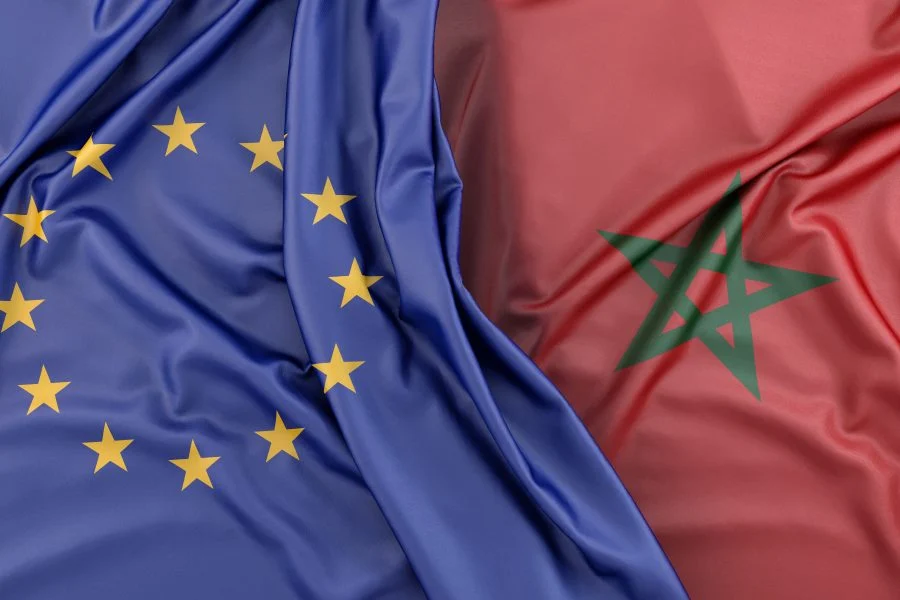
The High Representative of the European Union reaffirmed the alignment of the 27 Member States with UN Security Council Resolution 2797 and confirmed that Morocco’s autonomy plan constitutes the basis for negotiations within the exclusive framework of the United Nations.
This came in an official written reply, dated February 20, 2026, to a question from Irish MEP Lynn Boylan.
The High Representative of the European Union for Foreign Affairs and Security Policy, Kaja Kallas, confirmed the EU’s alignment with Resolution 2797 adopted in 2025 by the United Nations Security Council, which explicitly supports efforts carried out on the basis of the autonomy proposal presented by Morocco for its Sahara.
In her reply, the High Representative stated that “the EU has consistently reaffirmed its longstanding support for efforts undertaken under the auspices of the United Nations to find a solution to the Sahara conflict.” In line with this approach, the Union, “with the unanimity of its Member States, updated its position on the Sahara during the EU–Morocco Association Council held on January 29, 2026, aligning it with United Nations Security Council Resolution 2797 (2025),” She added.
Morocco’s partnership framework with the European Union remains legally anchored and politically aligned with the UN process on the Sahara, she insisted.
The response details the key elements of this alignment. Resolution 2797 supports “the efforts of the Secretary-General and his Personal Envoy to facilitate and conduct negotiations, on the basis of Morocco’s autonomy proposal, with a view to achieving a just, lasting, and mutually acceptable political solution to the conflict, consistent with the Charter of the United Nations, while welcoming any constructive proposals from the parties in response to the autonomy initiative.”
The High Representative also called on the parties to engage in discussions without preconditions, “on the basis of Morocco’s autonomy proposal, with a view to reaching a definitive and mutually acceptable political solution… while recognizing that genuine autonomy could constitute the most realistic solution.”
In this context, the EU official emphasized that “the EU stands ready to contribute to facilitating consultations between the parties within the framework of the United Nations.”
This clarification comes a few weeks after the 15th session of the Association Council between Morocco and the European Union, held on January 29 in Brussels. At the conclusion of the session, the parties adopted a new European position on the Moroccan Sahara, considering that “genuine autonomy could represent one of the most feasible solutions” for the final settlement of the regional dispute.
The position of the 27 Member States was then set out in a joint communiqué signed by the Minister of Foreign Affairs, Nasser Bourita, and the High Representative Kaja Kallas.