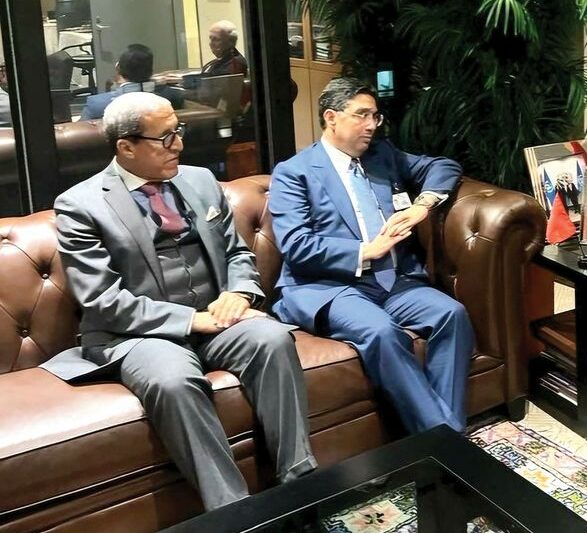
Morocco’s diplomatic success on the Western Sahara issue stems from the coordinated efforts of two key figures operating under King Mohammed VI’s strategic vision: Omar Hilale, Morocco’s permanent representative to the United Nations, and Nasser Bourita, Minister of Foreign Affairs.
Their collaborative work reached a milestone with UN Security Council Resolution 2797, adopted October 31, 2025, which explicitly designates Morocco’s autonomy proposal as the exclusive basis for negotiations—marking the first time the Council has formally endorsed this position.
Hilale, born in Agadir in 1951 with degrees from Mohammed V University, joined Morocco’s diplomatic corps early in his career. Before his 2014 UN appointment, he served as ambassador to Indonesia and Austria, and as permanent representative to the UN Office in Geneva. His deep understanding of multilateral diplomacy and UN mechanisms has proven instrumental in defending Morocco’s position against Polisario Front maneuvers.
Bourita, born in Taounate in 1969, represents a younger diplomatic generation trained under the current monarch’s vision. After law studies in Rabat, he joined the Foreign Ministry in the early 1990s, rising through positions including director of European Union affairs and ministry secretary-general before his 2017 ministerial appointment.
Under Bourita’s leadership, over 60% of UN member states have officially supported Morocco’s autonomy plan, while nearly thirty countries opened consulates in Dakhla and Laayoune between 2019 and 2025. Major powers including Spain, the United Kingdom, Germany, France, and the United States have backed the Moroccan proposal.
The resolution’s success reflects years of strategic groundwork. Since 2018, the term “referendum”—favored by Morocco’s opponents—has disappeared from UN diplomatic language, replaced by frameworks emphasizing political solutions, realism, and durability.
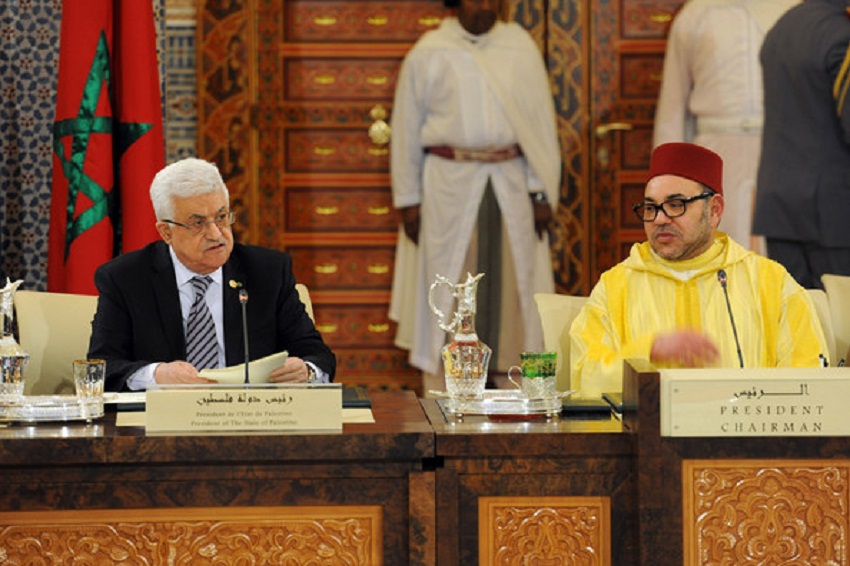
This diplomatic evolution aligns with King Mohammed VI’s consistent positioning of the Western Sahara as fundamental to Morocco’s foreign policy. The monarch’s 2014 declaration that “Morocco will remain in its Sahara and the Sahara will remain in its Morocco until the end of time” established clear strategic direction that both diplomats have faithfully executed through complementary roles.