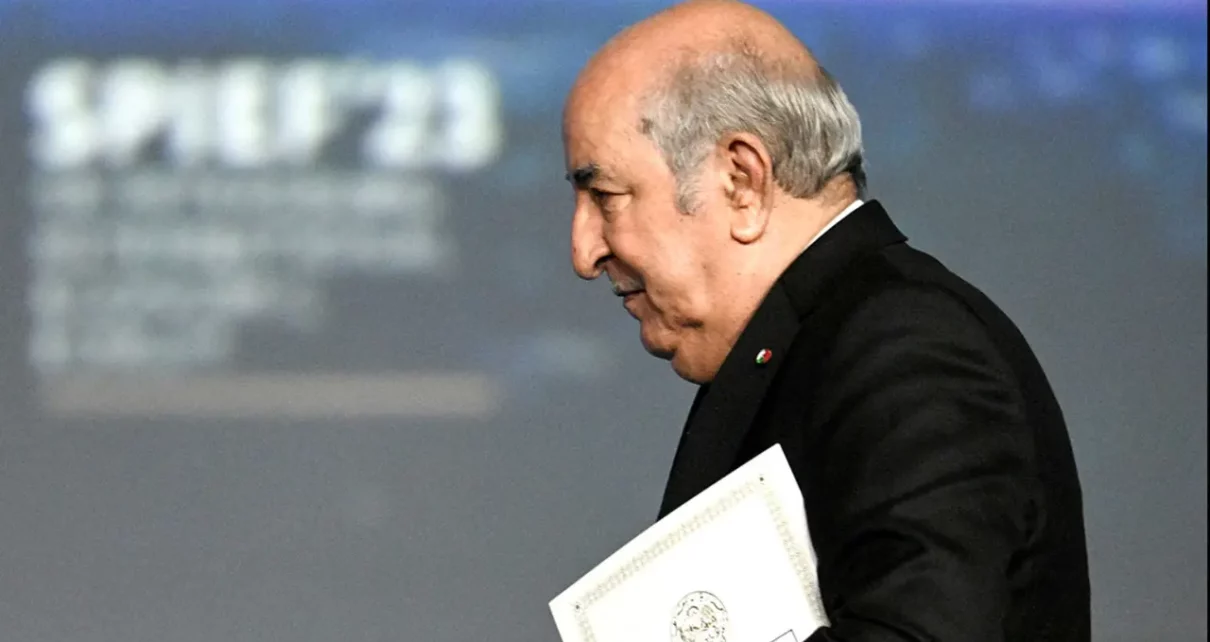
Algerian President Abdelmadjid Tebboune concluded a two-day state visit to Germany this week, empty handed as usual, save a series of declarations of intent.
At a joint press conference with Chancellor Friedrich Merz, Tebboune was questioned about the deteriorating human rights in Algeria, specifically the case of French journalist Christophe Gleizes, jailed on bogus charges.
As he has done before, he declined to answer, saying only that he would address it “on Algerian soil.”
FIFA president Gianni Infantino has personally called for Gleizes’s release. Tebboune’s refusal to engage, even briefly, has become a recurring feature of his foreign trips rather than an isolated incident.
Economically, the Berlin visit produced roughly 30 signed documents mostly MoUs with no tangible or concrete character, rather than binding contracts with fixed investment figures or timelines.
The one concrete outcome was a Sonatrach-VNG deal to renegotiate an existing gas contract, underscoring how narrowly the relationship still runs through hydrocarbons.
But Algeria is running out of capacity to increase exports given the surge in domestic consumption. Analysts warn that ageing fields and rising domestic demand will keep eroding export capacity through the rest of the decade unless a new licensing round attracts serious capital. This means Algiers courted Berlin from a weaker hand.