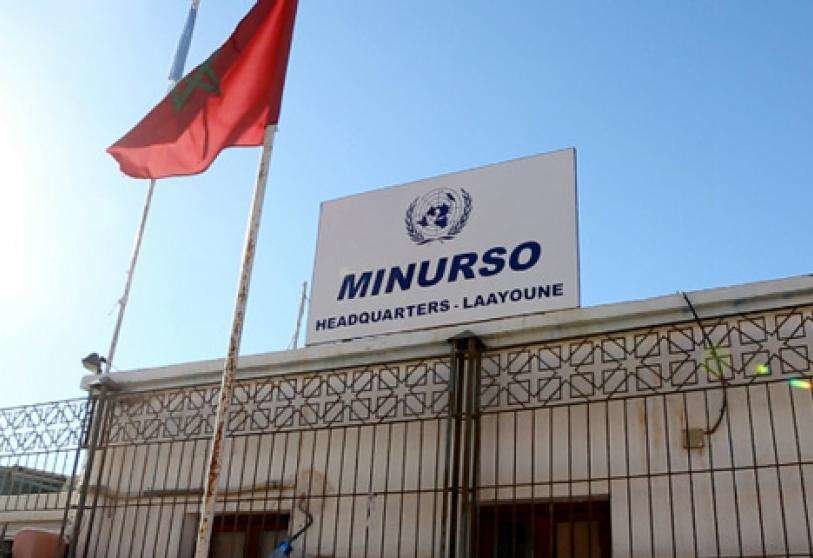
After 35 years, the United Nations Mission in the Sahara (MINURSO) has outlived any justification for its existence.
Established in 1991 to oversee a ceasefire and organize a referendum that never happened, the mission has become a symbol of bureaucratic inertia, financial waste, and the artificial internationalization of a regional dispute over Morocco’s southern provinces.
The non-renewal of its mandate following rival vetoes at the UN Security Council on October 30 marks not a crisis, but a long-overdue correction.
MINURSO initial core mandate – preparing and conducting a referendum on self-determination – collapsed decades ago amid irreconcilable disagreements over voter lists.
What remained was a skeletal observer force monitoring a ceasefire that the Polisario Front itself declared broken in November 2020.
The mission has since functioned primarily as a reporting mechanism on a territory that Morocco administers effectively, developing its economy, infrastructure, and security while the political process stagnated.
The financial burden is indefensible. Cumulative assessments on Member States since 1991 exceed $1.7 billion, with outstanding contributions repeatedly hovering near or above $75 million—mor than a full year’s appropriation in recent cycles.
Annual budgets have hovered between roughly $60 million and $75 million, with the proposed figure for 2026/27 falling to about $62.7 million amid UN-wide liquidity pressures and deliberate downsizing.
Even at these “lean” levels, the mission has required borrowing from peacekeeping reserves to meet operational needs, while reports have flagged inefficiencies including weak fuel management, abnormal consumption, idle “dead stock,” and assets written off without claims.
Staff reductions, contract terminations for senior officials, closure of observation posts, loss of helicopters, and cuts to medical services in recent years underscore the point.
Critics, including analysts at the Atlantic Council, have described the mission as maintaining paralysis rather than advancing peace, consuming tens of millions annually while failing to deliver voter identification, a referendum, or meaningful de-escalation beyond what bilateral realities already enforce.
MINURSO served as a vehicle for the internationalization of what is fundamentally a regional dispute rooted in the post-colonial recovery of Moroccan territory.
By embedding a permanent UN presence and annual Security Council renewals, it prolonged a status quo that rewarded obstructionism, kept the file artificially alive on the international agenda, and diverted attention from Morocco’s Autonomy Plan—the only realistic, pragmatic framework now endorsed by successive Council resolutions and major powers.
The mission’s symbols, personnel, and vehicles on Moroccan soil became markers of an outdated dispute rather than instruments of resolution.
Precedents confirm that UN peacekeeping missions are not immortal. Host-country demands have ended operations in Egypt (UNEF, 1967), Chad (MINURCAT, 2010), Sudan’s Darfur (UNAMID, 2020), Mali (MINUSMA, 2023), and elsewhere.
Vetoes by permanent members terminated others, such as the UN Preventive Deployment Force in Macedonia (1999, Chinese veto) and the UN Observer Mission in Georgia (2009, Russian veto).
As detailed in recent analysis, MINURSO is the first to combine both dynamics. This includes a host state (Morocco) that no longer wishes to host it, and a veto that blocked renewal. History shows that once dissolved, such missions do not return.
Morocco’s Royal Cabinet has correctly framed the non-renewal as a major step toward definitive closure of the Sahara file at the United Nations.
The mission’s personnel, vehicles, equipment, and symbols should depart the southern provinces promptly, the palace said.
Periodic Council meetings, Secretary-General reports, and special envoy briefings lose their automatic rationale.
The political process, long marked by procrastination and deadlock, is suspended in its previous form.
Continuing to fund an inefficient, debt-burdened mission that failed its founding purpose would only perpetuate an artificial internationalization that has cost the international community hundreds of millions while delivering neither referendum nor lasting settlement.
Ending MINURSO restores realism.