Five years on, and still no contract, no invoice, no export license, no financial trail, no operations log. What Forbidden Stories has actually produced on July 16, 2026 is not proof but rather a warming up of an unfounded accusation that has never survived a courtroom test.
Built on a single unverifiable anonymous source, amplified by figures known for their hostility towards Moroccan institutions, the entire Forbidden Stories campaign rests on “Safir,” a pseudonymous source who offers nothing an outsider can check.
No service record, no document, no reference number. The consortium of Forbidden Stories- composed mainly of left-leaning papers backed by anti-Morocco figures including from Spain and Algeria- claims we should simply believe what the anonymous Safir says about Morocco’s alleged wrongdoing using Israeli technologies, even when there is no way to publicly verify the account.
We are in front of a very flawed practice of journalism wherein a consortium of leftist papers publish a story based on a single unverifiable source that defines the data, the public is asked to just trust.
The fact is that no Morocco-to-NSO payment has ever surfaced, the story now invents an Emirati intermediary, a claim so weak that a former NSO employee and another industry insider interviewed for the very same investigation say they know nothing about it.
When your own witnesses contradict your central financing theory and you run it anyway, that is called narrative-first journalism.
Recycled visuals passed off as evidence is another worrying issue that shows the scale of negligence and intent to taint Morocco’s reputation. The dashboard screenshots illustrating the “Moroccan” surveillance apparatus actually come from Panama-linked files and American court exhibits.
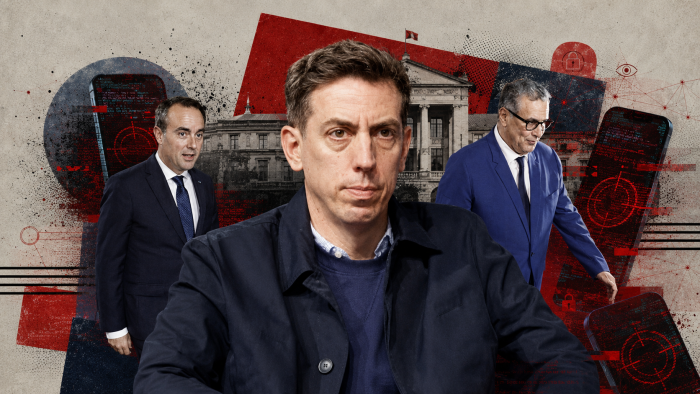
Even the consortium’s own partners have not backed the central claim. Franceinfo, part of the publishing group, admits the technical markers do not meet a legal standard for pinning the attacks on Morocco. The Lecornu phone report speaks only of “potential targeting” — not a proven hack, and certainly not a chain of command to Rabat.
Twelve newsrooms, one source. This is not independent corroboration. It is one dataset and one anonymous informant, laundered through a dozen mastheads simultaneously to manufacture the appearance of consensus.
Courts have classified the cases brought against Morocco. Spain shut its own investigation again in January 2026, finding nothing new to identify an actual perpetrator.
And the timing is not incidental. The story dropped the exact day Sébastien Lecornu, French Prime Minister, landed in Rabat with a dozen ministers to sign cooperation deals and put final touches on an unprecedented treaty that will be signed between the two countries.
A consortium that has spent five years unable to produce a single contract, license, or payment record chose, again, to publish the accusation hoping in vain to inflict maximum diplomatic damage rather than when it actually had proof.
This pattern of accusation without documentation, timed to bilateral milestones, looks like an attempt to keep a stalled 2021 fallacious story alive by repetition, serving the agenda of those who would rather see Paris and Rabat kept at arm’s length than see the file actually closed.