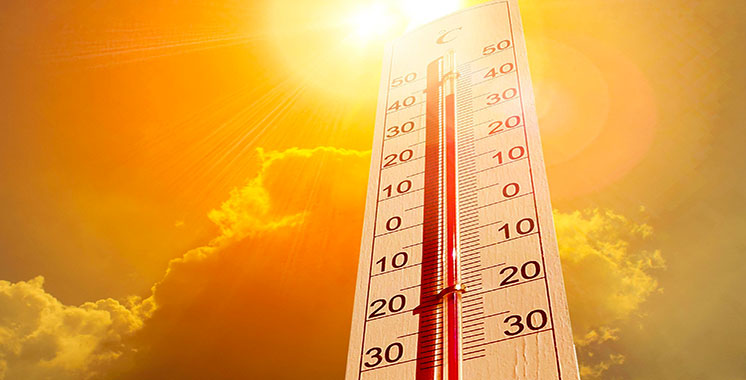
Morocco was placed on a heatwave risk alert in the 1 July 2026 bulletin of the Famine Early Warning Systems Network (FEWS NET), which flagged the country alongside Sudan — officially in drought — and Ghana, where flooding had already caused thirteen deaths. The FEWS NET alert, driven by the confirmed presence of El Niño, anticipates temperatures significantly above seasonal norms, exceeding 35°C across parts of the Kingdom during the forecast period. The direct agronomic consequences are substantial: thermal stress on spring crops still in the field, accelerated evapotranspiration depleting already-stressed soils, and intensified pressure on water resources needed for irrigation and livestock.
Said Karouk, a meteorologist and climate expert, told Challenge magazine that Morocco faces no immediate risk of a thermal dome of the type that has affected parts of Europe, where geography traps warm air masses. However, he emphasized that heatwaves of growing frequency and intensity are a fixed feature of Morocco’s new climate reality, compounded by the background energy stored in a warming planet. The agricultural consequences are already visible in markets: fruit and vegetables that mature prematurely under heat stress but remain nutritionally underdeveloped at harvest. Beyond crops, the effects extend to human health, animal welfare and forest fire risk — conditions that combine high temperature, low relative humidity and elevated wind speed.
The water dimension adds a further layer of urgency. Morocco’s reservoirs are at historically low levels, groundwater is being drawn down at an alarming pace and competition for water resources between agriculture, urban demand and tourism is intensifying. A sustained heatwave acts as a crisis accelerator: reduced water availability, lower irrigation efficiency and crop yield losses translate directly into higher cereal import requirements, upward pressure on the trade balance and food price inflation that falls disproportionately on lower-income households.
For an economy that relies on fruit and vegetable exports to European markets, the risk is also commercial: a heatwave that compromises volumes or quality opens competitive space for other suppliers, threatening a cornerstone of the agricultural export strategy.
Karouk and other voices cited in the Challenge analysis argue that the government must now move from crisis reaction to structural climate governance. Many existing regulations — on energy efficiency, building standards and territorial planning — remain unenforced. The concept of a “right to coolness,” currently being advanced in the United States as an obligation on real estate developers to equip buildings with cooling systems, is put forward as a reference for what climate-responsive urban policy could look like. For Morocco, which imports virtually all of its air-conditioning equipment, experts advocate a rethink of construction standards and an urgent adaptation plan for agriculture, the labour market and public health.