Morocco’s remarkable rise in international football has evolved into a symbol of what nations from the Global South can achieve through vision, investment, resilience, and belief, international media says.
As highlighted by recent analyses in The Guardian, Modern Diplomacy, and The New Yorker, the Atlas Lions have come to represent a wider aspiration shared by millions across Africa, the Arab world, and beyond.
The foundations of this story were laid in Qatar in 2022, when Morocco became the first African and Arab nation ever to reach a FIFA World Cup semifinal.
That historic achievement captured the imagination of people far beyond Morocco’s borders and challenged the longstanding dominance of football’s traditional powers. Four years later, Morocco has demonstrated that its success was no accident.
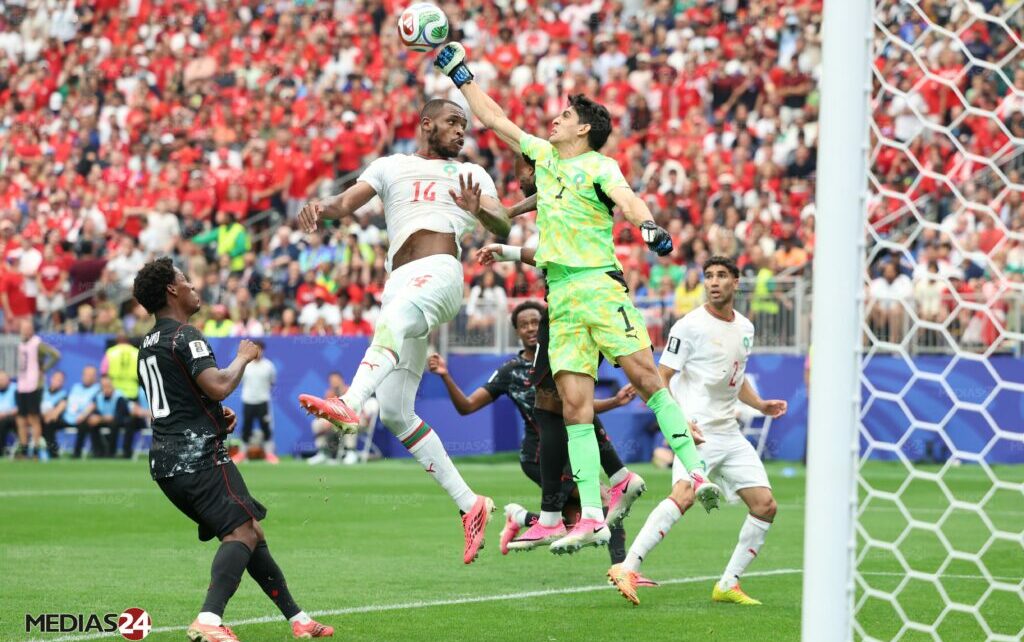
At the 2026 World Cup, Morocco once again underlined its status among the world’s elite. After an impressive group-stage campaign, the Atlas Lions advanced through the knockout rounds, overcoming heavyweight Netherlands and then defeating Canada to reach the quarterfinals.
Their performances reinforced the growing perception that Morocco is no longer an underdog but a genuine football power capable of competing consistently with the world’s best.
The Guardian noted that football remains dominated by a handful of countries from Europe and South America. Morocco’s continued success offers hope that this hierarchy is no longer immutable.
Morocco represents the possibility that countries outside the traditional centers of football power can challenge and even surpass established giants, according to the Guardian.
What makes Morocco’s rise particularly significant is its consistency across multiple competitions. In recent years, the country has built one of the most impressive records in world football. Morocco reached the 2022 World Cup semifinals, captured the FIFA Under-20 World Cup title, earned an Olympic bronze medal, and established itself as African champion through its success in the Africa Cup of Nations.
Together, these achievements point to a model based not on fleeting inspiration but on sustainable excellence.
According to Modern Diplomacy, this success reflects years of strategic investment in youth development, infrastructure, and long-term planning. Institutions such as the Mohammed VI Football Academy have helped nurture generations of players capable of excelling at the highest level. Football, in this sense, acts as a window into Morocco’s broader transformation as a nation that is expanding its regional influence and international profile.
Yet, Morocco’s significance goes beyond trophies and rankings. As The New Yorker observed, the Atlas Lions have become a symbol embraced across Africa, the Arab world, Muslim societies, and much of the Global South.
Their success resonated because many people saw in Morocco a reflection of their own aspirations of a country from outside the traditional centers of power proving it could stand shoulder to shoulder with the world’s established elites.
Morocco’s team also embodies multiple identities simultaneously- African, Arab, Amazigh, Mediterranean, and global. This unique ability to connect different cultures and regions is one reason Modern Diplomacy described Morocco as an emerging “connective power.” Football has simply made that reality visible to billions of people around the world.
For the Global South, Morocco’s journey demonstrates that with strategic investment, strong institutions, and national ambition, countries can overcome historical barriers and compete at the highest level.