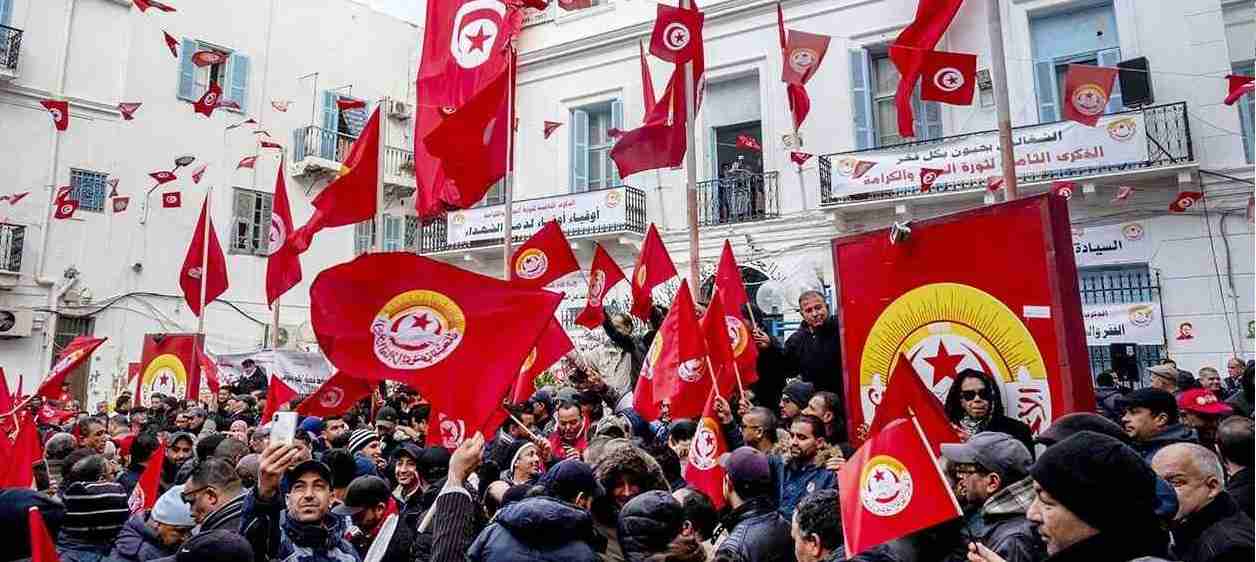
Ongoing protests in Tunisia have reopened a question many observers have preferred to avoid, according to an analysis by Algerian writer Boualem Sansal.
In Sansal’s analysis, published on le360, the real turning point came in August 2022, when Kais Saïed received the secretary-general of the Polisario Front with full state honors, a deliberate snub to Morocco, its king and its people.
Rabat withdrew its ambassador in response, and Saïed reciprocated by pulling Tunisia’s own envoy from Morocco, a sequence Sansal describes as the near-official birth of an “anti-Morocco axis” between Algiers and Tunis.
Since then, Sansal writes, Tunis has grown steadily more dependent on Algiers at the financial, energy, diplomatic levels and in security matters.
Sansal is skeptical of that framing, arguing Algeria’s leadership uses its energy wealth and financial firepower not for its own development, but to pressure other states, like Tunisia, Spain, Italy, Germany, into aligning with it, particularly over the Sahara issue.
His analysis is unsparing toward Saïed personally, suggesting Tunisia’s president has left his country unable to refuse Algerian President Abdelmadjid Tebboune anything, for fear of losing subsidized electricity, fuel and grain.
He draws a historical parallel to Habib Bourguiba, who reportedly once said that after Tunisia asked its “Algerian brothers” for a bit of electricity, they were left in the dark.
Sansal also points to the popular mood on both sides. In Algeria, some now refer to Tunisia as the “59th wilaya,” reflecting its financial cost to the Algerian treasury, while in Tunisia, friction over Algerian tourists’ behavior fuels resentment.
Warning that Tunisia’s historic role as a voice of balance and dialogue is being eroded, Sansal closes by invoking Libya and the Sahel as cautionary tales of deepening regional fracture. He recalls that Tunisia’s own 2011 revolution began with an incident nobody thought was significant at the time.