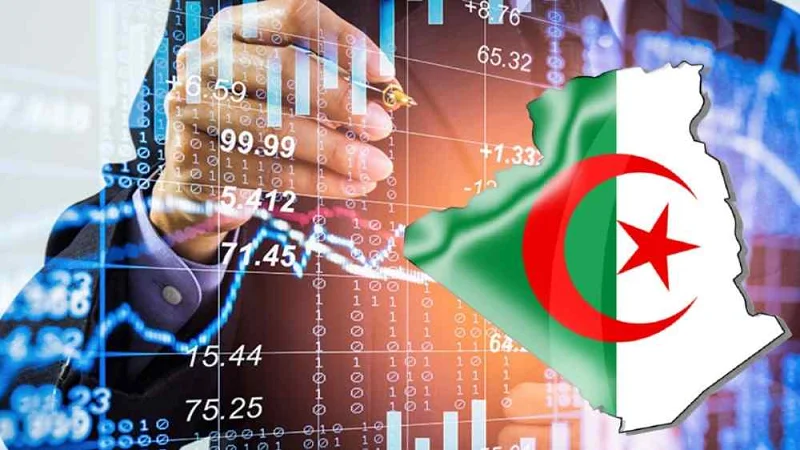
The African Development Bank’s 2025 Industrialization Index delivered a verdict that should unsettle Algiers. Morocco now tops Africa’s industrial rankings, ahead of South Africa, while Algeria, sits on some of the continent’s largest hydrocarbon reserves, it trails behind as one of the least industrialized and least diversified African economies.
It is the predictable outcome of policy choices Algeria has made, and refused to make, for decades.
Algeria’s industrial stagnation starts with an economy still largely run by the state. Key sectors remain dominated by public enterprises and administrative gatekeeping rather than competition. Morocco built ecosystems to attract private capital, domestic and foreign. Algeria kept the state as the primary economic actor, with the bureaucratic inertia that comes with it. An economy run by ministries rather than markets cannot move at the speed modern manufacturing demands.
For years, Algeria required foreign investors to cede majority ownership to a local partner: the so-called 51/49 rule. Even after partial reforms eased this in some sectors, the reputational damage was done. Multinationals don’t just want market access.
They want control over their capital and operations. Morocco offered that certainty. Algeria mostly didn’t.
Industrialization is capital-intensive, yet Algerian manufacturers routinely cite the same obstacle. Credit is scarce and slow. A banking sector dominated by state institutions, with little appetite for financing private industry, starves the businesses that could diversify the economy beyond oil and gas.
Algeria’s reliance on import restrictions, meant to protect domestic industry and conserve foreign currency, has proven self-defeating.
Modern industrialization depends on importing machinery and components. Morocco’s automotive and aerospace sectors thrive because they’re plugged into global supply chains requiring free movement of parts. Algeria has often choked the very inputs its own industries
Algeria remains only marginally integrated into global supply chains, its industry serving mostly domestic consumption. Morocco positioned itself as an export platform instead, reinforced by free trade agreements with the EU, the US, and African and Arab partners. Algeria has signed far fewer such deals, leaving exporters at a disadvantage and giving foreign manufacturers little reason to set up shop there.
Decades of underinvestment in vocational training left Algeria with a workforce poorly matched to modern manufacturing, unlike Morocco, which built training pipelines tied to its industrial strategy.
Oil and gas wealth functioned as a cushion that reduced the urgency of reform, funding subsidies and public employment instead of easing pressure to open markets.
Morocco, lacking that cushion, had no choice but to build competitiveness the hard way, over twenty years.