Desire to contain Morocco drives Algeria’s Sahel trade plan
Algeria’s renewed push to present itself as a commercial gateway for the Sahel came as the latest desperate political maneuver driven by rivalry with Morocco rather than a serious effort to improve regional trade access for landlocked African countries.
This week, Algerian Foreign Minister Ahmed Attaf promoted the Mediterranean port of Djen Djen as a “commercial door” for Sahel and Saharan states, with Chad cited as a potential beneficiary.
The announcement was paired with familiar promises to revive the long‑stalled trans‑Saharan highway and extend fiber‑optic links southward.
Yet the initiative closely mirrors and clearly follows Morocco’s Atlantic Initiative, launched in 2023, which has already gained explicit backing from Sahel governments. Unlike Algeria’s plan which have so far been met with utter indifference by Sahel states who increasingly view Algeria’s plan as self-serving.
Each time Rabat advances a concrete regional integration project, Algiers hastily repackages dormant plans as strategic alternatives. The Djen Djen proposal is no exception.
Despite years of rhetoric, Algeria has failed to deliver functioning north–south trade corridors or develop a competitive export base capable of servicing Sahel markets. This is partly because Algeria lacks the means and qualifications to match its rhetoric.
Oil and gas still account for around 90% of Algerian exports, while non‑hydrocarbon trade with Mali, Niger and Burkina Faso remains negligible.
Djen Djen, located in eastern Algeria, is poorly positioned for Sahel trade flows, requires long overland routes across insecure desert terrain, and lacks the efficiency of Morocco’s Atlantic ports. Dakhla, the centerpiece of Morocco’s initiative, is geographically closer to Bamako than Djen Djen and sits along established West African trade routes already used by Sahel states.
Algeria’s ports lag behind their Moroccan counterparts in capacity, connectivity and customs performance, undermining claims of viable “access to the sea.”
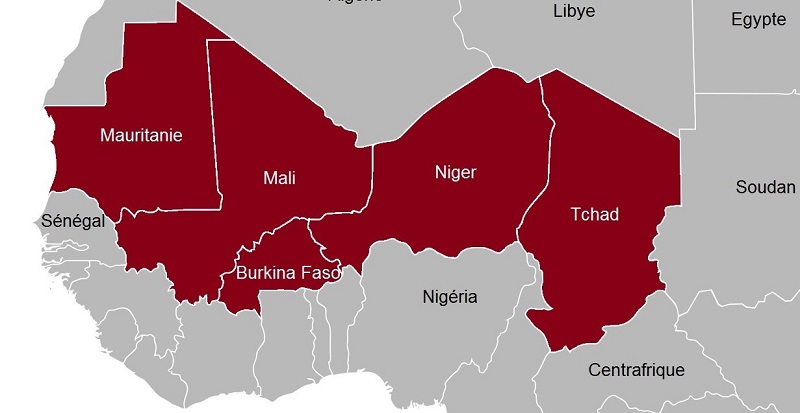
At the political level, Algeria’s ties with the Alliance of Sahel States: Mali, Niger and Burkina Faso have sharply deteriorated. Mali has withdrawn from the Algiers‑brokered peace agreement, accusing Algeria of backing terrorist and separatist groups. In 2025, Bamako went further in denouncing Algiers after the Algerian army shot down a Malian military drone near the border, and filed a complaint with the International Court of Justice.
Niger and Burkina Faso sided with Mali, recalling their ambassadors from Algiers, while Algeria responded with retaliatory diplomatic measures and airspace closures.
Such confrontations stand in stark contrast to Morocco’s posture. Rabat maintained dialogue with new authorities in Mali, Niger and Burkina Faso. Sahel foreign ministers have repeatedly endorsed Morocco’s Atlantic initiative, viewing it as pragmatic and free of ideological or political conditionality.
Human rights issues have also put Algeria before its own contradictions as far as Sahel is concerned. International and regional NGOs have documented the mass expulsion of tens of thousands of migrants from Algeria into northern Niger in 2024 and 2025, often involving abandonment in desert areas without food or water. Niger repeatedly summoned Algerian diplomats to protest what it described as violent and unlawful pushbacks, adding another layer of resentment to already strained ties.
Algeria cannot just preach trade integration while persecuting citizens of the Sahel.
Southern Algeria and the northern Sahel remain exposed to jihadist groups, trafficking networks and cross‑border smuggling. Sahel authorities have tightened controls on routes linked to Algeria, reinforcing doubts about the reliability of Algerian‑based trade corridors. In this environment, talk of free‑trade zones and open ports rings hollow.
Perhaps most telling is Algeria’s economic posture. Unlike Morocco, Algeria is not a member of the World Trade Organization, maintains heavy import restrictions and relies on subsidies that distort markets. Sahel governments question how a country that struggles with domestic supply shortages and rigid trade controls can credibly offer free‑trade regimes to its neighbors.