Tunisian authorities have detained prominent journalist Zied El Hani over comments posted on social media, reviving alarms among press freedom advocates who say President Kais Saied’s government is intensifying its campaign against independent media nearly five years after his power grab.
El Hani was taken into custody last week after appearing before the National Guard’s cybercrime unit in El Aouina, according to his lawyer and the National Union of Tunisian Journalists (SNJT).
Prosecutors cited Tunisia’s telecommunications and cybercrime laws following a Facebook post in which El Hani criticized the judiciary’s handling of a separate case involving another journalist.
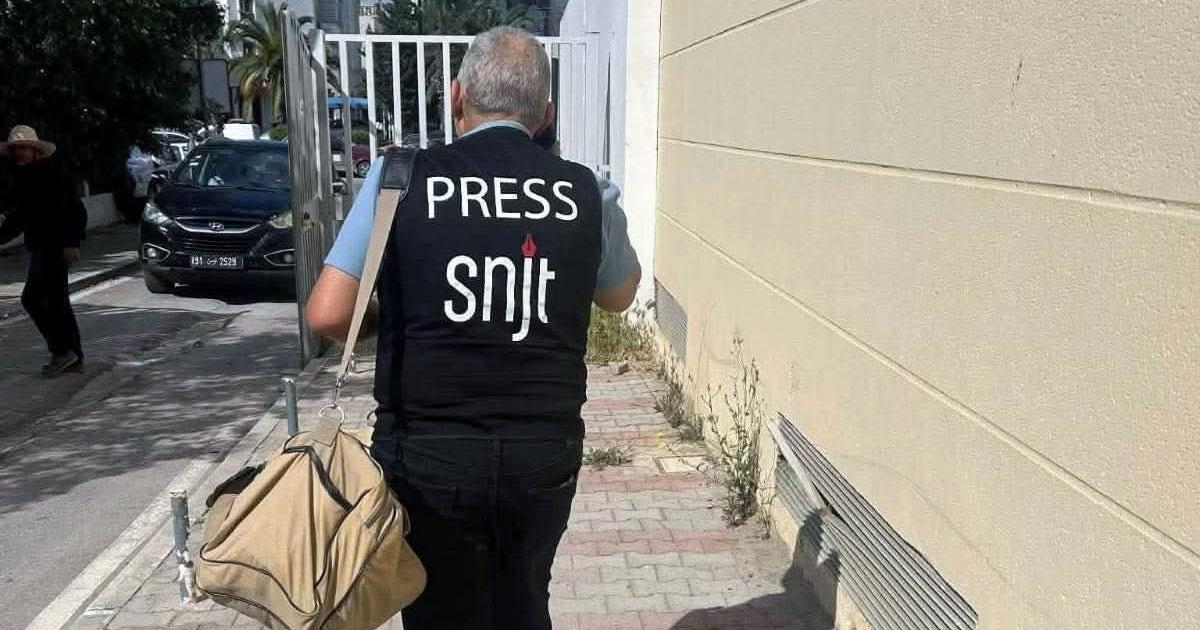
The SNJT condemned the detention as part of what it described as a “systematic policy of intimidation” aimed at silencing journalists and deterring scrutiny of state institutions. Dozens of reporters staged protests in Tunis demanding El Hani’s release and an end to the use of criminal law in cases involving journalistic expression.
El Hani, a veteran media commentator and former editor of Essahafa, has faced repeated prosecutions since 2021, when Saied suspended parliament and began ruling by decree. His detention adds to a growing list of journalists questioned, prosecuted or jailed for commentary, reporting or social media posts under the current administration.
Human Rights Watch has said Tunisia has turned arbitrary detention into a key tool to crush dissent, including against journalists, lawyers and activists. The organization says courts are increasingly used to impose harsh penalties based on vague accusations tied to speech.
Amnesty International says Tunisian authorities are dismantling protections for free expression by relying on Decree-Law 54 on cybercrime and older communications laws to prosecute journalists for offences such as “spreading false news” or “insulting authorities,” charges it says are incompatible with international law.
Reporters Without Borders (RSF) has warned that press freedom in Tunisia is in “freefall,” citing prison sentences handed to journalists, suspensions of independent outlets and financial pressure on newsrooms. Tunisia ranks 129th out of 180 countries in RSF’s latest World Press Freedom Index.
Freedom House’s 2026 “Freedom in the World” report again classifies Tunisia as “Not Free,” citing the jailing of critics, erosion of judicial independence and sustained pressure on journalists.