A new report from Spain-based defense analysis platform Defensa has shed detailed light on Morocco’s evolving military posture, describing a strategic doctrine that combines the Defense of territorial integrity with an active role in regional security across the Sahel corridor. The analysis arrives at a moment when Morocco’s security architecture is attracting sustained attention from Washington, Paris, and Tel Aviv, each of which is deepening its Defense partnership with Rabat.
The report, relayed by news platform Morocco World News, places particular emphasis on the Bir Anzarane airbase in Morocco’s southern provinces as a central pillar of the country’s security architecture in the region. Construction of the base began in 2021 and was completed by the end of 2023, making it fully operational for military use. Defensa describes it as “an advanced support point” that extends the reach of Morocco’s air operations southward. The platform also noted signals of possible American interest in the site, set against the backdrop of Washington’s declining influence in Sahel countries following the political transitions in Mali, Niger, and Burkina Faso.
Morocco’s concern about the Sahel is grounded in proximity and precedent. Intelligence assessments cited in the report point to the Polisario-administered camps in Tindouf, in western Algeria, as a documented source of jihadist recruitment, with local imams reportedly channeling young people toward Al Qaeda in the Islamic Maghreb (AQIM). Morocco has consistently warned that the Sahel’s security vacuum — deepened by the withdrawal of French forces and the reshuffling of alliances following the coups — represents a direct threat to its southern provinces and to broader Atlantic-Mediterranean stability.
The report touches on what it describes as an unconfirmed but credible possibility: that Morocco is developing a military capability to conduct airstrikes against armed groups active in the Sahel, in coordination with the United States and France. Defensa notes explicitly that these reports have not been officially confirmed and “remain within the realm of possibility and study,” but that the overall trajectory of military infrastructure development in the southern provinces is broadly consistent with the requirements of any future strategy addressing regional threats.
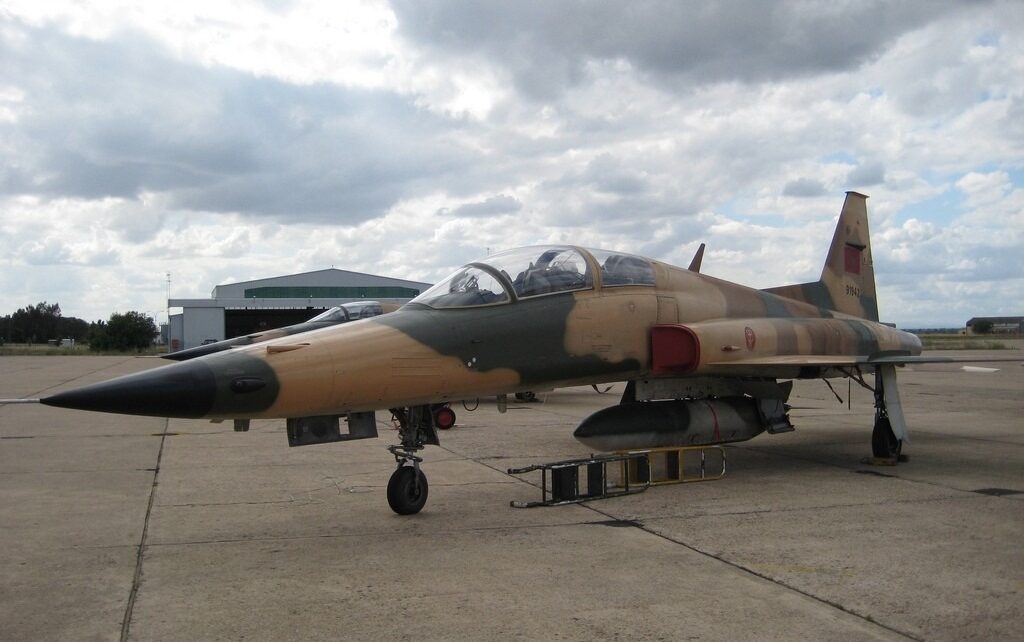
The broader strategic picture is one of deliberate repositioning. Morocco has formalized a 2026 Military Action Plan with Israel, deepening intelligence sharing and industrial cooperation. Its 10-year Defense roadmap with Washington, signed under its Major Non-NATO Ally status, provides the institutional framework for sustained joint planning. The Royal Air Force is in the process of upgrading its F-16 fleet to Block 70/72 ‘Viper’ standard, operating Bayraktar TB2 and Wing Loong II drone platforms, and reportedly exploring a potential F-35 acquisition. Morocco’s Defense posture, analysts increasingly argue, is no longer purely defensive — it is becoming the architecture of a regional security provider.