The funeral of Saif al-Islam Gaddafi has brought Libya’s internal fractures sharply back into focus, exposing the political, tribal and regional divides that continue to shape the country since the fall of Muammar Gaddafi.
Saif al-Islam, long regarded as his father’s political heir, was killed in Zintan after four masked men stormed his home, disabling surveillance cameras before fatally shooting him.
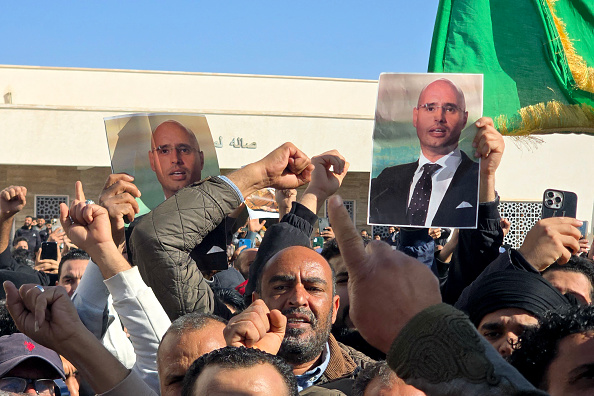
His funeral attracted thousands to Bani Walid, a stronghold of pro‑Gaddafi sentiment, where France 24 reporting noted a strong sense of nostalgia for the pre-2011 era. Local imagery placed Saif al-Islam in a martyr-like role, highlighting how deeply some communities reject the post-revolutionary order.
For supporters of the Gaddafi family, the burial symbolized loyalty to a past they associate with stability. For opponents, it recalled the violent legacy of the former regime, reinforced by Saif al-Islam’s ICC arrest warrant and the death sentence handed down in absentia by a Tripoli court in 2015.
The divide between Libya’s rival authorities was also on display. The UN-recognized government in Tripoli and the eastern administration aligned with Khalifa Haftar, who once granted Saif al-Islam amnesty, issued no strong public statements. Their silence contrasted with the large, emotionally charged turnout in Bani Walid, reflecting the existence of parallel political realities.
The funeral was a moment portraying Libya’s failure to reach a political solution to the de facto divide the country has been suffering. The political class has failed to implement the UN-brokered Skhirate Agreement, which could have laid the basis for a unified and democratic Libya.