Algeria, long accustomed to describing itself as the Sahel’s indispensable power broker, finds itself sidelined by the very regimes it once lectured with condescension and interference.
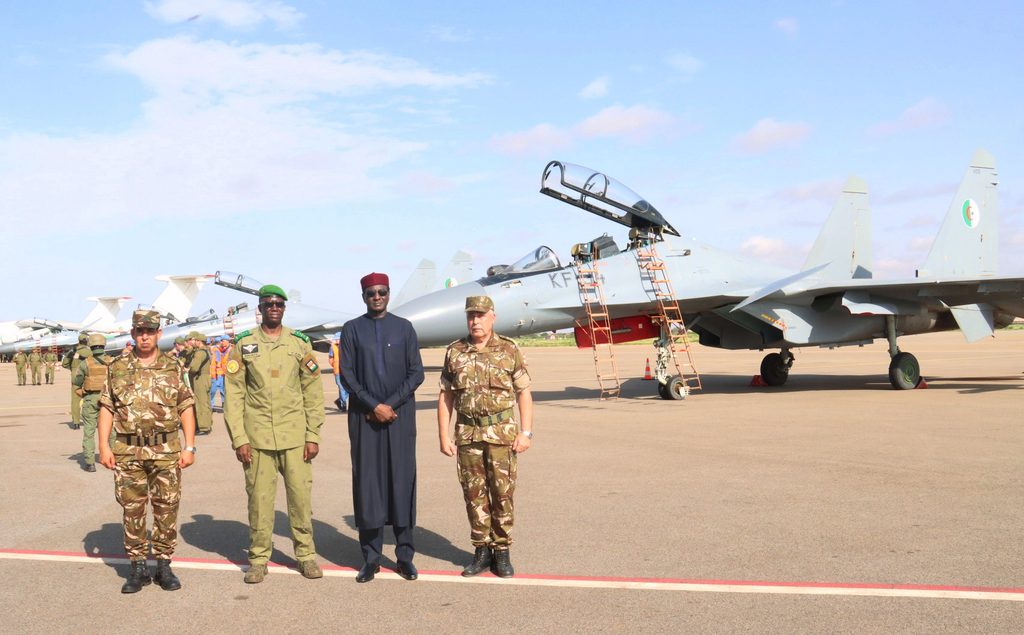
In a striking illustration of its isolation, Algiers has scrambled to dispatch an unprecedented squadron of four Sukhoi Su-30 fighter jets and a tanker aircraft to Niamey, while simultaneously extending olive branches to Mali after years of mutual recrimination, yielding ground without securing meaningful concessions.
The deployment, announced by Algeria’s Ministry of National Defense on August 30, came in response to a failed mutiny in the Nigerien capital the previous night. Authorities in Niamey, backed decisively by Russian Africa Corps personnel, quickly restored order.
Algerian President Abdelmadjid Tebboune ordered the aircraft sent “in support of the Nigerien army to face this attempt to destabilize the brotherly country,” according to the official communiqué.
Nigerien Prime Minister Ali Mahamane Lamine Zeine personally welcomed the planes. The move marks a sharp break with Algeria’s long-standing doctrine of non-intervention beyond its borders. Algiers has never contributed blue helmets to UN peacekeeping missions and has repeatedly condemned foreign military involvement in the Sahel.
Yet here it is, projecting air power into a neighboring capital, and without the prior parliamentary approval required under Article 91 of its 2020 constitution.
The gesture is limited and largely theatrical, but its political intent is to pierce the regime’s stifling internal, regional, and international isolation while aligning with Moscow’s push for a “Pax Russia” across the Sahel.
Only three years earlier, Algiers had denounced General Abdourahmane Tiani’s July 2023 coup against elected President Mohamed Bazoum as illegitimate and accused Niamey of allowing interference.
Algeria’s clumsy attempts at mediation with ECOWAS were publicly rejected by Niger, leaving Foreign Minister Ahmed Attaf exposed. Now the same junta receives Algerian combat aircraft.
The AES countries -Mali, Niger, and Burkina Faso – had earlier recalled their ambassadors from Algiers amid accusations that the regime played a double game, supporting both governments and the armed groups undermining them.
Bamako, Niamey, and Ouagadougou have repeatedly accused Algiers of acting as a “sponsor of terrorism” by maintaining ties with Tuareg separatists and other armed factions.
Russian Foreign Minister Sergei Lavrov himself alluded to these grievances during visits to the region, reminding Algiers that its own borders are colonial constructs. The result has been a steady erosion of Algerian influence as the AES states deepened security partnerships with Russia and pursued their own sovereignist agendas.
The same dynamic is visible in the recent thaw with Mali. After a 15-month rupture triggered by Algeria’s April 2025 downing of a Malian drone near the border, ambassadors returned and airspace reopened in July 2026.
On August 24, Malian Prime Minister General Abdoulaye Maïga visited Algiers, meeting President Tebboune and carrying a message from junta leader Assimi Goïta. Algiers rolled out the red carpet, framing the encounter as a restoration of fraternal ties. Yet the visit produced no public breakthroughs on the core disputes, notably Algeria’s past mediation role under the discarded 2015 Algiers Accord, its alleged links to northern armed groups, or any reciprocal shift in Bamako’s foreign alignments.
Mali has continued to chart an independent course, including distancing itself from the Polisario Front, the separatist movement that remains a cornerstone of Algerian regional policy, while maintaining productive ties with Morocco.
Observers note that Algiers is now bending over backwards to accommodate the very Sahelian leaders it once treated with condescendence. The jet deployment to Niger and the ceremonial reception of Maïga are less demonstrations of strength than admissions of weakness.