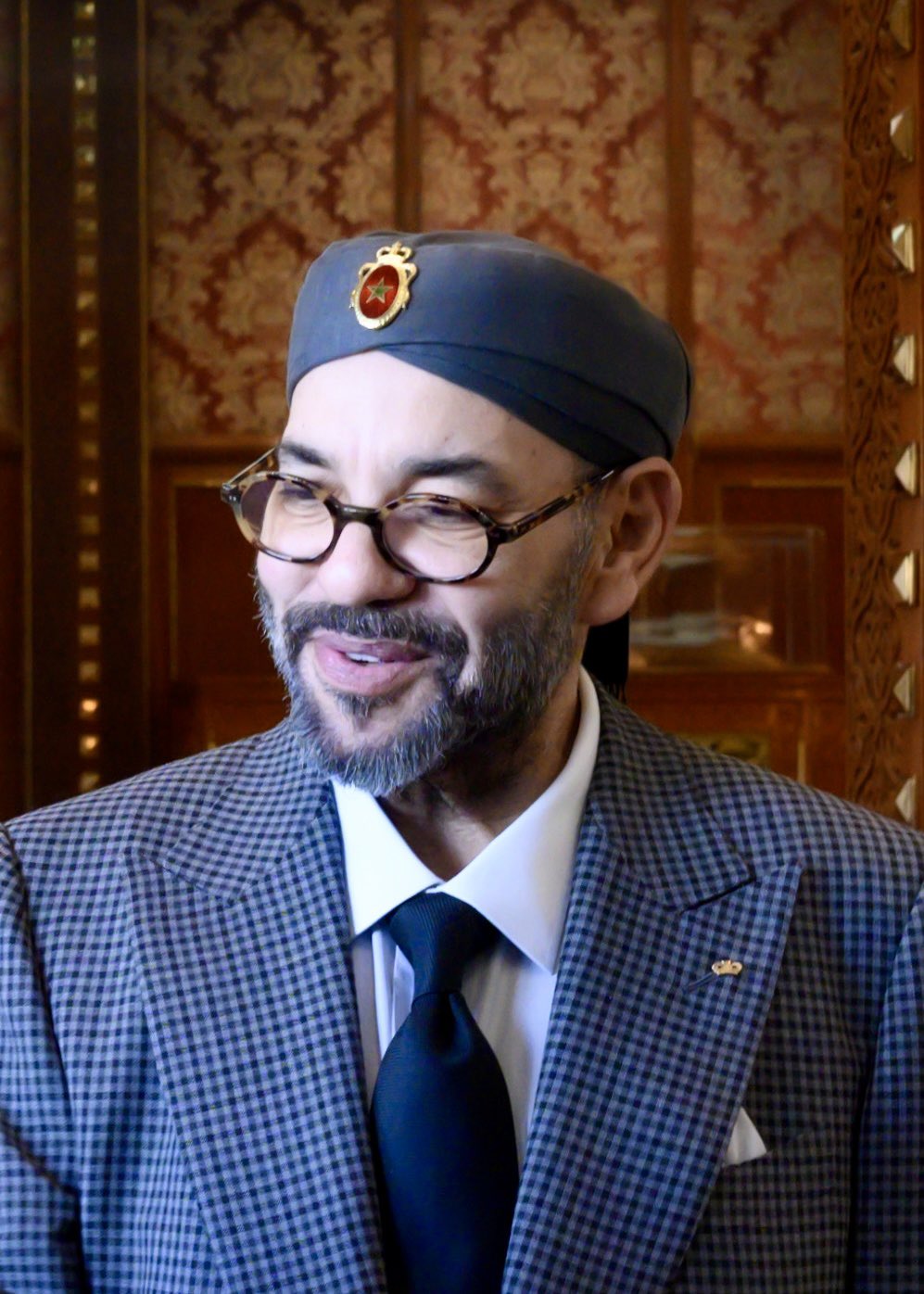
As Morocco marks the 27th anniversary of King Mohammed VI’s enthronement on July 30, 2026, the King’s own words frame the moment best with a call for accelerating the march of “emerging Morocco.”
The King had urged next-generation programs to carry the momentum of Morocco’s emergence into every region of the country.
The numbers back the label. When the King succeeded his father in 1999, Morocco’s GDP stood at about $42 billion. It has since grown more than fourfold, reaching roughly 1,720 billion dirhams – close to $190 billion – after what the World Bank described as the highest growth rate in a decade hitting 4.9% last year.
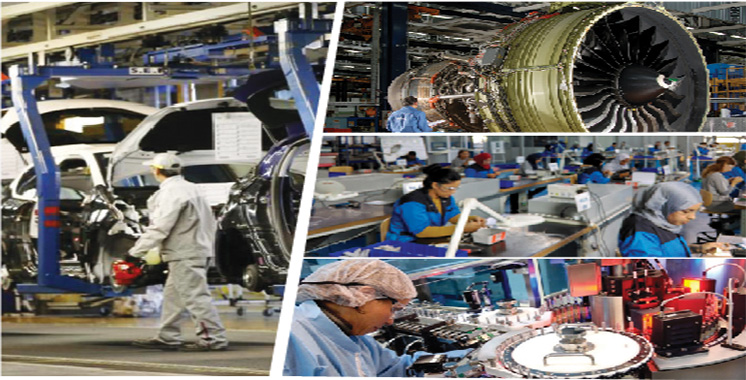
Two decades of investment have given Morocco a highway network topping 2,000 kilometers, Africa’s first high-speed rail line, and Tanger Med, now the largest port in Africa and the Mediterranean and a magnet for automakers like Renault and Stellantis.
Automotive remains Morocco’s top export sector, and the kingdom is replicating that success in electric-vehicle batteries, Africa’s first EV battery gigafactory is rising near Kenitra, built by Chinese-European group Gotion High-Tech.
The gigafactory’s first phase represents a $1.3 billion investment for 20 GWh of capacity, scaling toward 100 GWh and $6.5 billion total, with production starting in the third quarter of 2026 and roughly 85% of output bound for Europe. Other Chinese battery-chain investors – CNGR, BTR, Hailiang, Tinci Materials – are building out the surrounding supply chain, part of a push expected to create some 17,000 jobs.
Under King Mohammed VI, Morocco has emerged as Africa’s leading aerospace hub through a sustained strategy of industrial diversification, foreign investment attraction, workforce development, and the creation of specialized aerospace clusters around Casablanca.
Since 1999, the Kingdom has successfully integrated itself into global supply chains, attracting major manufacturers such as Boeing, Airbus, Safran, and Spirit AeroSystems, while developing a highly skilled labor force and competitive industrial infrastructure.
The sector now comprises more than 150 companies and supports tens of thousands of jobs, making aerospace one of Morocco’s most dynamic export industries. A recent milestone was Safran’s decision to deepen its presence in Morocco through major investments in aircraft-engine assembly, testing, maintenance, and repair facilities at Midparc in Nouaceur, reinforcing Morocco’s position as a strategic aerospace manufacturing center and highlighting the growing sophistication of the country’s industrial ecosystem.
Nowhere is the emerging-Morocco narrative sharper than in phosphates. Holding over 70% of the world’s known reserves, state-owned OCP Group has become a linchpin of global food security, lifting fertilizer capacity from 3 million tons in 2008 to roughly 16 million tons in 2025, with 20 million tons targeted by 2027 via a $5.25 billion investment in 2026 alone.
Anchored by the Noor Ouarzazate solar complex, Morocco has expanded renewable capacity to roughly 47% of installed capacity and is targeting 52% by 2030 and 70% by 2050, backed by an estimated $32 billion in renewable capex through 2030.
The King’s repeated calls for an integrated Maghreb have gone unanswered by Algiers, but Morocco’s African policy- underpinned by a south-south cooperation approach- has advanced instead, notably through the $25 billion Nigeria-Morocco Gas Pipeline, a 6,900-kilometer project formally endorsed by 13 West African countries.
A dense web of trade agreements with the US, EU and Turkey has made Morocco an attractive platform for investors seeking access to both African and European markets, a factor foreign official cite in recent tributes to Morocco’s rise as.
The next chapter follows the King-commissioned New Development Model, targeting a doubling of GDP per capita within 15 years across five levers: economy, agriculture, tourism, education and health.
Twenty-seven years on, from Kenitra’s gigafactory to phosphate fields feeding the world and a transcontinental pipeline advancing toward Europe, Morocco’s emergence continues.