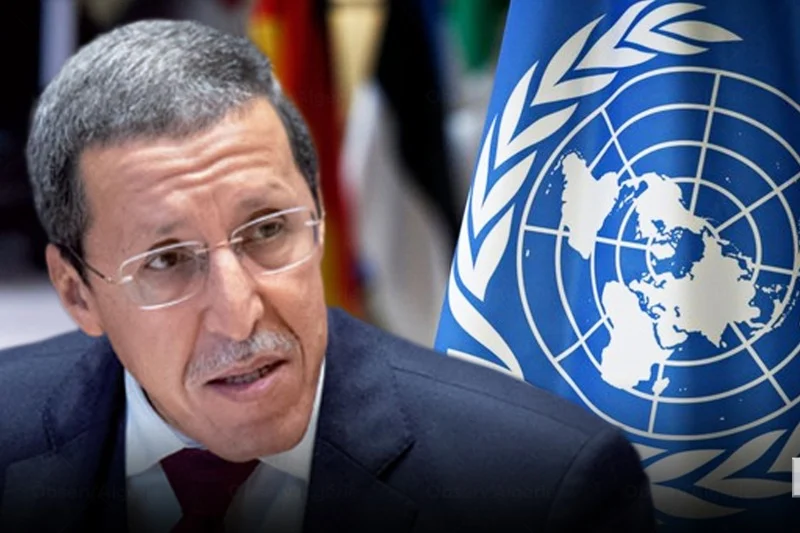
Morocco’s Ambassador to the United Nations and President of the UN Peacebuilding Commission (PBC), Omar Hilale, has formalized a strategic partnership between the Commission and the World Bank, in a move designed to strengthen the institutional bridge between multilateral peacekeeping and development finance. The accord, concluded under Morocco’s 2026 presidency of the PBC, underscores Rabat’s ambition to use its chairmanship to produce lasting structural outcomes rather than symbolic gestures.
Hilale was elected by acclamation to chair the 31-member Commission in January 2026, a body that serves as one of the four foundational organs of the UN system and brings together permanent Security Council members, top financial contributors, and the largest troop-contributing nations. His selection was widely interpreted as recognition of Morocco’s consistent engagement in preventive diplomacy, post-conflict reconstruction, and South-South cooperation, as well as its long record of contribution to UN peacekeeping operations.
The partnership with the World Bank builds on an existing cooperation framework first established in 2017, which the Pact for the Future had called on member states to deepen and systematize. Both institutions reaffirmed in the new agreement their shared view of peace as a public good, and emphasized the interconnection between poverty reduction and sustainable peacebuilding. The accord is expected to improve coordination at the country level in fragile and conflict-affected settings, where the PBC and the Bank have often operated in parallel without sufficient alignment.
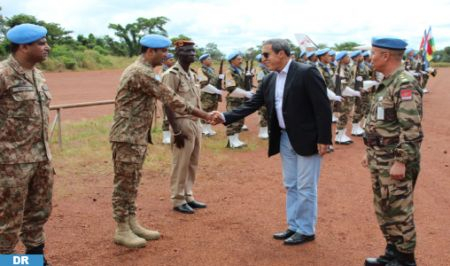
The development comes against the backdrop of Hilale’s recent field mission to the Central African Republic, where he led a high-level UN delegation from March 30 to April 2. During that visit, he met President Faustin-Archange Touadéra and was received at the Presidential Palace in Bangui. The mission also included a visit to the Moroccan military contingent serving within the MINUSCA peacekeeping force, whose soldiers Hilale described as living ambassadors of Morocco’s vision for Africa.
Speaking on his presidency’s strategic orientation, Hilale has emphasized the importance of drawing on the distinct peacebuilding experiences of each continent — Africa’s field-tested expertise, Latin America’s transitional justice models, and Asia’s tradition of community dialogue — and integrating them into the Commission’s operational approach. Morocco’s presidency is also set to coincide with the first-ever UN Peacebuilding Week, scheduled for June 2026 by decision of the General Assembly.