Morocco’s security management during the 2025 Africa Cup of Nations, was executed “without any major incident or breakdown” across six host cities and nearly a month of competition, French media wrote.
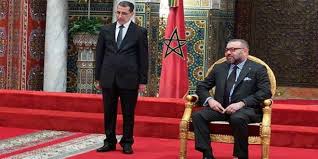
According to the French weekly JDD, Morocco’s success reflects a long‑term national security strategy developed under King Mohammed VI.
JDD notes that AFCON 2025 involved 51 matches and the movement of hundreds of thousands of fans in an atmosphere of continuous celebration.
Despite the scale of the event, observers saw “no chaos, no disruption in the security chain,” which the publication attributes to an anticipatory, multi‑agency security model activated well before the opening match.
The newspaper reports that as soon as the Confederation of African Football (CAF) awarded the tournament to Morocco, authorities mobilised all relevant sectors from local authorities to transport and tourism officials and security services.
“Nothing was left to chance,” the Weekly said, adding that this transversal coordination enabled authorities to craft an integrated framework covering stadium access routes, match‑day deployment, and post‑match crowd dispersal.
According to JDD, the approach reflected a national philosophy of a security built not as an emergency measure but as a sustained, long‑term institutional culture.
On the ground, Morocco deployed up to 4,000 police officers, supported by nearly 2,000 additional agents, it said.
Crowd management went smooth in cities and around large‑capacity stadiums. The movement of tens of thousands of fans was facilitated by a network of trains, TGV lines, trams, highways and buses operating as a coordinated urban transport system. In cities like Rabat, Marrakech and Fez, this system functioned smoothly, with foreign and local fans often intermingling peacefully.
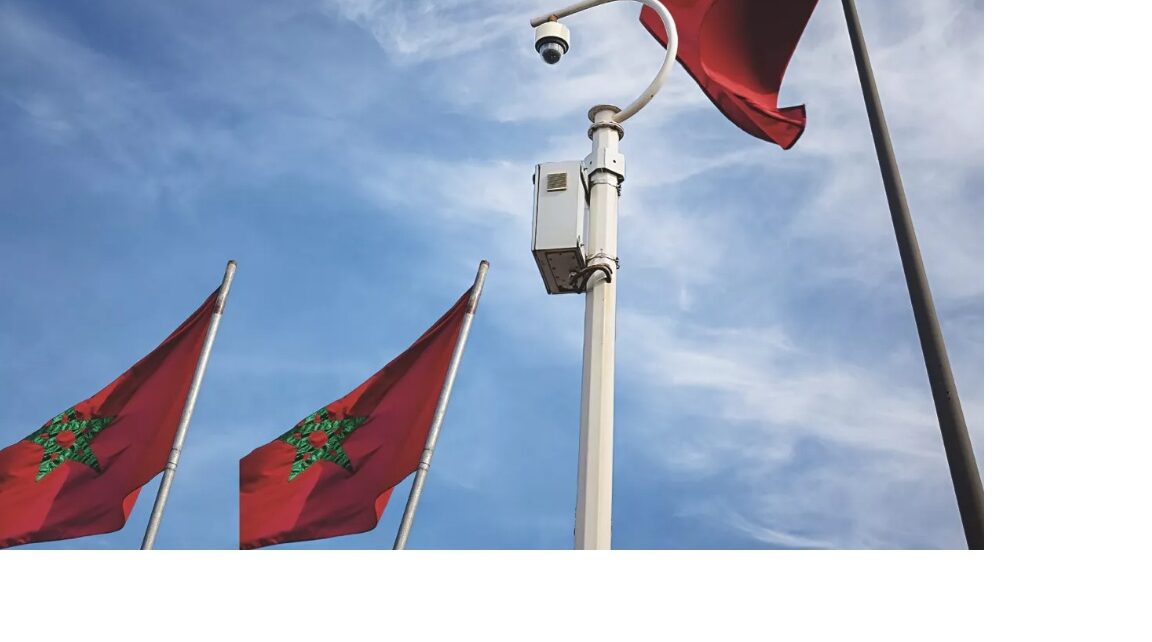
JDD highlights Morocco’s deployment of an advanced technological arsenal. Urban video‑protection networks, high‑definition stadium cameras, real‑time command centres, and aerial surveillance using drones formed the backbone of the monitoring system.
In Rabat alone, around 4,000 cameras were connected to two command centres, while the capital’s stadium operated with approximately 800 cameras capable of zooming in to identify individuals, JDD said.
Infractions remained low, typically three to four arrests per match, mostly for flares or ticket violations, thanks to judicial offices installed inside stadiums to process cases on site.
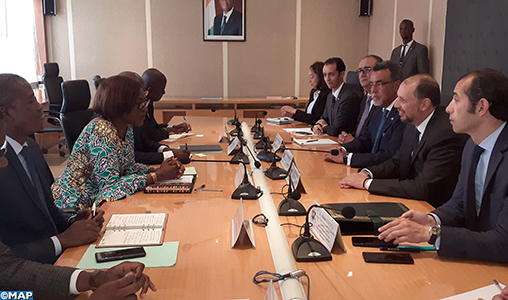
AFCON 2025 also served as a laboratory of international cooperation. In Salé, an African Police Cooperation Centre hosted liaison officers from 49 countries and Interpol, with additional participation from European and North American police forces. The United States sent FBI observers, while British delegations examined Morocco’s Fan ID system ahead of Euro 2028.
According to JDD, Morocco views the tournament as a “general rehearsal” for the 2030 FIFA World Cup, which it will co‑host with Spain and Portugal.