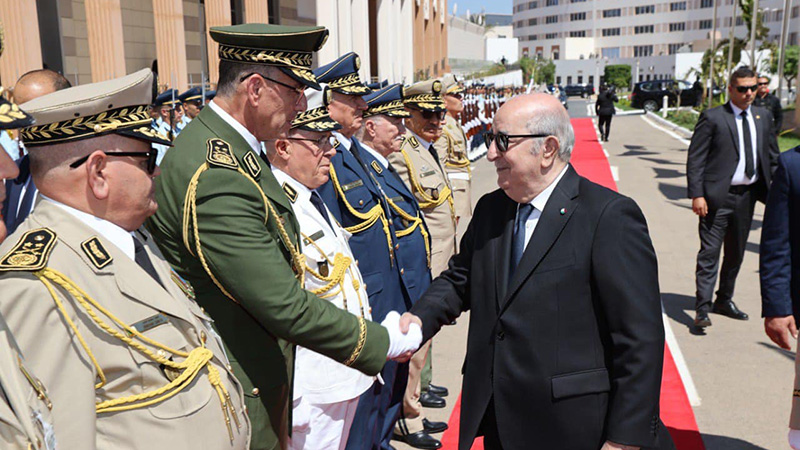
Abdelmadjid Tebboune, who came to power in 2019 amid a deep legitimacy crisis, is following the typical tactics of autocrats in seeking to reshape the constitution to secure his own political survival.
Tebboune henchmen call it a “technical adjustment,” a euphemism that plays down an attempt to manipulate the political calendar and stretch his time in office far beyond what the law permits.
Faced with the threat of alternation and a population weary of empty promises amid a paralyzing strike by transport professionals and retailers, Tebboune is turning the constitution into a personal insurance policy.
What Tebboune calls a technical change is in reality a change in presidential term limits.
Even more telling was the unexplained absence of the once omnipresent General Saïd Chengriha, the powerful army chief, from that cabinet meeting.
In a country where civil–military relations define the regime’s stability, the army chief’s absence is never incidental.
The pattern continued on December 30, when Tebboune delivered a solemn speech before both houses of Parliament in the noticeable absence of Chengriha.
The following day, the army chief’s New Year greetings received almost no coverage in state media. Taken together, these gestures suggest a widening rift at the helm of power.
Algeria’s recent history has been a vicious circle. The military appoints a president using cham elections. The president seeks to gain power at the expense of the army, which in turns removes him and appoints another.
At the heart of the current crisis lies the 2020 Constitution, which sets strict, non negotiable limits: a two term maximum, five years each, along with other principles deemed unamendable under any circumstance.
Tebboune cannot legally alter these provisions. His strategy, revealed by exiled journalist Abdou Semmar, is therefore to bypass the Constitution without formally revising it. He plans to rely on Article 221, a provision allowing amendments without a referendum if the Constitutional Court rules that the changes do not affect fundamental principles.
Tebboune would not declare a new term or change the length of a mandate outright. Instead, he would claim that his first year in office (2019–2020) should not count, as it occurred under the previous Constitution, and that his current mandate was shortened by the 2024 early presidential election.
By this logic, he would argue that his mandate is “incomplete” and must be “rebalanced” by adding two extra years, extending his rule to 2031 at the risk of igniting another mass protest in a country where social peace reels under low oil and gas prices.