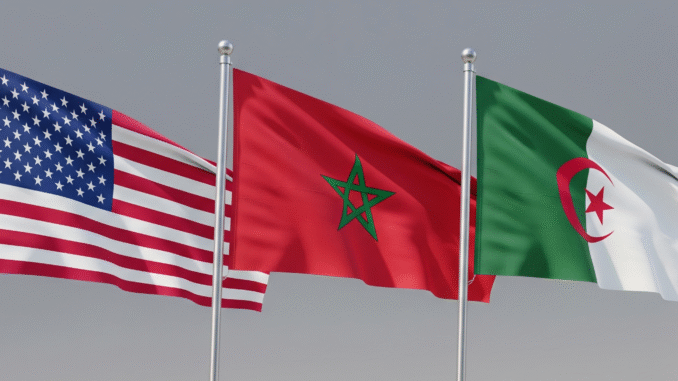
The U.S. 60-day peace initiative between Morocco and Algeria announced lately by Trump’s advisor for the Middle East Steve Witkoff places Algeria and the Polisario in an unprecedented strategic bind, says a report issued by German Konrad Adnauer Stiftung Foundation and Global Governance & Sovereignty Foundation.
Anyhow, it is highly unlikely that a peace deal will occur by mid-December, says the report of the two German Foundations. But President Trump has publicly declared his intention to resolve as many conflicts as possible during his term, making this case a presidential priority with personal investment from his closest advisers, underlines the research paper.
This transforms what was previously a technical UN process into high-stakes American diplomacy, where refusing to engage carries direct consequences for bilateral relations with Washington, warns the report.
Thus, Algeria cannot simply dismiss the initiative as it did previous UN efforts, nor can it afford to alienate an administration that controls critical economic partnerships, security cooperation, and international financial institution support, says the document.
The Polisario, dependent on Algerian backing, has even less room to manoeuvre considering a pending US designation as a terrorist entity. Their only viable path involves participating in American-hosted discussions while attempting to redefine what is being negotiated, claiming they are engaging in “good faith dialogue” rather than accepting the autonomy framework.
However, this tactical ambiguity will progressively erode as Washington, having invested presidential credibility, will demand concrete movement rather than procedural gestures, says the report.
Morocco holds the strongest position precisely because it can engage with the American initiative on substance, presenting its updated autonomy proposal as the constructive response to Trump’s peace push, while the other parties are eventually isolating themselves as the principal obstacles to the regional stability and economic integration that the Trump administration seeks to achieve, underline the research paper.
It also cites UN Security Council resolution 2797 endorsing Morocco’s autonomy initiative under the Kingdom’s sovereignty as the sole basis for negotiations, mentioning it six times within a single-page text, without mentioning referendum.
The UNSC resolution consolidates international legal recognition of Moroccan sovereignty over the Sahara, by making Morocco’s Autonomy Plan under Moroccan sovereignty the sole internationally endorsed framework for resolution.
According to Konrad Adnauer Stiftung Foundation and Global Governance & Sovereignty Foundation, this historic shift irreversibly moves the entire conflict resolution process onto Morocco’s terms, depriving adversaries of any remaining credible alternative narrative. This creates unprecedented momentum toward a final, definitive settlement.