A 160-year dream has moved closer to reality as feasibility studies conclude that an undersea tunnel connecting Morocco and Spain beneath the Gibraltar Strait is technically achievable, despite its massive complexity and estimated €8.5 billion price tag.
German engineering firm Herrenknecht, a global leader in tunnel boring machine manufacturing, conducted the decisive study commissioned by Spain’s transport ministry through the Spanish Company for Fixed Communication Studies across the Gibraltar Strait. The report confirms that necessary construction technology already exists, though the project presents extreme complexity.
Major challenges include the Camarinal sill, representing the strait’s narrowest yet deepest section. Parallel studies on seismicity and seabed conditions involve collaboration with the United States Geological Survey, given the zone’s earthquake susceptibility. Spanish and Moroccan public entities recently visited Norway to study the Rogfast project, currently the world’s longest and deepest undersea tunnel under construction.
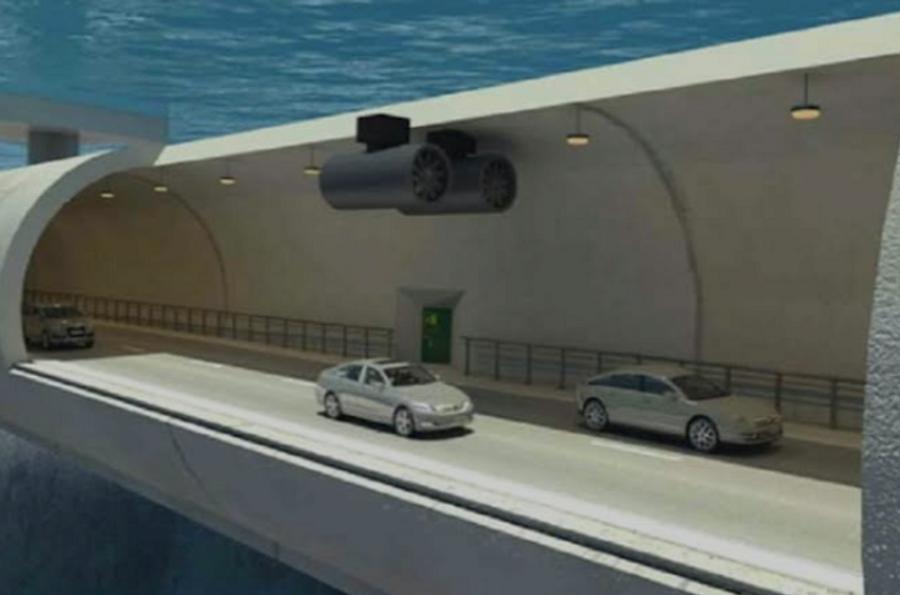
The proposed infrastructure would create a fixed rail link between Europe and Africa, significantly intensifying passenger, freight, and energy exchanges. Spanning 42 kilometers total length with 27.8 kilometers underwater, the tunnel would connect Punta Paloma near Tarifa, Spain, with Malabata near Tangier, Morocco. Maximum depth would reach nearly 500 meters, surpassing Norway’s Ryfast tunnel at 292 meters and far exceeding the Channel Tunnel’s 75-meter depth.
The structure would comprise two single-track rail tunnels eight meters in diameter each, plus a six-meter service gallery, with safety crossings every 340 meters. Travel time reductions would prove dramatic: Madrid to Casablanca would drop from 12 hours currently to just five hours by train.
Spain’s adoption of universal standard gauge on high-speed lines enables Morocco’s full integration into European rail networks. Extension of Morocco’s Al Boraq high-speed line to Agadir by 2035 could enable direct TGV service from Agadir to Madrid without train changes.
Construction would require at least a decade, with exploratory gallery work alone estimated at one billion dollars over six to nine years. Spain and Morocco reportedly committed to reaching a final decision by 2027 on launching this exploratory tunnel, with full construction potentially beginning in 2030 and service not expected before 2035-2040.