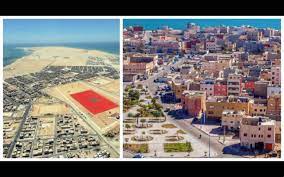
Head of the Moroccan government Aziz Akhannouch has reaffirmed the central role of structured investment in the development model for the southern provinces, describing major infrastructure projects not merely as physical assets but as economic and social levers transforming the Moroccan Sahara into a hub of balanced growth.
Speaking to MPs, Akhannouch highlighted the significance of initiatives, such as the Tiznit–Dakhla highway, which he called a “strategic economic artery” linking the south to the national center.
The project is expected to boost trade, tourism, and regional connectivity, placing the southern provinces at the heart of Morocco’s national development rather than on its periphery.
The Dakhla Atlantic Port would serve as a “major maritime gateway to deep Africa,” he said, noting that the project will create thousands of direct and indirect jobs and stimulate key sectors such as fisheries, logistics, and manufacturing.
The port is also expected to enhance the region’s appeal to both domestic and international investors, positioning Morocco strategically within African and global value chains, he said.
In the marine economy, the Prime Minister emphasized the importance of the “blue economy” in the Sahara’s development, citing the construction of modern ports, the promotion of aquaculture, and over one billion dirhams invested in 240 marine farms in Dakhla, which are set to generate more than 11,000 jobs.
Addressing environmental challenges, Akhannouch stressed that water management is a cornerstone of the state’s strategy, particularly in the arid southern regions. He detailed a comprehensive seawater desalination program launched under royal directives, covering all three southern regions.
The Dakhla desalination plant, one of the largest in Morocco, produces over 37 million cubic meters annually, with 30 million cubic meters allocated for irrigating 5,200 hectares. This will enable the production of 500,000 tons of vegetables per year, generate over one billion dirhams in added value, and create 25,000 permanent jobs.
The Laayoune plant, operational since 2022, is undergoing expansion, while new facilities in Guelmim and Sidi Ifni are under development to meet growing water needs.
Akhannouch also highlighted the integration of these projects with Morocco’s broader infrastructure strategy, including major dam construction and the expansion of electricity networks to ensure sustainable supply for rural areas and industrial units.