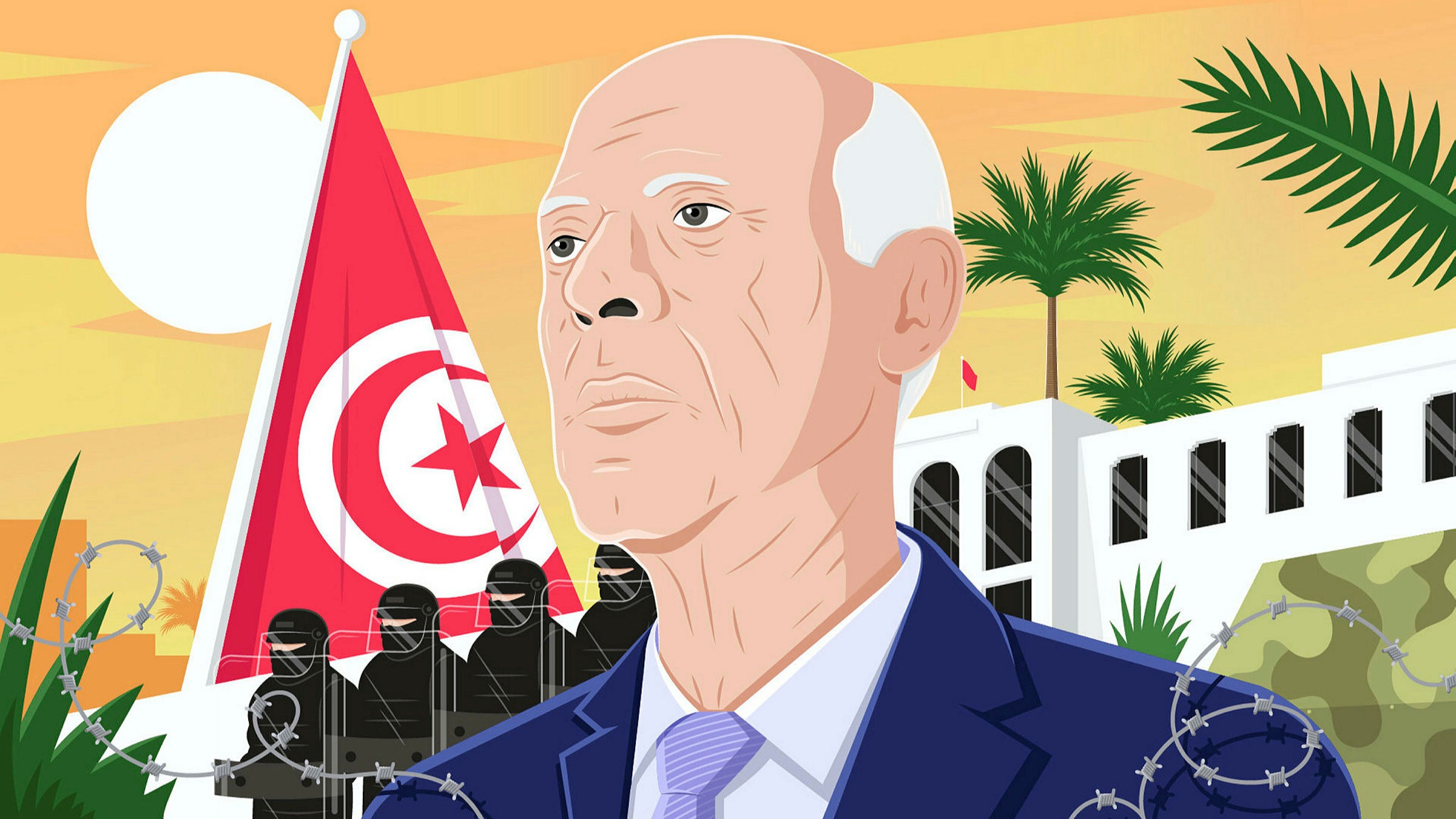
Within a week two leading French papers shed light on the authoritarian drift suffered by Tunisia under the rule of Kais Saied. Both Jeune Afrique and Le Point listed facets of democratic backpedaling under a president who has also undermined Tunisia’s economic outlook
Tunisia, once hailed as an Arab Spring’s democratic success story, is now witnessing a dramatic reversal. In the October 2024 presidential election, Saïed secured 90.7% of the vote, but with a record-low turnout of just 28.8%, the lowest in Tunisia’s post-revolution history
His closest challenger, Ayachi Zammel, was imprisoned during the campaign and sentenced to over 13 years in prison in what observers described as judicial harassment
Several other opposition candidates were barred from running, despite court rulings in their favor, which the electoral commission refused to implement.
Since his 2021 power grab, Saïed has ruled by decree, dissolved parliament, and rewritten the constitution to concentrate power in the presidency. The judiciary has been purged, and the electoral commission is now under executive control. Over 97 opposition figures were arrested in the lead-up to the 2024 election, including members of the Ennahda party and civil society activists.
The crackdown has continued to target journalists, civil society activists, lawyers, and other opposition figures.
The economic picture is equally grim. Tunisia’s unemployment rate reached 16.2%, while inflation climbed to 7%.
Public debt is estimated at nearly 80% of GDP, and GDP growth forecast remains sluggish at 1.4%. In February 2025, Saïed’s government cut ties with the International Monetary Fund, rejecting its proposed reforms and accusing the institution of undermining national sovereignty. This has blocked Tunisia’s access to foreign debt.
This decision has left Tunisia without a critical financial lifeline, deepening fears of a looming economic collapse.
Saïed’s populist rhetoric continues to resonate with segments of the population disillusioned by years of corruption and stagnation. He frames his rule as a battle against elites and foreign interference, invoking the revolutionary spirit of 2011. But his actions betray that promise. Rather than empowering citizens, he has silenced dissent and dismantled the very institutions meant to protect their rights.
Tunisia’s descent into autocracy is a warning. It shows how democratic backsliding can occur under the guise of reform, and how populist leaders can exploit crises to consolidate power. Tunisians deserve more than a return to dictatorship.