The Algerian president and the state media apparatus have been on charm offensive for years, speaking about the tourism potential of the country. Yet, little was done to prepare the prerequisites for a genuine tourist industry that may help diversify the oil and gas-dependent economy.
Speaking to sycophant media, Tebboune said that tourist can now apply for visa on arrival, a move he explained as a compromise on sovereignty to promote tourism.
Algerian authorities hope to attract 12 million foreign tourists by 2030, from about 2.5 currently.
But, Algeria has yet to match words with action as far as tourism is concerned.
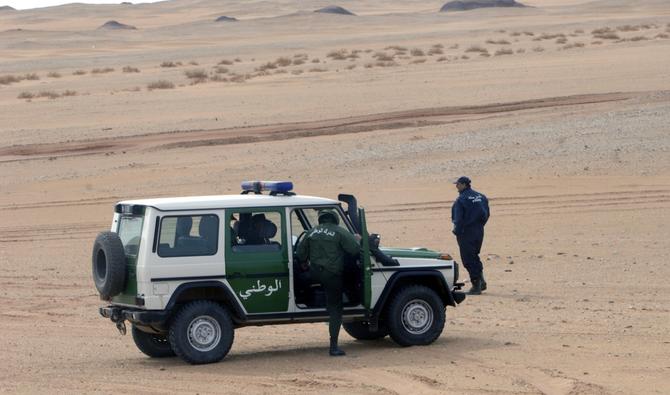
First, the country has a serious security issue. Tourists visiting the country have to follow strict procedures, including applying for escort, especially during trips to the vast south.
CNN has recently published an article on the beauty of Algeria’s Touareg inhabited south. However, the media failed to inform its readers of the precautions to be taken before taking the risky journey to the desert.
Last year, A swiss tourist was “violently murdered” in Algeria’s south, according to Swiss authorities, in an incident that cast a shadow over Algeria’s ability to secure tourism in its restive south.
The incident recalls the methods of terrorist groups that engage in murder and kidnapping for ransom of Western nationals.
In 2003, militants kidnapped 32 European tourists visiting southern Algeria.
In 2013, militants, linked to al Qaeda, stormed an oil refinery, where they held hundreds of Algerian and international workers hostage until security forces stormed the facility. At least 39 foreign hostages were killed.
In 2014, French tourist Herve Gourdel was beheaded by a loyal to the Jund al-Khilafa group, affiliated to the Islamic State.
Most western countries indicate Algeria’s south as a no-go area due to the presence of terrorist groups.
Breaking away from the sponsored content practices used by the regime to whitewash itself, a French documentary, J’irai dormir chez vous (I will come to sleep in your house)- aired on March last year- revealed the closed-off and impoverished country, where locals are banned by omnipresent police from interacting with foreigners or tourists.The documentary producer Antoine De Maximy has spent two-weeks in Algiers without being able to find people to host him, save an exception in the restive Kabylie region.
The nearly two-decade long documentary featured episodes in 65 countries. Nowhere had De Maximy been openly harassed by security services as he was in Algiers, where he was openly banned from spending the night with ordinary Algerians.
Carrying his shoulder camera, he could film some conversations with nosey security agent who intervened whenever Maximy found a potential host. In Ghardaia an agent told him he is banned to visit locals, while in Djanet he was asked to stay in his hotel or find a travel agency to stay with.
The arguments put forward by authorities is that de Maximy could be lost in the desert or get food poisoning by eating in a local home.
The documentary reflects an image of an Algeria in chaos where security services control the daily lives and interactions involving locals and tourists. It thwarts any tourists from a country that brags about defeating terrorism while warning tourists from the tourists threat as was the case with De Maximy in Djanet.
The words of New York Times bureau chief in Paris Roger Cohen, in an article following a rare reporting in Algeria in October 2022, were so eloquent in describing Algeria’s tourism dilemma.
“For the ossified politico-military establishment that runs Algeria, tourism and foreign investment are suspect, as are theaters, cinemas or bookstores. This is a land of absences, of immense potential denied. It is a country hunched in suspicion of the outsider, as if it were still at war,” he stated in his article dubbed “In Algeria, Veiled From the World, Past and Future Are Shrouded, Too.”