The Intergovernmental Authority on Development (IGAD) and the African Union have expressed in separate statements grave concern over the worsening security situation in Sudan’s El Obeid, a key city in Sudan’s North Kordofan state, amid continued fighting between the Sudanese Armed Forces (SAF) and the Rapid Support Forces (RSF), warning that continued fighting could deepen the country’s humanitarian crisis.
In a statement issued on Monday, June 22, IGAD, the Horn of Africa regional bloc, called on all parties involved in the conflict to immediately cease hostilities and halt military operations in and around El Obeid.
IGAD cautioned that the escalating violence threatens efforts to achieve a peaceful resolution to the conflict and could further worsen the humanitarian and security challenges facing Sudanese civilians. The bloc urged all parties to protect civilians and civilian infrastructure and to comply with international humanitarian and human rights laws.
In a statement published on X on Monday, the African Union (AU) also expressed deep concern over the escalating violence in El Obeid, and called on all parties to protect civilians and respect international humanitarian law as clashes intensified in and around the city. The organization warned that the violence threatens civilian lives and could worsen the already difficult humanitarian situation in the region.
El Obeid remains an important commercial and transportation hub linking several parts of Sudan. A recent escalation in fighting has disrupted daily life, restricted access to essential services, and raised concerns about the delivery of humanitarian aid.
The AU urged the warring sides to pursue dialogue and support efforts aimed at achieving a peaceful resolution to the conflict.
The United Nations (UN) Office for the Coordination of Humanitarian Affairs (OCHA) on its part said the situation has deteriorated sharply amid reports of a significant build-up of Rapid Support Forces (RSF) fighters in the area. The warning follows concerns raised by the UN Security Council over the “imminent risk of mass atrocities”.
OCHA reported that drone strikes between Thursday and Sunday targeted key infrastructure in El Obeid, including a power substation and a fuel facility. The attacks forced the closure of several health services, including a dialysis centre, while also cutting access to water supplies after stations were shut down.
Further strikes were reported on transport routes, including bridges south of Um Ruwaba and a major highway in Ar Rahad, raising concerns about mobility and access for humanitarian operations.
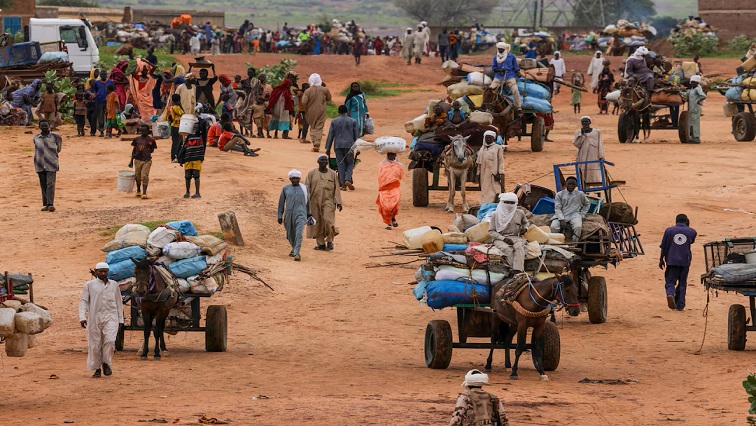
Conditions are worsening beyond North Kordofan. In neighboring West Kordofan, a cholera outbreak has intensified, with around 700 cases and 60 deaths reported as of mid-June. Limited access to clean water and healthcare, combined with insecurity and displacement, is driving the spread of the disease.
Elsewhere, attacks have also caused civilian casualties, including a strike on a fuel station in White Nile state that killed at least one person.The UN has urged all parties to comply with international law, calling for the protection of civilians and the restoration of safe humanitarian access.
Sudan has been gripped by conflict between the RSF and the Sudanese Armed Forces (SAF) for more than three years, creating a severe humanitarian crisis affecting over 30 million people.