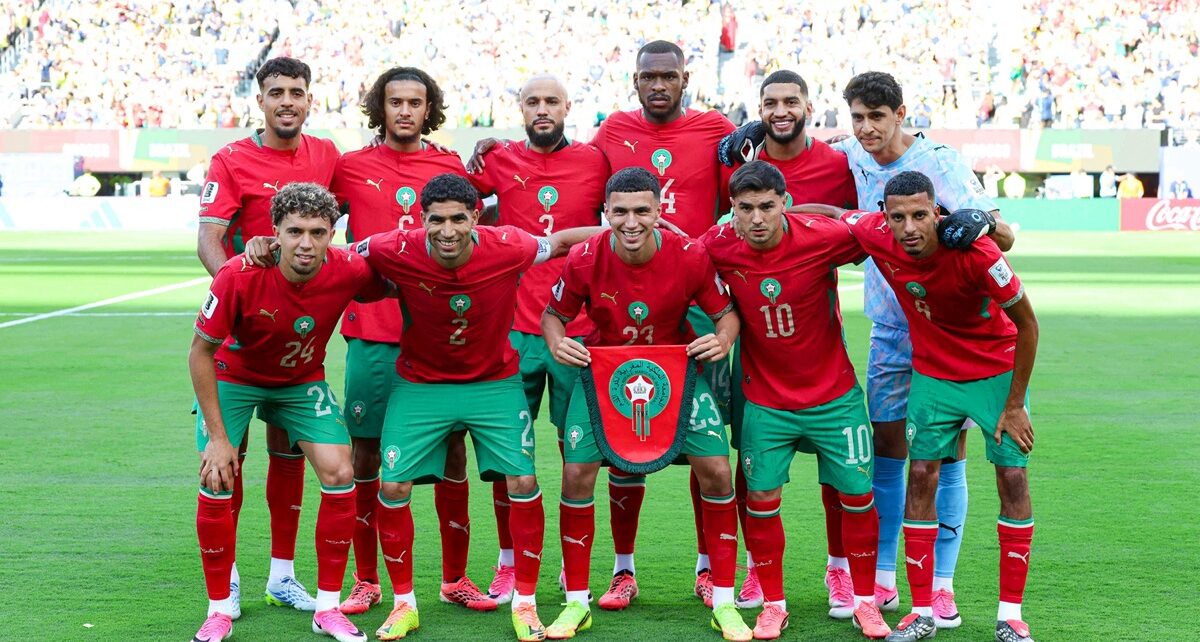
Attempts by some Western and Arab media outlets and football analysts to frame Morocco’s historic World Cup performances as a by-product of foreign-born talent miss the point of the country’s long-term investment in talents and infrastructure.
Morocco’s standing as a serious contender in this World Cup and its run to the semifinals of the 2022 World Cup was not an accident, nor was it an outsourced success. It was the result of years of strategic planning, investment in football infrastructure, and a clear vision by the Royal Moroccan Football Federation to build a competitive national team capable of standing out on the global stage.
Much of the criticism has focused on the fact that many Moroccan players were born or developed in Europe. But this argument overlooks that these players are Moroccan by heritage, genetics, identity, and choice.
They were eligible to represent European nations but chose Morocco, often turning down opportunities to play for some of the world’s most established football powers. That decision reflects belonging and commitment, not opportunism.
Migration, dual nationality, and diaspora identities are integral to the sport. Morocco is far from unique in this regard. Yet, when Morocco succeeds, the narrative shifts from praise to qualification, raising questions that are rarely applied with the same intensity to other nations.
More importantly, reducing Morocco’s achievements to diaspora contributions ignores the depth of its domestic football ecosystem. Morocco’s success is not built solely on players abroad. The country has consistently demonstrated its strength at local and continental levels.
Morocco won the African Nations Championship (CHAN), a tournament reserved exclusively for players active in domestic leagues. It also secured the Arab Cup with a squad composed of locally based players. These victories underscore the quality of Morocco’s homegrown talent and the effectiveness of its national development system.
At club level, Moroccan teams are a dominant force in African competitions. Clubs such as Wydad Casablanca and Raja Casablanca, Renaissance Berkane and les FAR have repeatedly reached the latter stages of the CAF Champions League and Confederation Cup, reinforcing the country’s status as a continental football powerhouse.
The suggestion that Morocco’s success is somehow less authentic because of its diaspora players raises broader questions. European football has long benefited from the talents of players with African roots. Many of these players have contributed to the success of European leagues and national teams. When those same players choose to represent their countries of origin, it is framed by some as a weakness rather than a strength.
Morocco’s model should instead be seen as a success story and an example of how to integrate diaspora talent with strong domestic development.
It reflects a confident national identity that embraces both local and global dimensions.