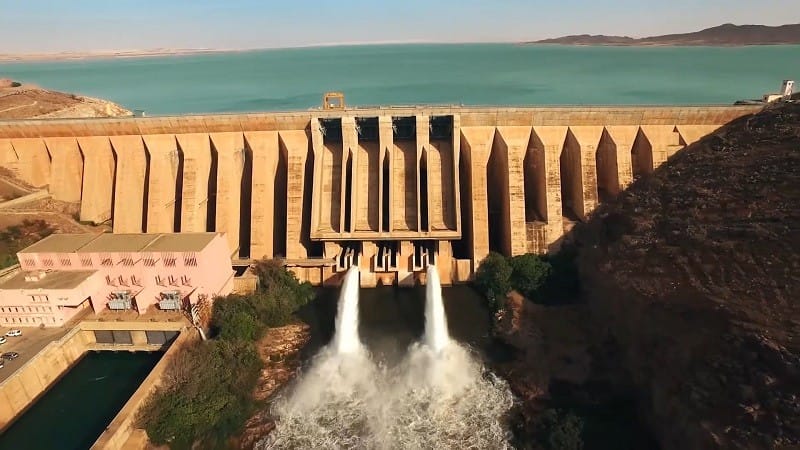
Morocco’s Equipment Ministry launched comprehensive upgrades to the Maghreb Dam Application (MORDAM) used for daily dam reservoir monitoring, aiming to enhance data reliability, strengthen anticipation, and support more reactive hydraulic governance. The Water Research and Planning Directorate pilots this digital transformation initiative modernizing hydrological data collection, consolidation, and analysis nationwide.
Morocco’s dam policy, initiated under King Hassan II and advanced under King Mohammed VI, represents fundamental leverage strengthening national water resilience through foresight, anticipation, solidarity, and territorial justice. In his July 2024 Throne Speech, King Mohammed VI conducted uncompromising assessment of deplorable water situations partly attributable to delays in programmed water policy projects.
The Sovereign recalled directives to competent authorities implementing urgent, innovative measures preventing water shortages plus optimal implementation of the 2020-2027 National Program for Drinking Water Supply and Irrigation. This program successfully guaranteed drinking water for all citizens and covered at least 80% of national irrigation needs despite chronic drought since the 2000s.
Morocco currently operates over 150 major dams with storage capacity exceeding 20 billion cubic meters, plus 140-150 small dams and hillside lakes. Since King Mohammed VI’s 1999 accession, the Kingdom pursues active policies with numerous dams under construction targeting 25 billion cubic meters capacity by 2027-2028, positioning Morocco among leading African nations in hydraulic potential. The budget increased from initially planned 115 billion dirhams to 150 billion dirhams.
Major interbasin water transfer projects connect Oued Laou-Larache and Loukkos with Oued Oum Er-Rbia through Oued Sebou and Bouregreg basins, exploiting one billion cubic meters previously lost to sea while guaranteeing balanced national water resource spatial distribution.
However, urgent restoration questions emerge for many 1960s-era structures facing inevitable silting, obsolete hydraulic equipment, and aging infrastructure requiring systematic surveillance detecting potential leak zones, deformation, and fissures.