The right to protest is sacred in Morocco. This right is protected by the people for the people. During the few past days, young Moroccans staged protests for better healthcare and education. But Morocco’s enemies, rivals and corrupt politicians have exploited the naïve demonstrators to serve their own political agenda. Their goal is to destabilize the Kingdom and put a brake on its growing competitive growth.
The young protesters of “Gen Z” movement criticize the government’s priorities of building stadiums instead of schools and hospitals. But they need to understand that development takes time. It’s a laborious marathon not a sprint. It requires patience, abnegation and perseverance.
Some people say why building stadiums when we need schools and hospitals. The truth is that the two are necessary. Building stadiums and hosting major competitions are strategic investments. When Morocco organizes Africa Cup of Nations or the World Cup, it’s not just about sport, it’s about the economy, soft power, and visibility for the country.
A stadium means millions of direct and indirect jobs for workers, engineers, architects, suppliers, companies of security, cleaning services and catering. An international competition means tens of thousands of foreign visitors coming in to spend money in Moroccan hotels, restaurants, cabs and shops. It means new tax revenues for the State. And above all, booster of foreign direct investment.
When the world sees Morocco organizing CAF Africa Cup of Nations 2025 and the FIFA World Cup 2030, they will see the country’s modern stadiums, transport infrastructures and hotels. Then more investors will come in. They will open factories and create even more jobs. This is exactly what allows the State to get more profit margin gains to build more schools, more hospitals and improve social services.
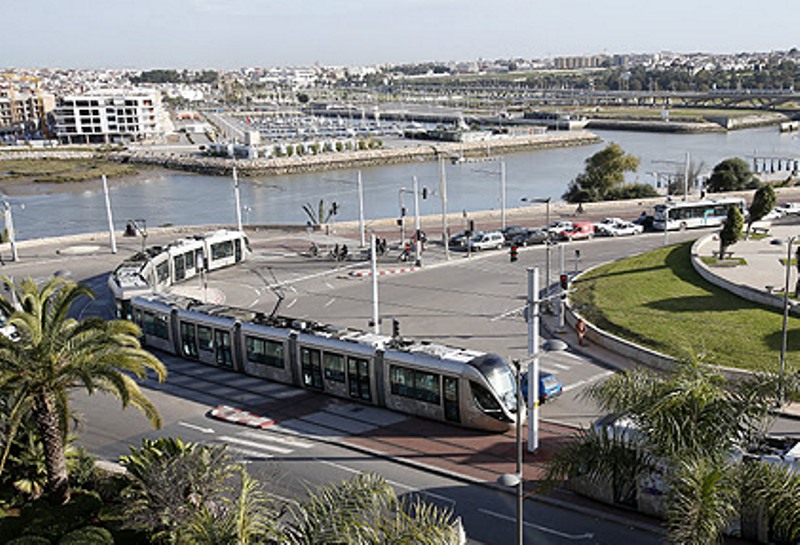
It is also important to understand that revenues do not fall from the sky. No pain, no gain. To finance its social policies, Morocco needs to generate wealth. And this wealth comes from investment, tourism, trade and market confidence. That’s why Morocco has chosen to invest in stadiums, ports, railways and Internet networks. These are economic engines, and without engines, no sector or activity can operate.
25 years ago, Morocco didn’t look like it does today. Many villages were without electricity. The country’s ports and airports were not ready to compete with the world. Its international visibility was blurred, but step by step and thanks to the Royal vision and strong determination, the Kingdom has been transformed.
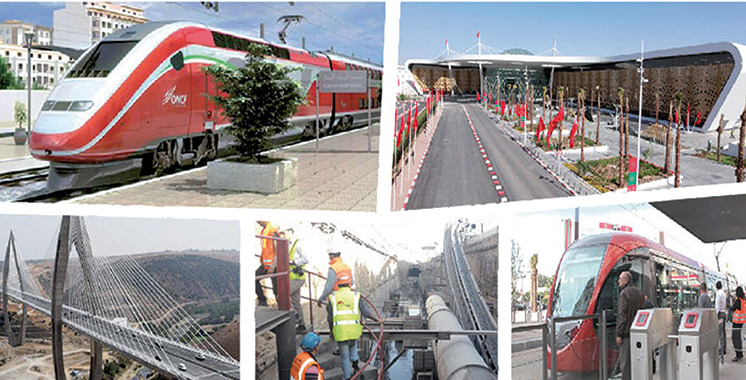
Today, Tangier-Med is the leading port in the Mediterranean and Africa. Al Bouraq high-speed train is the first in the continent. Highways are connecting almost every region. Noor Ouarzazate is one of the world’s largest solar power plants. In the industrial zones of Nouaceur, Tangier and Casablanca, Moroccan engineers are producing aeronautical parts and components for Airbus, Boeing, Safran and other world leaders. The African Nations Cup 2025 and the 2030 World Cup will put the global spotlight on Morocco.
But development isn’t just about infrastructure, it’s also about the daily lives of Moroccans. In a quarter of a century, rural electrification has risen from 18pc in 1995 to almost 100% today. Illiteracy, which affected one Moroccan in two in 1990, has fallen to 24.8 pc in 2024. Poverty has also receded. The multidimensional poverty rate fell from 11.9pc in 1994 to 6.8pc in 2024.
Thousands of families are living better, eating better, and gaining access to healthcare and education. Modest families have become homeowners thanks to social housing. Banking has integrated thousands of citizens into the formal economy. And despite the crises, Moroccan dirham has remained stable.
In terms of security, at a time when terrorism hit hard the region, Morocco has been able to protect its people thanks to a comprehensive prevention and intelligence strategy which has been recognized internationally. Today, the Kingdom is the safest country in the region.
Many Moroccan ministers & diplomats, prominent physicians, consultants, pilots, businessmen, inventors…have all been educated in public school. They are inspirational success-stories. This means that success is possible in Morocco.
Let’s look at the situation in Morocco’s neighboring countries. Algeria, with its oil and gas, could have been an African power, but its petrodollars were not invested in socioeconomic development as in Gulf countries but squandered on lost causes. The result is massive unemployment, battered economy, dependency, oppression and lack of freedom. In this country, controlled by the army, demonstration forbidden. Desperate young Algerians are fleeing their country in makeshift boats. Even one of the Algerian top Generals has deserted to Spain. Businessmen and investors are also leaving the country massively.
Oil-rich Libya has been living in institutional instability since 2011. The UN is still trying to reunify its institutions and organize elections. Oil production is picking up from time to time, but governance remains fragile and the people are paying the price.
This is exactly where Morocco stands out. While its neighboring country has wasted oil-gas revenues, Morocco has taken a pathway, not the easy way, moving forward cautiously by diversifying its economy thanks to the far-sighted Royal vision and collective effort.
Young people have the right to want more, but their demands must be expressed in accordance with the law and regulations. Demonstrations and marches must receive prior authorization before proceeding. There are red lines that must not be crossed: national unity and the inviolability of the Monarchy because Monarchy is the guarantor of the Kingdom’s stability.
Above all, let’s not be naive. Algeria bans all demonstrations on its territory, but incites young Moroccans to take to the streets not out of solidarity, but because they see that Morocco is making progress and succeeding where they have failed.
Morocco is not perfect, and it never will be, because perfection is divine, but it is advancing step by step, with patience, self-confidence and optimism in the future. If Moroccans stay united, no one can stop their march towards a better future. Let’s not put the cart before the horse!