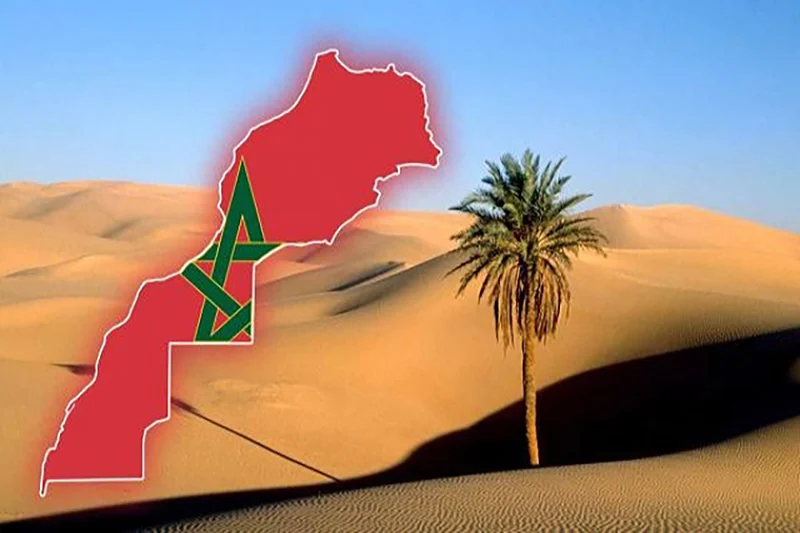
The Sahara conflict, which has been locked in a stalemate for five-decades due to Algeria’s stubbornness, is finally edging closer to its final stage driven by the growing international recognition of Morocco’s autonomy plan offered for the territory under its sovereignty.
According to “Africa Intelligence” news platform, the Autonomy plan is on the table of close-door negotiations from Washington to Algiers, while the UN Chief Antonio Guterres has warned against the fallout of continuing deadlock and called for finding an urgent political solution to the Sahara issue.
On the eve of a new UN Security Council resolution, the UN Secretary General actually presented to the UN General Assembly a report on the Sahara, offering an account that is both factual and alarming. While it notes significant diplomatic shifts, with Morocco’s approach gaining growing international support, the document warns of a stalled political process and the risk of escalation, as well as a worsening humanitarian crisis in the Tindouf camps. António Guterres called for an urgent solution, warning that the deadlock cannot last as the dispute nears its fiftieth year. The seven-page document, just made public, covers the period from July 1, 2024, to June 30, 2025, and paints a grim picture of a conflict that has resisted decades of mediation efforts. The report provides a largely factual account of the events during that period, along with conclusions and recommendations.
Diplomatic developments, however, were marked by fresh endorsements of Morocco’s autonomy plan: France in July 2024, followed by the United Kingdom in June 2025, joining a trend already set by the United States and Spain.
According to analysts, only U.S.-led efforts could break the deadlock.
In this connection, U.S. Presidential advisor Massad Boulos discussed the Sahara issue with Algerian officials during his latest visit to Algeria within the frame of a Maghreb tour. He reiterated then U.S. recognition of Morocco’s sovereignty over its entire Saharan territory and support for the Autonomy Plan as the ONLY realistic solution to the decades-long conflict.
In coordination with its major allies and veto holders at the UN Security Council, France and the United Kingdom, the United States is currently intensifying its efforts for the resolution of the Sahara conflict on the basis of the Moroccan Autonomy plan.
Ahead of the October meeting of the UN Security Council, an American delegation of diplomats and military officers travelled to Laayoune, southern Morocco, where they met with MINURSO leadership amid reports that the UN Mission will be replaced by another body tasked with advancing the Autonomy plan, ditching definitively the self-determination referendum.
After 34 years and billions of dollars spent, no progress has been made by the MINURSO and the UN-led political process is stalled due to the disengagement and procrastination of Algeria and the Polisario.
According to experts, time has come to end MINURSO that, at best, does nothing and, at worst, preserves the conflict. The establishment of a new Mission is deemed as a major strategic breakthrough and victory for Morocco and international allies, particularly the United States and France to definitively close this five-decade-long conflict.
The referendum, which was never held, was used as a political leverage by Polisario and Algeria to keep the conflict open to undermine Morocco’s territorial integrity and regional stability.
The autonomy plan offers a pragmatic solution, taking into account the new reality on the ground: a Moroccan Saharan territory, enjoying stability, inclusive growth and witnessing a major socioeconomic development, gateway to investment to African markets.
While Algeria continues to refuse Morocco’s calls for peace and seeks
prolongation of a conflict undermining regional stability, Morocco, supported by its allies, offers autonomy solution conducive to shared development, security and stability.