Algerian President Abdelmadjid Tebboune’s pledge to double public salaries rings hollow against the backdrop of relentless money printing and fiscal policies that are steadily eroding the dinar’s value.
Any nominal wage gains will be halved in real terms in a country where the black market determines the value of the currency depending on offer and demand.
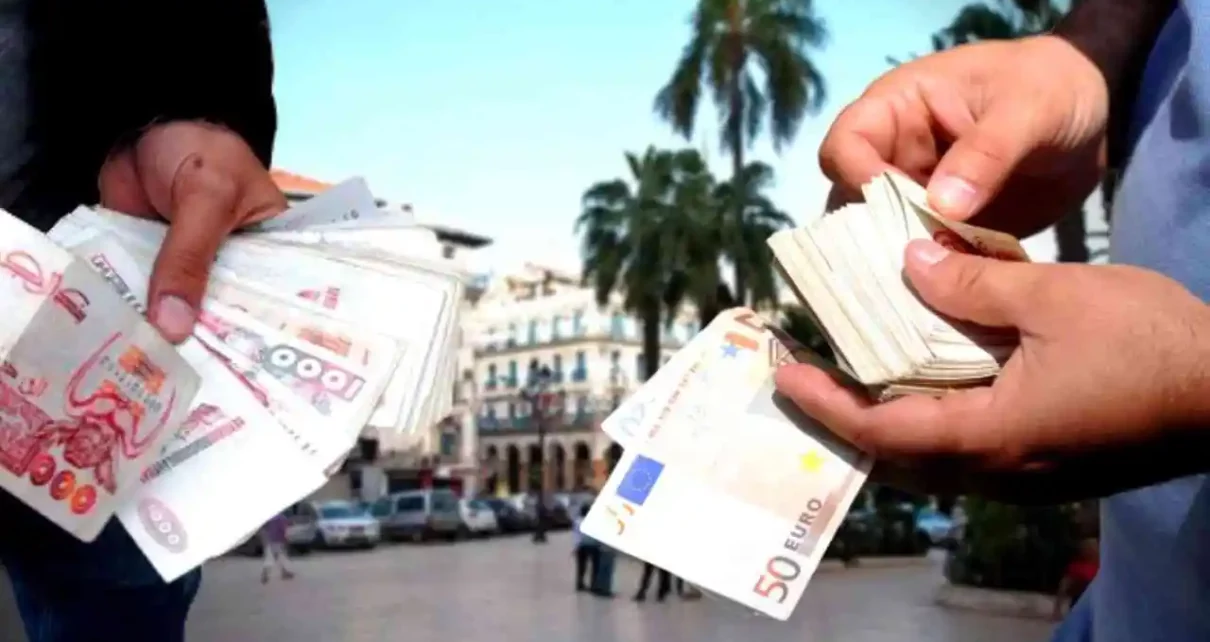
On November 4, street changers in Algiers’ Port-Saïd square bought the US dollar at 243 dinars and sold it at 246, according to sources in Algiers. The euro traded near 278.
Officially, the Bank of Algeria listed the dollar at 135.91 and the euro at 152.07. The gap exceeds 80 percent.
Ordinary Algerians must change money at the parallel rate. The government’s “official” rate exists mainly for statistics and speeches.
The 2027 budget rests on an assumption of 131 dinars to the dollar through 2029.
That rate is already obsolete on both the official and parallel markets.
Meanwhile, the International Monetary Fund has linked the widening parallel premium directly to central-bank financing of the Treasury.
When the Bank of Algeria creates dinars to cover deficits, those unbacked notes flood the economy and flee into hard currency.
Algeria spends nearly two dinars for every dinar it collects. Public debt is projected to climb sharply.
The authorities refuse the IMF’s repeated advice to let the official rate adjust, end monetary financing of the state, and impose genuine fiscal discipline.
Doing so would raise the cost of imports in a country where import restrictions led to shortages of basic goods, such as wheat, milk powder, medicines.
Just as local elections approach, salary hikes are dangled as political gifts by a regime that has nothing to offer its disenchanted youth but anachronistic rhetoric.