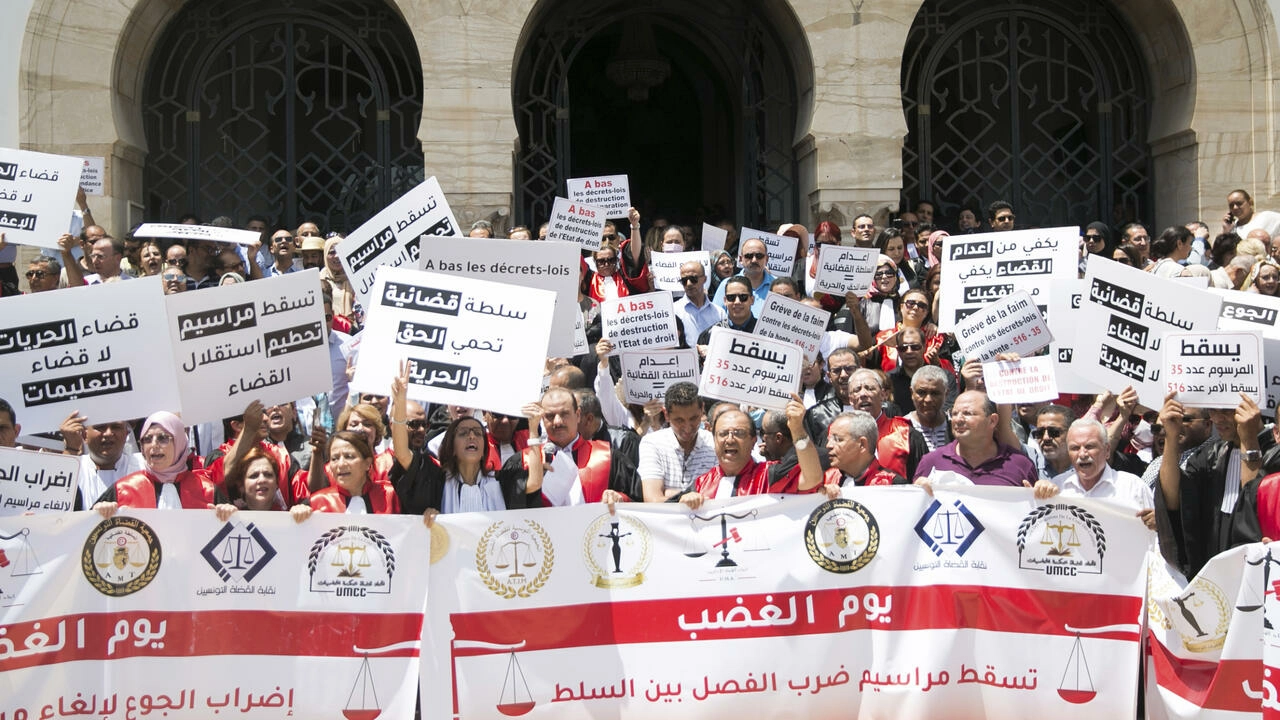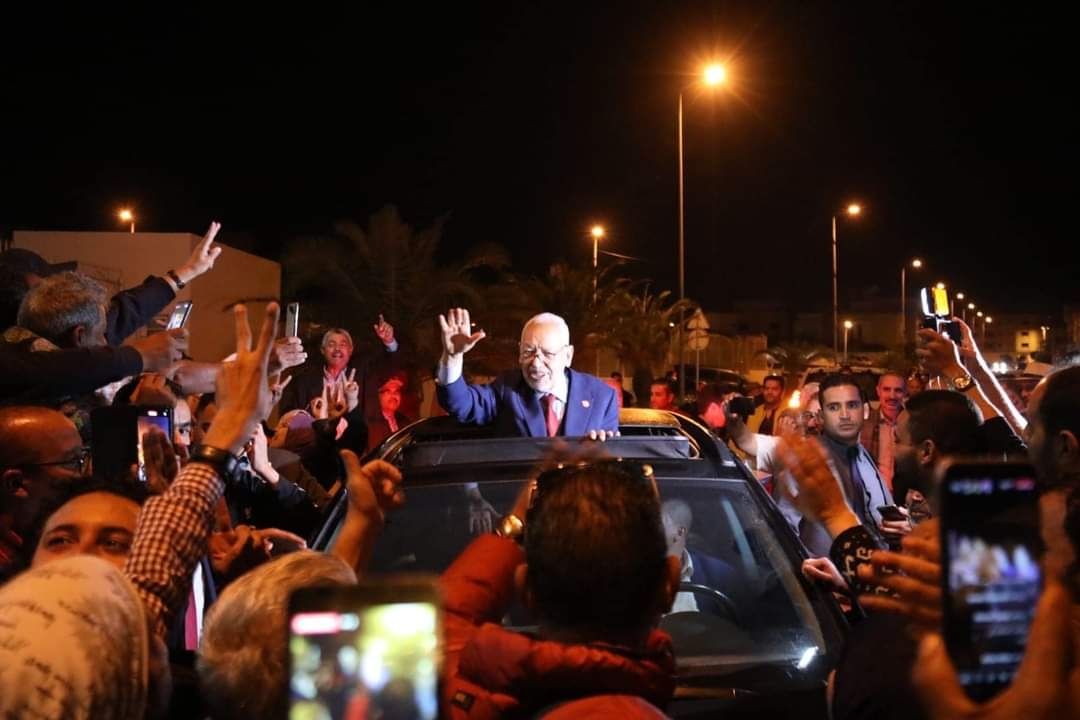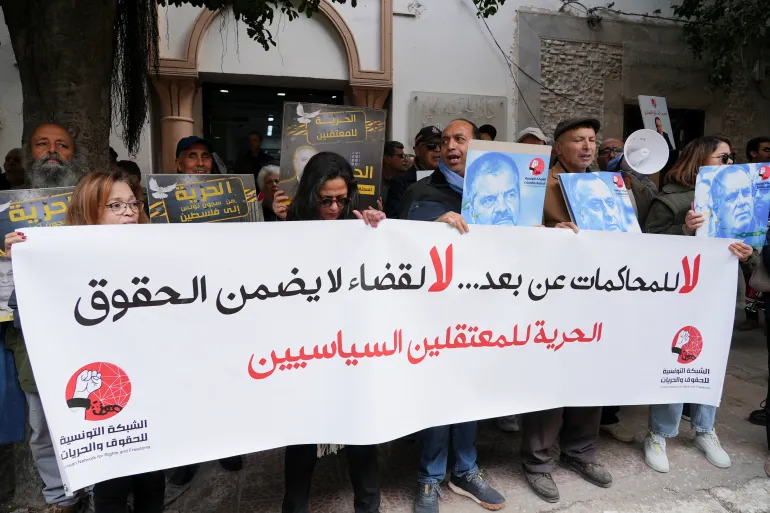
Human Rights Watch has denounced the continuing unfair Tunisian authorities’ prosecution of political opponents and human rights activists to muzzle them.
Tunisian courts have sentenced lately eight human rights defenders to prison terms and heavy fines for charges connected to their human rights work, including two prominent women who were handed harsh sentences, said HRW in a statement issued Tuesday.
The Human Rights NGO cites the case of Sihem Bensedrine, the former president of the Truth and Dignity Commission, who has been sentenced to 25 years in prison and a joint fine with several other defendants of about $600 million.
For her part, Saadia Mosbah, president of the antiracism association Mnemty (“My Dream” in Tunisian Arabic), was handed eight years in prison and a fine of about $41,400. The court sentenced five other Mnemty members to prison terms ranging from one to three years, some of which were suspended.
“The harsh prison sentences and astronomical fines are another devastating blow to human rights defenders and all those fighting to preserve what remains of Tunisia’s civic space,” said Bassam Khawaja, deputy MENA director at Human Rights Watch.
These latest convictions come amid a drastic closure of civic space and increasing attacks on civil society groups and members in Tunisia, said HRW, calling on Tunisian authorities to cancel the convictions, free those detained, and drop abusive prosecutions against rights defenders.
Bensedrine, 75, appeared before the court on June 25 in two separate cases. Her conviction is linked to her role from 2014 to 2018 as head of the Truth and Dignity Commission, which worked to uncover accountability for decades of human rights abuses.
Tunisia’s Transitional Justice law grants immunity to the commission members and states that members and officials who have performed a duty at the commission’s request “shall not be held liable for the content of reports, conclusions, opinions, or recommendations made within the scope of this law.”
In a 2025 report, the UN Committee on the Elimination of Racial Discrimination recommended that Tunisia review its legislative framework to ensure space for civil society organizations, including those working with ethnic minority groups, asylum seekers, refugees, and migrants.
HRW called on Tunisia’s international partners, including the European Union, to press Tunisian government to end the ongoing persecution of human rights defenders and protect civic space.