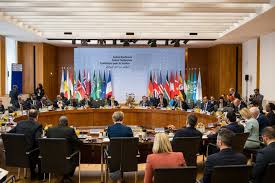
On April 30, 2026, global and regional actors meeting in Berlin adopted a set of guiding frameworks known as the “Berlin Principles”, aimed at bringing an end to the protracted three-year conflict in Sudan. The agreement was endorsed by a broad coalition including the United States, United Kingdom, Germany, France, the European Union, and the African Union, alongside regional states including Egypt, Ethiopia, and Saudi Arabia.
Speaking at the summit, U.S. Senior Advisor for Arab and African Affairs Massad Boulos said the gathering delivered a unified message that the war must end immediately, stressing that there is no military solution to the crisis.
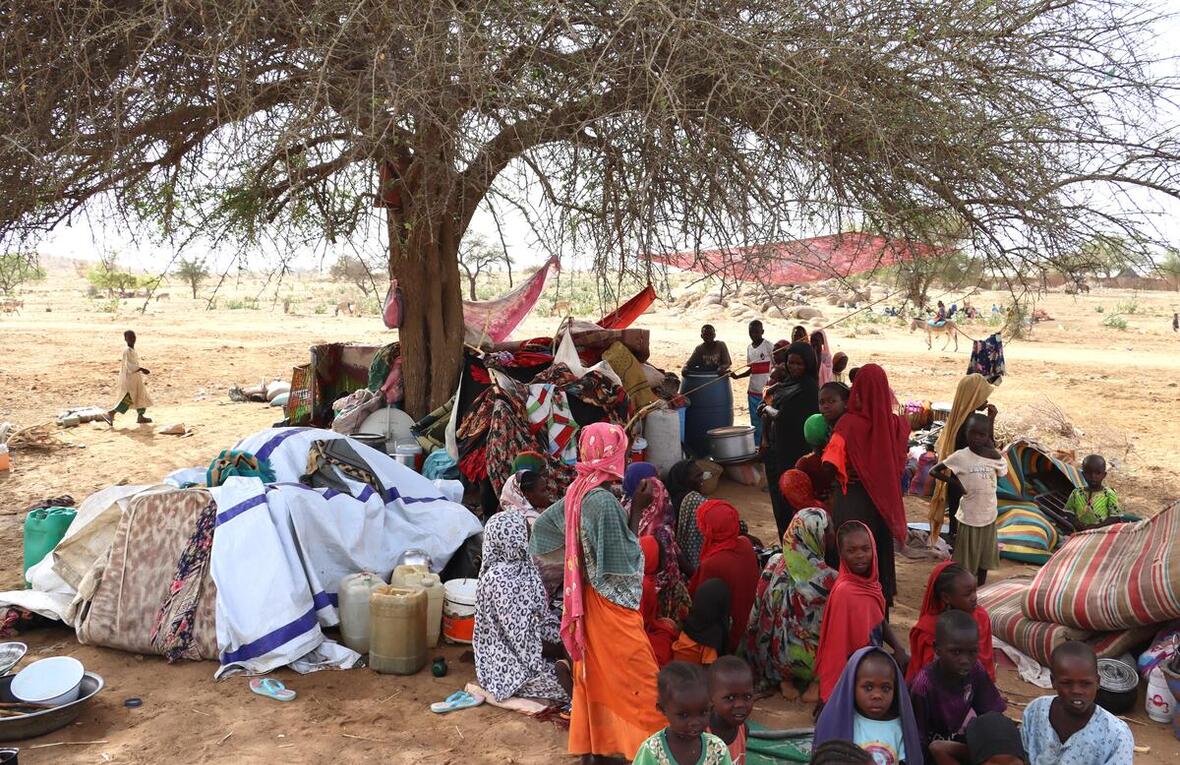
The principles call for an immediate humanitarian truce, followed by a sustained ceasefire monitored by international and regional partners. They also demand unrestricted humanitarian access across borders and conflict lines to address escalating displacement and humanitarian needs.
The declaration further urges an end to all external financial, logistical, and military support to warring factions, warning that such assistance risks prolonging the conflict. Signatories strongly condemned attacks on civilian infrastructure, including hospitals, schools, and energy facilities, insisting that such assets must remain protected under international law.
The framework also highlights accountability measures, stating that allegations of war crimes and crimes against humanity must be investigated to ensure durable peace. It additionally commits international partners to support Sudan’s economic recovery and ongoing humanitarian response efforts.
The adoption of the Berlin Principles marks a coordinated diplomatic push to shift Sudan’s trajectory from conflict toward a negotiated political transition and civilian-led governance.