France’s national anti‑terrorism prosecutor has publicly identified Algeria as one of three foreign states under investigation for suspected acts of “state terrorism,” a move that casts renewed scrutiny on the North African country’s authoritarian political system and its treatment of opponents beyond its borders.
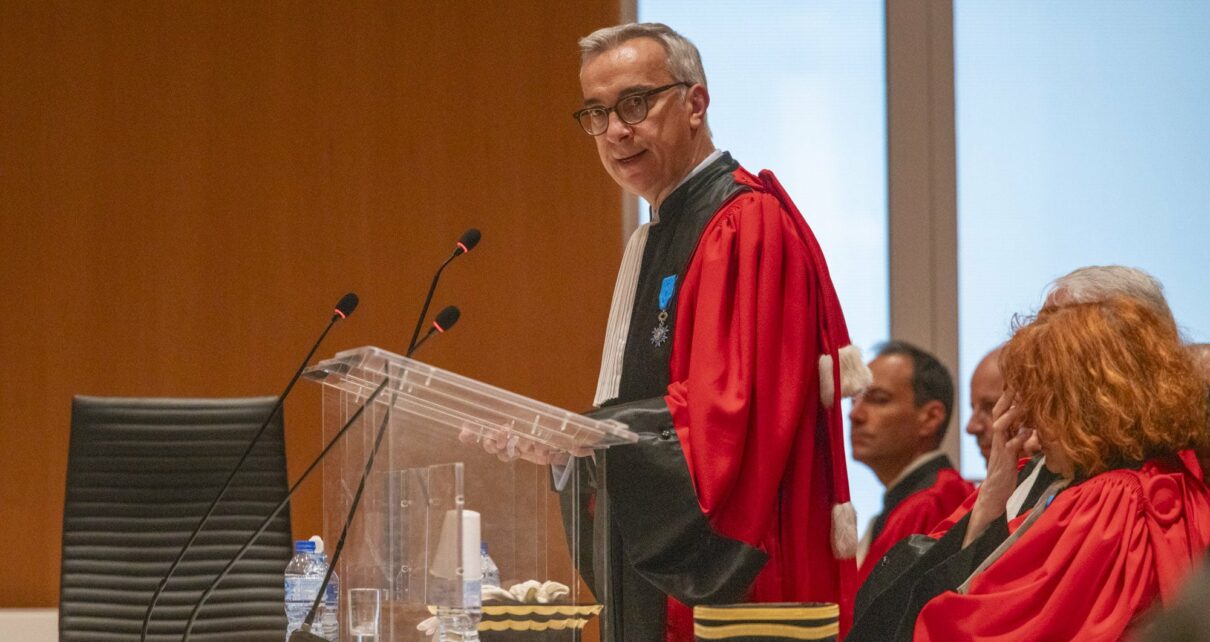
Olivier Christen, head of the National Anti‑Terrorism Prosecutor’s Office (PNAT), told Franceinfo that eight judicial procedures for state‑linked terrorism were currently open, implicating Iran, Russia and Algeria.
Three cases concerned Iran, while five others were “mainly linked to Russia and Algeria,” he said.
“These are not necessarily actions targeting the French population as a whole,” Christen said. “They are actions aimed primarily at political opponents who have sought refuge on French territory.”
The comment placed Algeria alongside governments widely accused by Western countries of using coercion, intimidation and violence abroad to silence dissent.
The announcement reflects a hardening stance by French judicial authorities toward what they see as a deliberate policy by authoritarian states to pursue critics overseas, bypassing international law and violating the sovereignty of host countries.
Algeria, where political power is held by the army and dissent is routinely criminalized, has long been accused by rights groups of repressing journalists, writers and activists at home.
French investigators now appear to be examining whether that repression has extended into Europe through covert operations directed at exiled opponents.
The explicit reference to Algeria marked a shift away from the cautious diplomatic language that has traditionally characterised Paris–Algiers relations.
At the center of the French probe is the alleged kidnapping of Algerian dissident Amir Boukhors, known as Amir DZ, who was abducted on April 29, 2024, in Seine‑et‑Marne. Boukhors, a prominent online critic of Algeria’s ruling system, was reportedly lured into a trap, drugged and held captive in an operation that investigators describe as highly organized.
French judicial authorities view the case as a potential illustration of how a rogue state may deploy security services or proxies to neutralize opponents abroad, even when they are under the protection of another country’s legal system.
Involvement of Algerian diplomats
The case escalated further when a serving Algerian consular official was placed under formal investigation and detained in France in April 2025 on suspicion of involvement in the operation, according to judicial sources.
The decision to pursue charges against a diplomat underscores the seriousness with which French authorities view the allegations.
By proceeding despite the diplomatic fallout, magistrates have signaled that they consider the affair part of a broader, state‑directed strategy rather than the actions of rogue individuals. The case has become emblematic of concerns that Algerian state institutions may be operating outside legal norms when dealing with critics.
French officials also point to a wider pattern of behavior they describe as incompatible with the rule of law, including Algeria’s persistent refusal to accept the return of its nationals subject to deportation orders from France. The issue has repeatedly strained bilateral relations and is seen in Paris as another example of selective compliance with international obligations.
The French investigations come as Algeria faces mounting international criticism over its regional conduct, including its backing of armed movements and its alignment with states accused by Western governments of destabilizing activities such as Iran.
In Washington, lawmakers and Senate members have moved to label the Polisario Front a terrorist organization, a development that would further spotlight Algeria’s role as the group’s principal sponsor.