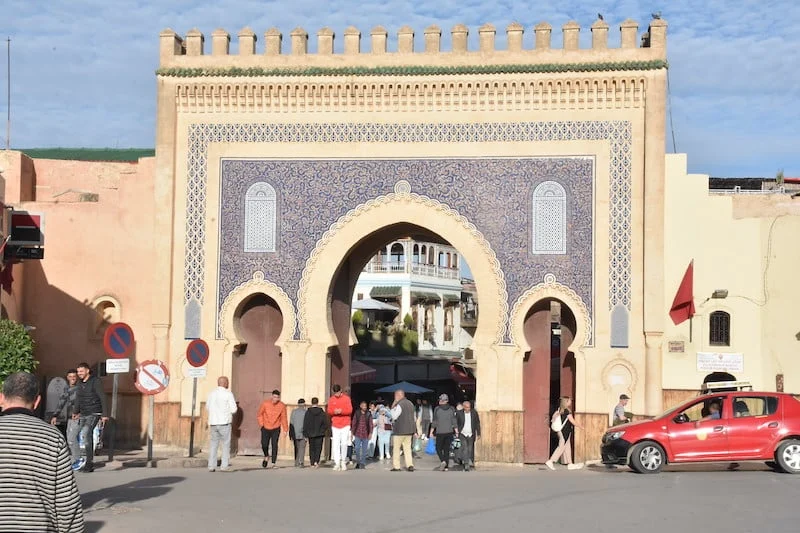
The ancient imperial city of Fez has introduced a new weekly cultural programming initiative at its iconic Bab Boujloud square, commonly known as the Blue Gate, as part of a broader effort to sustain tourism momentum and showcase the city’s living heritage throughout 2026. The initiative transforms one of Morocco’s most photographed landmarks into a regular stage for traditional performing arts, bringing local artisans, musicians, and cultural practitioners into direct contact with both domestic and international visitors.
Bab Boujloud, constructed in 1913 at the main entrance to Fes el-Bali — a UNESCO World Heritage medina — has long served as the symbolic threshold between Fez’s ancient past and its contemporary life. Its distinctive exterior blue tilework, a homage to the city’s famed cobalt pottery tradition, and its interior green tiles representing Islam, make it one of the most recognizable monuments in the Arab world. The new programming initiative leverages this setting to deliver curated weekly performances that draw on the city’s deep well of Andalusian, Sufi, and Amazigh artistic traditions.
The move is designed to complement Fez’s established calendar of international events, including the Festival of World Sacred Music — expected at its 29th edition in June 2026 — by extending high-quality cultural experiences beyond the festival season. Local authorities and tourism stakeholders see the initiative as a means of redistributing visitor flows across the year, reducing seasonal concentration while boosting local artisan revenues.
For a city that serves as Morocco’s spiritual and intellectual capital, home to Al Quaraouiyine — one of the world’s oldest continuously operating universities — the initiative reflects a deliberate strategy to leverage cultural identity as an economic driver, positioning Fez as a year-round cultural destination ahead of the 2030 FIFA World Cup.