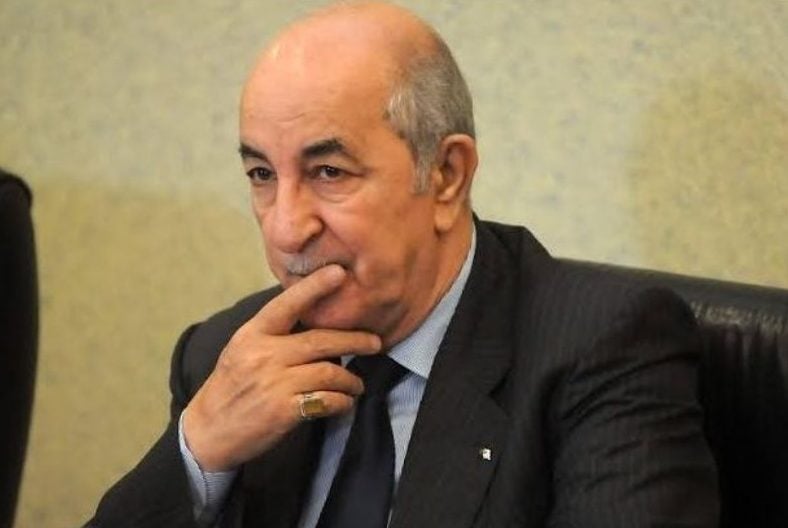
President Abdelmadjid Tebboune has once again reached for deflection tactics in the face of Algeria’s growing diplomatic isolation after its Sahara fiasco, economic woes, and fragile social peace.
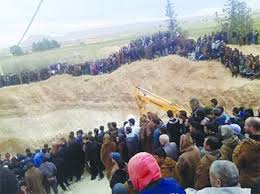
In this context of failing domestic policies, Tebboune held an international conference on “colonial crimes in Africa.” It’s a move designed to stir nationalist sentiment and redirect public anger away from the country’s dysfunctional economy.
But while the president rails against France, he simultaneously spins a fantasy about Algeria’s present and future, one built on absurd statistics and economic illusions.
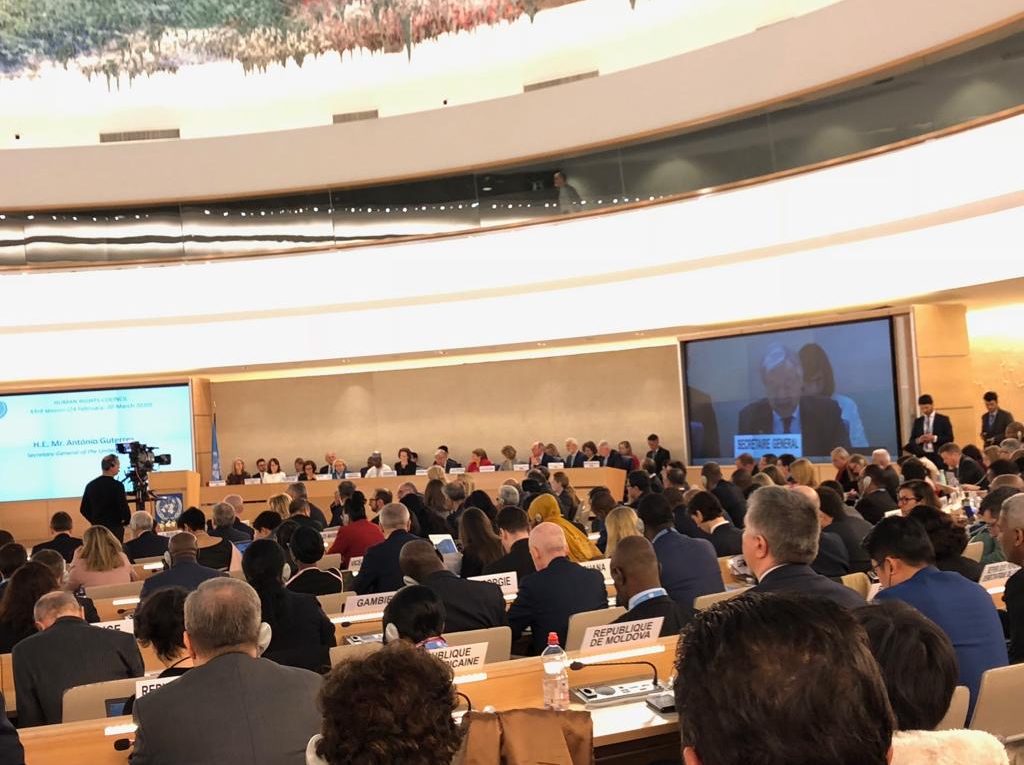
At the UN General Assembly, Tebboune had boasted that Algeria would soon desalinate 1.3 billion cubic meters of water per day, a figure so astronomical that experts joked it could drain the Mediterranean in a year.
That anecdote came to represent a governance style in Algiers based on inflation, both at the economic level and political discourse. This wasn’t an isolated slip. He has claimed 20% economic growth, a GDP of $225 billion (versus the World Bank’s $190 billion), and billions recovered from corrupt oligarchs, without offering verifiable evidence.
Meanwhile, the dinar has collapsed to nearly 290 per euro on the informal market as of November, and foreign reserves have plunged from $194 billion in 2014 to about $68 billion today. Yet, Tebboune insists Algeria is on the brink of an economic renaissance, touting mega-projects like Gara Djebilet and Bled El Hadba as lifelines. Analysts call this narrative delusional.
Instead of confronting these crises, Tebboune resurrects the colonial grievance card. He accuses France of “pillaging” Algeria, a claim that wilfully ignores history’s inconvenient truths. In 1962, France left behind an infrastructure network that included 54,000 km of roads, 4,300 km of rail, modern ports, hospitals, schools, and even oil fields discovered and developed at enormous cost. As historian Bernard Lugan notes, “Everything that existed in Algeria in 1962 had been paid for by French taxpayers.”
Today, Algeria imports tomato paste, chickpeas, and semolina for couscous. Its only notable agricultural exports are dates, which obviously cannot offset its dependence on foreign dairy products. This is hardly the legacy of a country “pillaged” by ruthless men in uniform into poverty.
Tebboune’s dual strategy, inflate the present, weaponize the past, may buy time, but it cannot mask the truth that Algeria is struggling. The president’s obsession with colonial conferences and fantastical desalination projects underscores a leadership adrift, clinging to illusions while the economy sinks deeper into crisis.
As Charles de Gaulle once said of Algeria: “France cannot remain indefinitely attached to this rock.” Today, Algeria cannot remain indefinitely attached to myths and persistently living in an imagined past indulging in colonial victimhood.