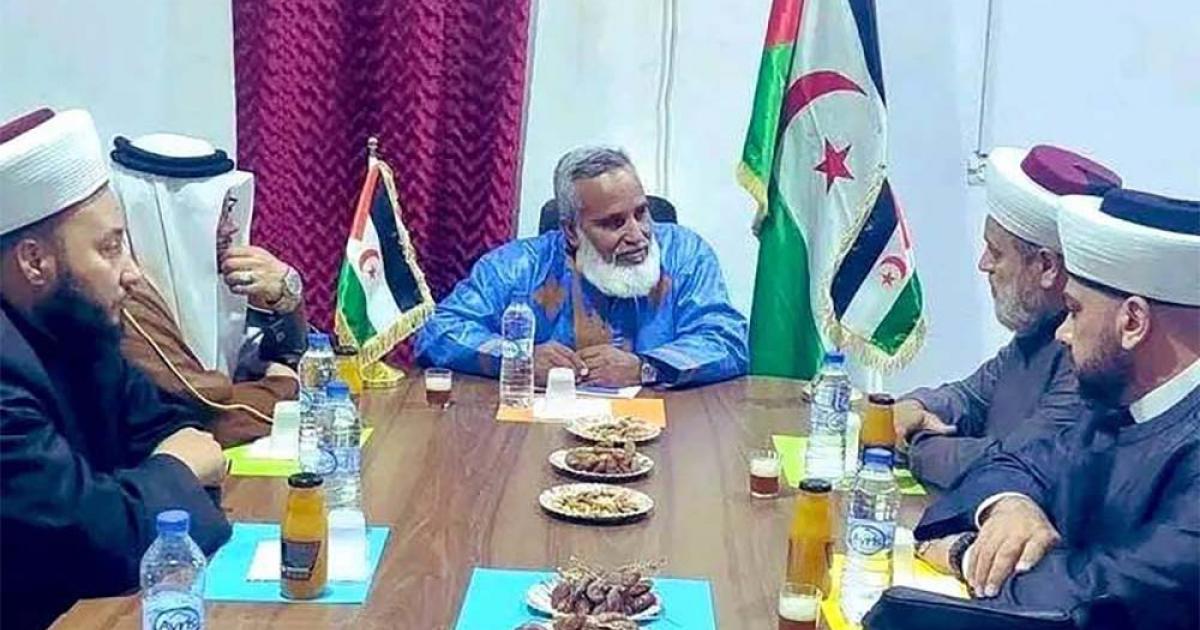
A recent so-called “academic” meeting in Tindouf between senior Iranian officials and Polisario separatists has lifted the veil on the troubling reality of ties in the open between the Polisario, Iran, and Hezbollah forged in full connivance with Algeria.
But can a drowning man save another from sinking? This question looms large as the Maghreb faces renewed attempts to destabilize its security architecture.
According to Moroccan daily Al Ahdath Almaghribia, the meeting- initiated by Algeria and disguised as an intellectual exchange -signals Tehran’s persistent ambition to use the Maghreb as a gateway for exporting Shiite ideology and its militant proxies deeper into Africa.
Despite Hezbollah’s waning influence in Lebanon and Syria’s pivot away from its former Iranian-Algerian axis, Algiers and Tehran appear determined to engineer a “new Hezbollah” in Tindouf.
Polisario leaders have amplified this narrative, publicizing the presence of Iranian clerics such as Sheikh Hassam El Ali, Sheikh Moussa Erravi’i, and Sheikh Khalev Darouich. This overt display of alignment raises alarms far beyond North Africa.
American think tank, Foundation for Defense of Democracies (FDD), recently warned that the Polisario-Iran rapprochement risks replicating the disastrous Yemeni and Lebanese models.
Its analysis underscores that Algeria’s sponsorship of a proxy entity in Morocco’s Sahara serves one purpose: creating a permanent zone of instability in Africa and at Europe’s doorstep.
The warning echoes revelations by German daily Die Welt, which exposed a phone call between Mustapha Mohamed Lemine, a former Polisario representative in Syria, and a Hezbollah operative. In that conversation, Lemine pledged allegiance to Iran’s so-called “axis of resistance,” stretching from the Golan Heights to the Moroccan Sahara via southern Lebanon and Gaza.
More disturbingly, he requested Hezbollah’s military assistance to attack Israel’s diplomatic mission in Morocco, a stark reminder of the Polisario’s terrorist inclinations.
This is not an isolated case. Polisario leaders, emboldened by Algerian backing, have repeatedly called for terror operations against Moroccan cities.
Reports even suggest Algeria sought Iranian drones for Polisario militias, further cementing the nexus between state sponsorship and transnational terrorism.
Spanish intelligence has voiced growing concern over Sahrawis in Tindouf, some with ties to terror networks in the Sahel, posing a significant security risk to Spain and Europe.
These developments strengthen calls from US Congressmen to designate the Polisario as a terrorist organization.