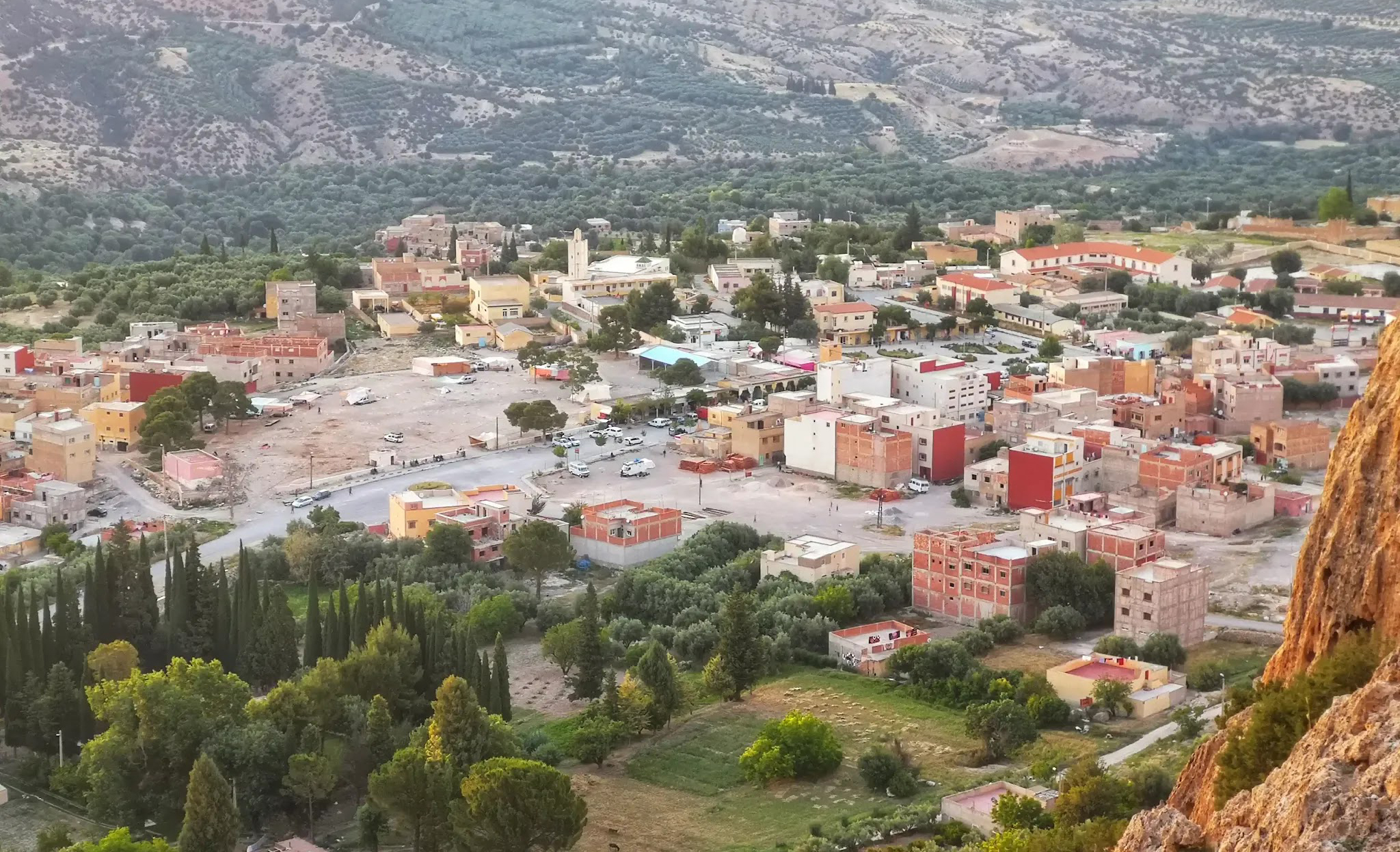
Emerging rural centers represent Morocco’s strategic response to demographic challenges facing countryside communities experiencing drought, water stress, and accelerating rural exodus effects, aiming to strengthen territorial resilience while supporting genuine rural middle class development.
This evolving concept addresses rural depopulation dramatically accelerated by climate change and seven consecutive drought years. Developing authentic rural middle class emerged as a major orientation in the Royal Speech of October 12, 2018.
The Generation Green 2020-2030 strategy adopted this objective, targeting 400,000 households accessing middle class status, stabilizing 690,000 households already belonging, and extending social protection to over three million farmers. Climate warming, faster and more relentless than anticipated, visibly challenged these objectives.
This goal includes creating new young entrepreneur generations, particularly through mobilizing and valorizing one million hectares of collective lands and training 150,000 youth in agricultural and para-agricultural professions. Within this logic, emerging rural centers (CREM) became one of Morocco’s most ambitious territorial development bets within recent years.
By late November 2022, rehabilitation studies for emerging rural centers were completed for twelve centers across kingdom regions, targeting progressive expansion toward seventy-seven centers initially. According to RGPH 2024 results, Morocco counts 33,189 douars and small rural centers housing 3.6 million inhabitants.
Public policies long reduced rural development to agricultural development alone, improving crops, irrigation, and rural tracks while neglecting housing, services, culture, or leisure. This approach no longer meets national needs. Rural areas cannot remain simple agricultural reserves but must become complete living spaces with services, jobs, and diversified activities.
The national emerging rural centers program, launched in 2017, identified seventy-seven priority centers. A second phase is planned for 2025, with 2.8 billion dirhams allocated for developing thirty-six centers. The IHYAE program, supported by French Development Agency and European Union, finances revitalization through 2027.
These centers aim creating small rural poles offering services, employment, and decent living conditions, preventing residents from leaving for large cities. Success occurs when farmers supplement incomes, young graduates establish as nurses, teachers, or artisans, and women transform informal activities into declared businesses with regular clientele.