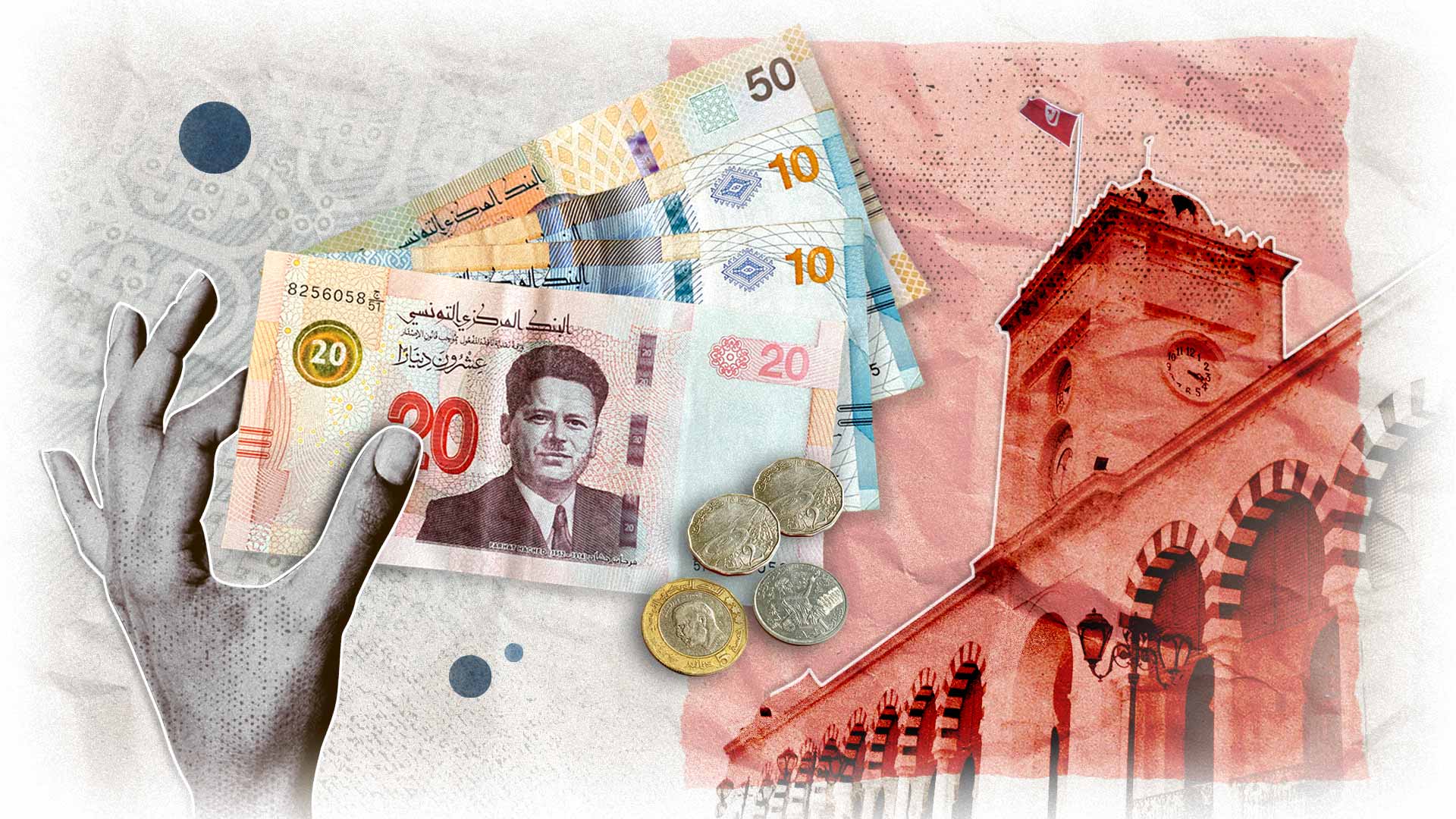
The Tunisian government plans to seek $3.7 billion in direct financing from the Central Bank of Tunisia (BCT) in 2026, after borrowing $2.3 billion this year to cover urgent debt repayments.
Total financing needs are projected at 27 billion dinars, with plans for a 7 billion dinar sukuk issuance, a first for the country. Public spending is expected to rise from 59.8 to 63.5 billion dinars, driven by wage hikes and a new 1% wealth tax on assets above 5 million dinars.
Economists caution that repeated recourse to central bank funding would effectively monetize the deficit and fuel inflation, while weakening the dinar and draining liquidity from banks.
Tunisia’s public debt hovers near 81% of GDP, growth stagnates at 1%, and inflation averaged 7.4% in 2024. With IMF talks stalled since 2023, the state appears locked into a cycle of domestic borrowing that Fitch Ratings says could push sovereign exposure in banks to over 20% of sector assets.
The financial squeeze coincides with violent protests in Gabes, where thousands have marched against decades of phosphate pollution. Recent gas leaks hospitalized over 120 residents, including schoolchildren, sparking clashes with police and army deployments. Protesters demanded the dismantling of the state-owned Tunisian Chemical Group’s complex, accusing authorities of ignoring health risks for the sake of export revenues.
The unrest, the largest since Kais Siaed took power, underscores a broader risk: social volatility fueled by economic fragility. With unemployment high, subsidies under strain, and food prices rising, Tunisia faces a combustible mix of environmental grievances and fiscal austerity.
Compounding the challenge is Tunisia’s growing dependency on Algeria for energy and trade. While officials tout deeper integration, critics argue the partnership offers little relief as Algeria grapples with its own economic stagnation and diplomatic isolation. This alignment, analysts warn, risks tethering Tunisia to a failing model rather than unlocking new markets.