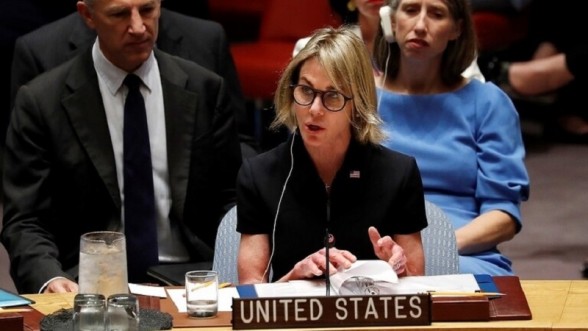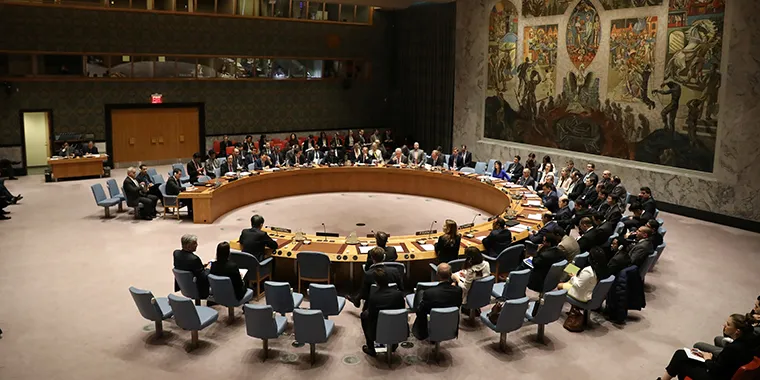
A draft resolution introduced by the United States positions Morocco’s autonomy plan not as one option among many, but as the sole recognized pathway to a lasting peace, a move that could redefine the diplomatic landscape in North Africa.
The text elevates Morocco’s autonomy plan from a “credible option” to the only recognized solution for the Sahara conflict, in a diplomatic earthquake that leaves Algeria and its proxy, the Polisario Front, in unprecedented isolation.
The text, circulated among Council members ahead of a vote expected later this month, underscores that “genuine autonomy under Moroccan sovereignty constitutes the most viable solution” to the conflict.
It calls for immediate negotiations between Morocco, Algeria, Mauritania, and the Polisario Front, using Rabat’s 2007 autonomy proposal as the exclusive framework.
This marks a significant departure from previous resolutions, which treated the autonomy plan as one of several possible solutions. The draft explicitly notes “the support expressed by Member States for Morocco’s serious, credible, and realistic autonomy proposal” and urges talks “without delay.”
The resolution formalizes commitments repeatedly voiced by US officials since President Donald Trump’s return to office.
In a sign of urgency, the draft limits the mandate of the UN mission in Western Sahara (MINURSO) to three months, until January 31, 2026, with provisions for regular briefings and a review of the mission’s future, including possible transformation or closure.
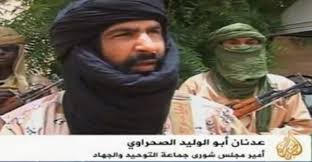
The leak of the draft has triggered a sharp backlash from Algeria and the Polisario Front. Algerian state media denounced the text as “a frontal negation of international law and an insult to the UN Charter,” while Polisario representatives warned that the resolution “reflects only the US position” and vowed to resist what they called “a colonial imposition.”
US, France, and the UK openly support Moroccan sovereignty over the territory. Spain, the former colonial power, and other influential states have also aligned with Rabat. Even Russia and China, traditionally cautious, appear receptive to a renewed dialogue based on autonomy, as illustrated by Moroccan Foreign Minister Nasser Bourita’s recent visit to Moscow.
If adopted, the resolution would represent the most consequential step toward resolving a conflict that has lingered for half a century. For Algeria, which has bankrolled the Polisario since the 1970s, the draft signals a strategic defeat. Ironically, as a non-permanent member of the Security Council, Algiers will witness the vote from the front row.