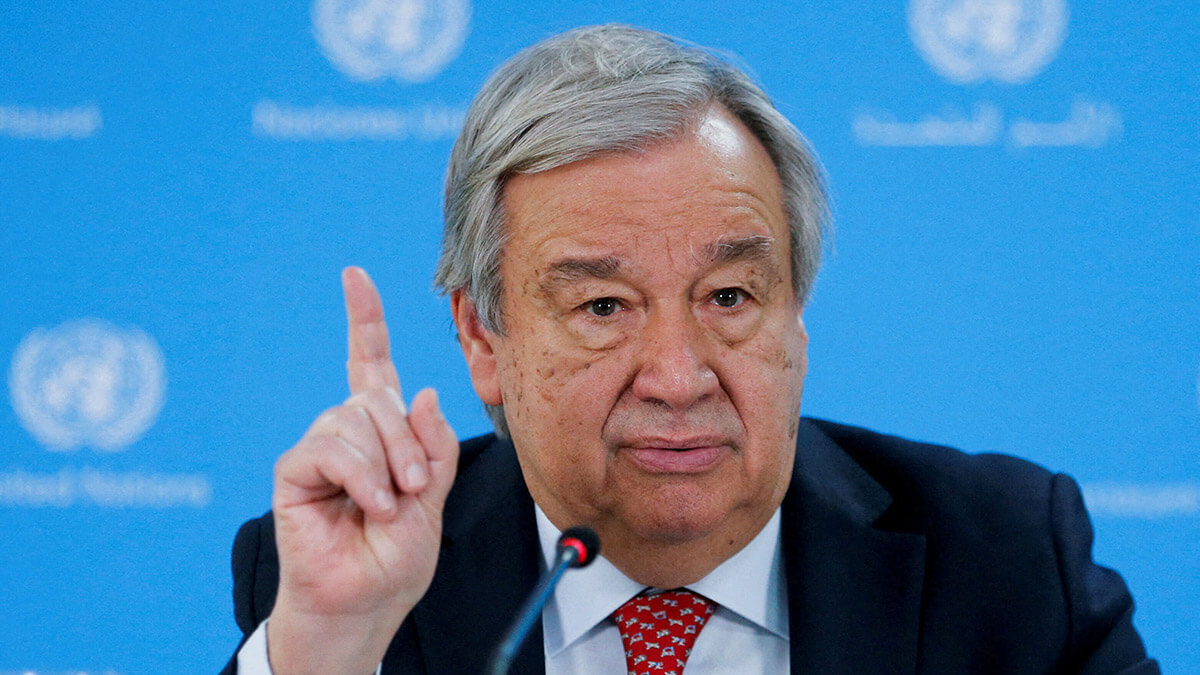
The latest report by United Nations Secretary-General António Guterres on the Sahara conflict marks a decisive shift in favor of Morocco’s autonomy plan.
Covering developments from July 2024 to June 2025, the report- submitted to the UN General Assembly- abandons the decades-old fixation on a referendum and instead highlights growing international support for Morocco’s autonomy initiative.
This evolution reflects not only geopolitical realism but also a recognition of the plan’s viability as the only path toward a durable political solution.
One of the most striking aspects of the Guterres report is what it omits: any mention of a referendum on self-determination. Long used by Algeria and its Polisario proxies as a cover, the unfeasible referendum option has become a relic of a bygone era.
Its absence from the Secretary-General’s assessment signals a quiet but firm departure from a framework that has proven unworkable for decades.
Instead, the report underscores the growing consensus around Morocco’s autonomy proposal. France and the United Kingdom, two permanent members of the Security Council, are cited as endorsing the plan as the most credible and pragmatic basis for resolving the conflict together with the United States which has reiterated recognition of Morocco’s sovereignty over the Sahara.
The UN Mission for the Referendum in Western Sahara (MINURSO) was originally tasked with organizing a vote on the territory’s future. But as the referendum option fades, MINURSO’s mandate is quietly being redefined. Guterres calls for a “change of course without delay,” a phrase that suggests the mission may soon pivot toward facilitating negotiations rather than maintaining a status quo that no longer reflects political realities.
The report also sheds light on the worsening humanitarian situation in the Tindouf refugee camps in Algeria, where the Polisario maintains its base of operations and holds thousands of Sahrawis hostage, denying them right to be registered, in violation of refugee rights. International aid has declined sharply, and malnutrition rates have reached alarming levels as Algerian officials and the Polisario militias continue to embezzle international assistance. With donor fatigue setting in and Algeria failing to fill the gaps, the viability of the Polisario’s governance model in the Tindouf camps is increasingly in question.
Taken together, the Guterres report reflects a broader diplomatic momentum in favor of Morocco’s autonomy plan. It aligns with the positions of key global actors and acknowledges the need for a realistic, negotiated solution. As the UN approaches the fiftieth anniversary of the Sahara conflict, Guterres signals that the time has come to embrace the autonomy plan.