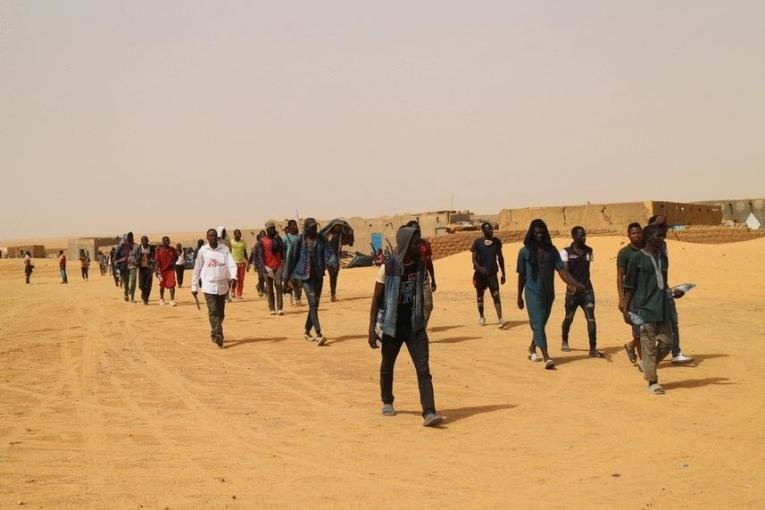
A new commentary by Italy’s Institute for International Political Studies (ISPI) warns that European Union migration policies risk failure unless they begin to meaningfully include African perspectives — especially from West Africa.
Since the 2015 refugee crisis, the EU has heavily securitized migration, investing in border surveillance, readmission deals, and deterrence measures across the Sahel. But these top-down approaches often ignore the root causes of migration — poverty, youth unemployment, and regional mobility — and sideline the voices of African civil society, researchers, and migrant communities. The report argues that current EU strategies reflect colonial-era power dynamics, with financial aid tied to containment goals rather than shared development. While the EU pushes for tighter borders, African states increasingly seek autonomy and new alliances amid rising anti-foreign sentiment and political shifts in countries like Mali and Burkina Faso.
Migration is not a temporary crisis but a complex, long-term reality shaped by demographic and economic ties. The ISPI, Italy’s oldest think tank, urges a pivot toward African-led dialogue through platforms like ECOWAS and the African Union, expanding participation to include local stakeholders. Practical solutions — such as circular migration, legal pathways, and student exchanges — can serve both African and European interests. But real progress, the report concludes, will require the EU to move beyond control and containment, and embrace migration as a shared development opportunity. “Until African perspectives are fully integrated into migration policies, EU strategies will remain incomplete, misaligned, and out of touch with the realities on the ground,” says the analysis.