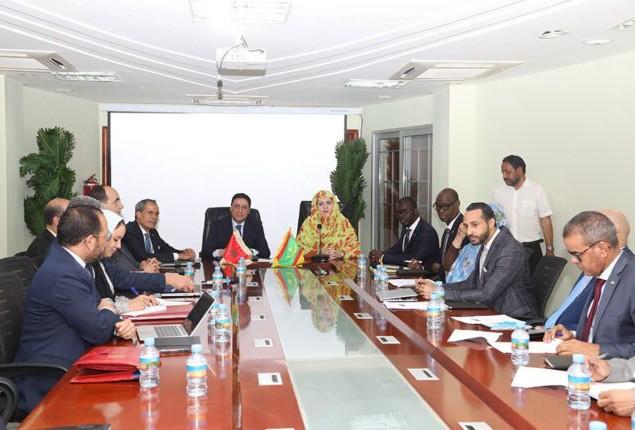
Mauritania and Morocco launched negotiations to update their 38-year-old trade agreement during the first meeting of a joint technical committee held in Nouakchott over the weekend. The initiative aims to modernize the commercial framework and boost bilateral trade to $350 million by the end of 2025.
The meeting, co-chaired by Mauritanian Minister of Commerce and Tourism Zeinebou Mint Ahmednah and Moroccan Secretary of State for Foreign Trade Omar Ihjira, represents a significant step in strengthening economic and diplomatic ties between the two North African neighbors.
The 1986 agreement, which primarily focused on customs exemptions, no longer addresses the evolving economic context and growing ambitions of both countries. The revision is part of a broader strategic convergence between Rabat and Nouakchott, underpinned by the mutual trust between King Mohammed VI and President Mohamed Ould Cheikh El Ghazouani.
In recent years, the two nations have signed multiple sectoral agreements to intensify cooperation. Moroccan companies are currently involved in modernizing the Nouadhibou Autonomous Port, while a fisheries cooperation protocol structures access to resources and exchange of best practices. A 2021 customs facilitation agreement has streamlined commercial procedures at the Guerguerat border crossing, a critical point for flows between Morocco, Mauritania, and West Africa.
During the meeting, Minister Ahmednah emphasized the need to further open the Moroccan market to Mauritanian products and diversify trade flows toward high-value-added sectors. Ihjira highlighted the importance of mobilizing the private sector, with discussions including meetings between Moroccan investors and Mauritanian business leaders.
Beyond trade in goods, both countries aim to develop joint projects in technological innovation, agri-food industry, renewable energy, and regional logistics. This approach reflects a long-term strategy in which Nouakchott and Rabat aspire to catalyze African economic integration through pragmatic bilateral cooperation before engaging in broader frameworks such as the African Continental Free Trade Area.
The trade agreement revision represents another milestone in building a resilient strategic partnership based on a shared vision of the continent’s economic and political future.