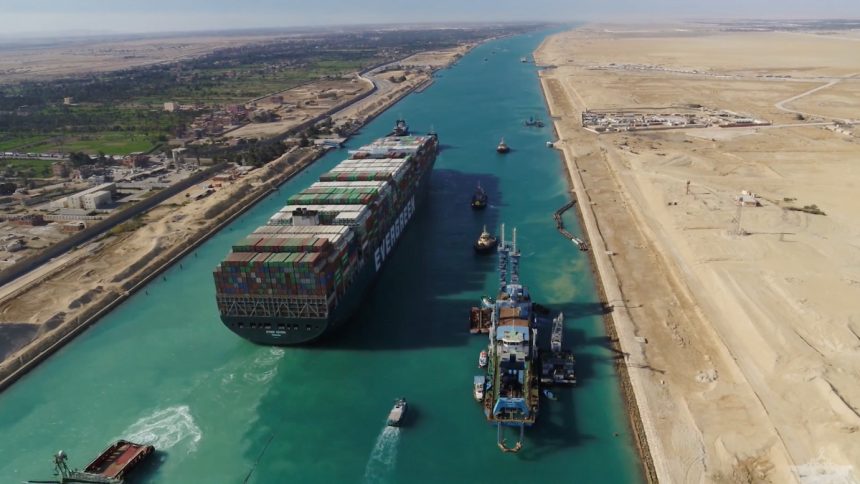
A significant reduction in maritime traffic through the Suez Canal has been recorded, with figures showing a nearly 50 percent drop in the first quarter of 2025, according to statements made on Wednesday, April 16, by Suez Canal Authority (SCA), Chairman Osama Rabie.
The decline has been attributed primarily to ongoing security threats in the Red Sea, where Houthi-led attacks have disrupted international shipping routes. As a result, many vessels were redirected to alternative passages such as the Cape of Good Hope, bypassing the canal entirely.
Financial repercussions have also been felt, with canal revenues reported to have decreased by 60 percent in 2024, leading to estimated losses of $7 billion. Although a temporary ceasefire in Gaza during March prompted the return of 166 ships to the Suez Canal, the broader disruption has had lasting effects on shipping patterns. The authority has not only faced a downturn in transit volume but also a significant challenge in restoring confidence among international maritime operators.
To counter these impacts, a range of strategic initiatives has been launched by the SCA. Collaborations with Saudi and Jordanian firms in port dredging and shipbuilding have been established, while infrastructure projects including floating docks and a specialized training center have been initiated. Additional maritime services such as fuel provision, emergency rescue, and crew exchange have been planned. It was also confirmed that cooperation has been extended to ports in neighboring countries, including the recently reopened Port of Sirte in Libya, further reinforcing the SCA’s commitment to maintaining its role in global maritime trade.