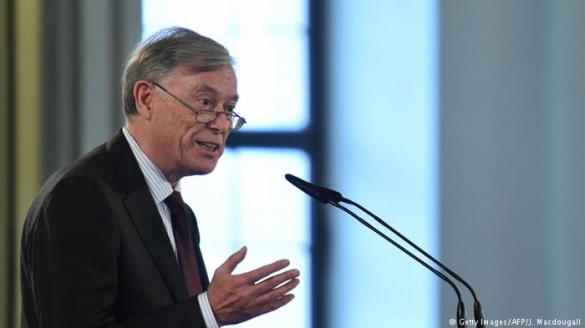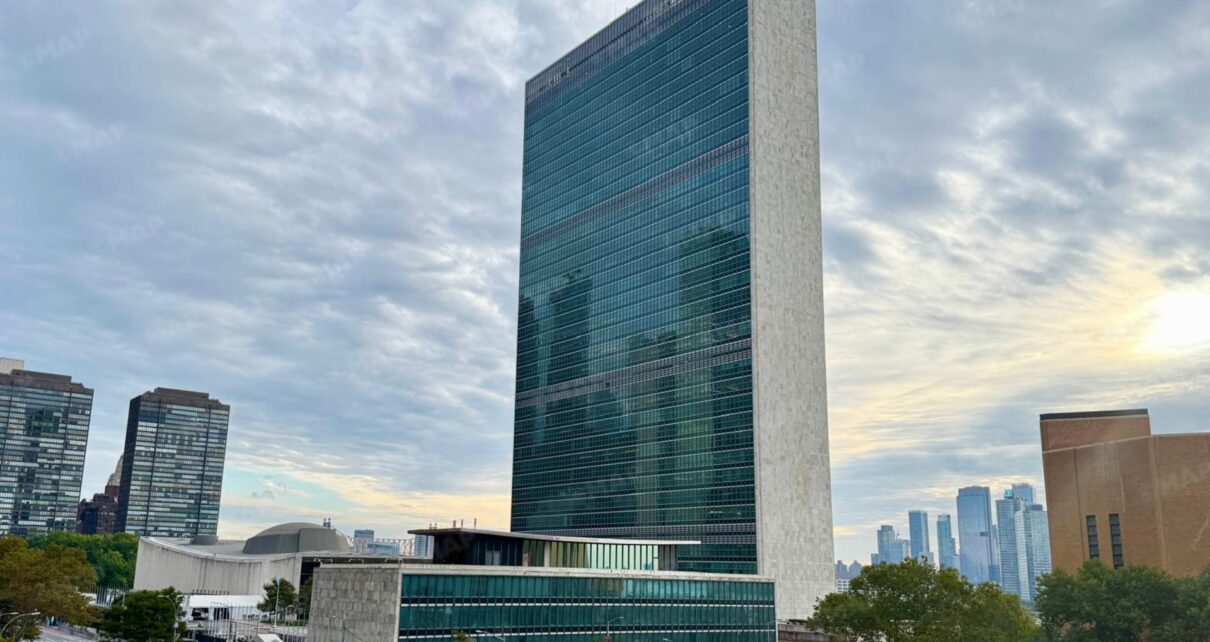
During the Nov 10 United Nations General Assembly session dedicated to examining Russia’s recent veto on the Moroccan Sahara file, Morocco’s Permanent Representative, Ambassador Omar Hilale, once again exposed Algeria as the main party to the Sahara conflict, blocking efforts to reach a political solution on the basis of Morocco’s autonomy plan.
Through a series of six pointed questions, Hilale systematically dismantled Algiers’ long-standing claim to be a mere “observer” and exposed its responsibility for perpetuating the deadlock and the humanitarian crisis in the Tindouf camps.
Hilale began by recalling the October 30 Security Council meeting, where Russia vetoed a US-drafted resolution supported by 11 members.
That text would have advanced a political solution based solely on Morocco’s Autonomy Plan under Moroccan sovereignty.
Algeria’s active opposition, he stressed, revealed its true role as the principal party obstructing any realistic settlement. The Moroccan diplomat then framed his intervention around six questions that laid bare Algeria’s contradictions.
Why does Algeria fear genuine autonomy under Moroccan sovereignty, even though it participated in the three rounds of talks in Washington and Madrid based on Morocco’s detailed Autonomy Initiative, already endorsed by Security Council Resolution 2797 (2025)?
Why does Algeria refuse to assume its status as a main party to the dispute, when accepting this responsibility would mean acknowledging that the key to a solution lies in Algiers?
How can Algeria claim neutrality while hosting, financing, arming, and diplomatically promoting the Polisario separatists?
Why does Algeria cling to the letter “R” in MINURSO (Referendum) when successive Secretaries-General and former force commanders have long recognized that a referendum is unworkable and unrealistic? For Algeria, Hilale noted, the “R” no longer stands for referendum but for refusal, refusal of a final settlement.
Why does Algeria continue to block the registration of the Tindouf camp populations by the UNHCR, leaving their exact numbers unknown (estimated by some accounts at around 30,000) and denying them international protection and the fundamental right to return home?
How can Algeria lecture the international community on self-determination and humanitarian principles while restricting freedom of movement in the camps and transferring authority to an armed separatist group?
Hilale emphasized that these contradictions prove Algeria is not a detached observer but the main obstacle to peace.
“The Sahara was Moroccan before 30 October, it remains Moroccan after 30 October, and it will stay Moroccan until the end of time,” he made it clear, reaffirming Morocco’s unwavering commitment to its territorial integrity and to a political solution grounded exclusively in the Autonomy Plan.