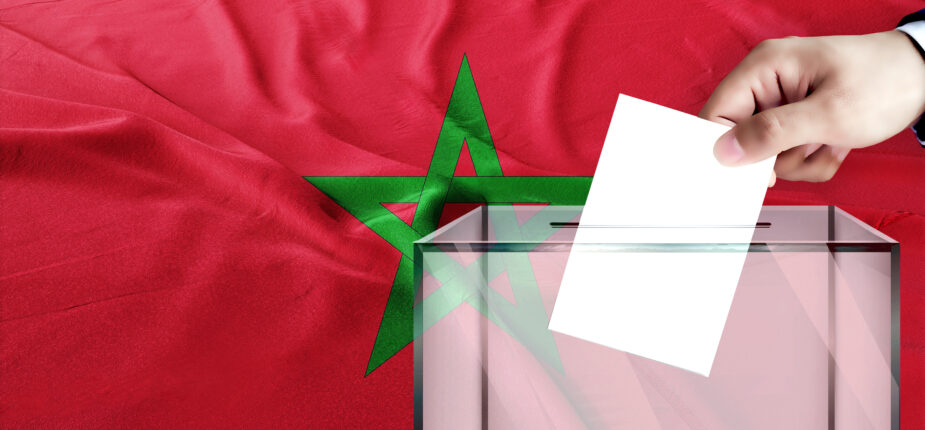
The final turnout in Morocco’s legislative elections stood at 38.02%, the interior ministry reported.
Moroccan voters went to the polls on September 23, 2026, to elect the 395 members of the House of Representatives in a closely watched contest marked by intense rivalry among the three parties that have formed the governing coalition since 2021.
More than 15.8 million registered voters were eligible to cast ballots in what was the fourth regular legislative election held under the 2011 Constitution.
Under that constitution, King Mohammed VI designates the prime minister from the party that secures the largest number of seats in parliament, making the race for first place particularly consequential.
The outgoing government is led by the National Rally of Independents (RNI) of Prime Minister Aziz Akhannouch, in coalition with the Authenticity and Modernity Party (PAM) and the Istiqlal Party. These three partners, which together dominated the 2021 results (RNI 102 seats, PAM 87, Istiqlal 81), spent the campaign period locked in open competition rather than presenting a united front.
A major highlight of the race was the high-profile entry of Fouzi Lekjaa into partisan politics. The popular Minister Delegate for the Budget and president of the Royal Moroccan Football Federation formally joined the PAM in July 2026 and quickly became one of the most visible figures of the campaign.
Although not himself a candidate in all accounts, Lekjaa drew large crowds, helped shape the party’s program, and fueled speculation about a possible future role at the highest level of government if PAM emerges as the leading force.
Relations between the coalition partners grew increasingly tense. The RNI and PAM publicly traded accusations of poaching elected officials and candidates ahead of the vote.
The exchanges underscored the breakdown of earlier informal understandings against mutual recruitment within the majority.
Meanwhile, opposition parties sought to reinforce their positions. The Justice and Development Party (PJD), which suffered a dramatic collapse from 125 seats in 2016 to just 13 in 2021, campaigned to recover ground.
Other formations, including the leftist PPS and USFP as well as smaller parties, also aimed to expand their parliamentary presence amid public concerns over living costs, youth unemployment, and public services.