Morocco has called for strengthening an international response to the challenges posed by Non-State Armed Groups and reiterated its condemnation of such groups.
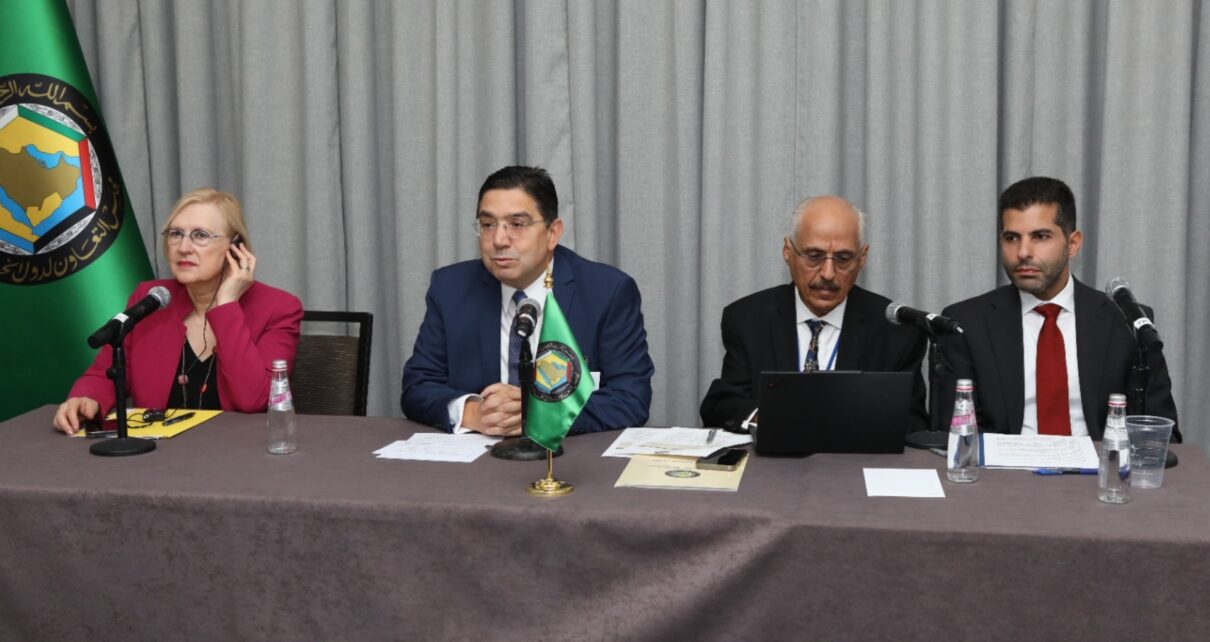
The call was launched by Minister of Foreign Affairs Nasser Bourita, during a high-level event on the “Challenges Posed by Non-State Armed Groups,” organized by the Gulf Cooperation Council (GCC) on the sidelines of the ongoing 81st session of the United Nations General Assembly.
In his Address, Bourita strongly condemned the criminal acts of the Houthi militias targeting Saudi Arabia, as well as Iranian attacks threatening the security and stability of GCC countries.
He also expressed Morocco’s condemnation of acts of aggression affecting freedom of navigation in maritime passages, with the aim of exerting pressure and serving the interests of other parties.
Bourita stressed the increasingly urgent nature of the issue of non-state armed groups, noting that these groups have evolved into sophisticated actors capable of exploiting national vulnerabilities, crossing borders, and linking different conflict theaters.
He notably highlighted the scale of the threat in Africa, where nearly 24,000 deaths have been linked over the past twelve months to violence perpetrated by armed groups.
Bourita also drew attention to the growing convergence between terrorist groups, separatist movements and criminal networks, as well as the phenomenon of “proxy warfare,” noting that certain states resort to proxy armed actors to pursue strategic objectives, including by providing them with safe haven in violation of international law and the principles enshrined in the United Nations Charter.
In light of these developments, Bourita called on the international community to act at an early stage and deepen cooperation to counter the financing, arms transfers, illicit trafficking and external support provided to armed groups.
In this context, he called for strengthening accountability and closing the loopholes that allow proxies to operate with impunity, thereby engaging the legal, political and moral responsibility of the states sponsoring these groups and benefiting most directly from their destructive and destabilizing activities.
The Moroccan official stressed further that collective responsibility does not consist solely in containing these actors, but also in preventing them from shaping future conflicts and in resolutely safeguarding the sovereignty and territorial integrity of countries, as well as the security and dignity of their populations.