In the wake of the July 2026 migrant crossings into occupied Ceuta, Spanish political forces, particularly the Partido Popular and Vox, have intensified efforts to drag a purely bilateral issue with Morocco, into the European Parliament and frame it as an EU-wide “hybrid attack.”
This calculated move aims less at solving migration pressures than at entrenching Spain’s hold on territories Morocco has never relinquished and at isolating Rabat diplomatically.
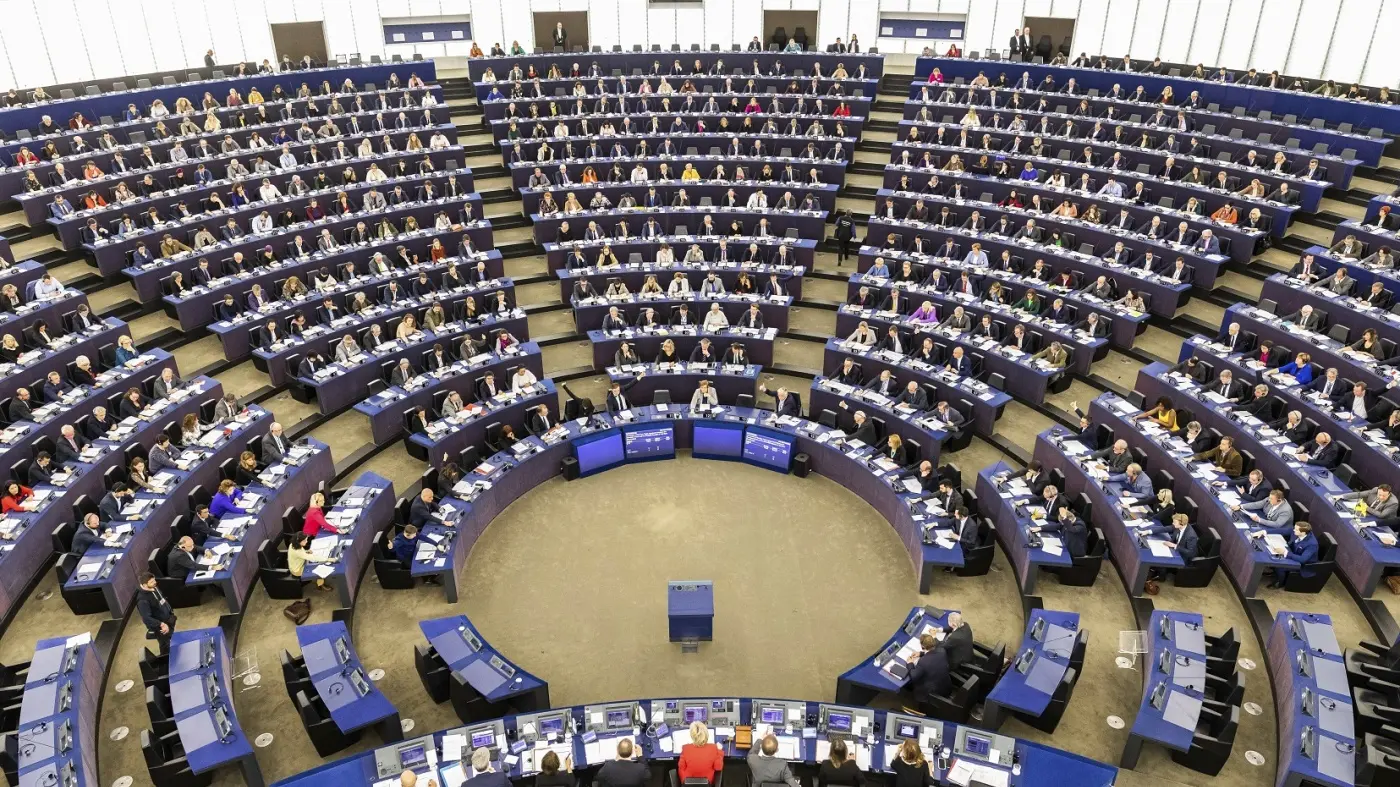
The European Parliament debate on 15 September and subsequent hybrid-threats language illustrate the strategy.
Madrid’s opposition parties push resolutions that demand Morocco “assume responsibilities,” review or even suspend association agreements, and accept an investigation narrative that conveniently sidelines Spain’s own border-management failures and Madrid’s multiplication of pull factors, chief among which a court decision banning immediate returns of those entering the enclaves swimming.
By Europeanizing the file, the Spanish opposition desperately seeks a collective EU pressure that transforms a historical dispute into a test of “solidarity” against a southern neighbor.
Yet the European Parliament remains largely irrelevant on matters of foreign policy. Its resolutions are non-binding political statements with no legal force over the Council or Member States’ bilateral relations.
Real decision-making on association agreements, migration cooperation, and external partnerships rests with governments and the Commission, not with plenary theater at the European Parliament.
Calls by some Spanish MEPs, notably from Vox, to suspend or cancel the EU-Morocco Association Agreement are a recipe for explosion. Such a step would damage a partnership that has delivered concrete results on security, trade, and migration management.
Undermining it would almost certainly produce more irregular migration, not less, by weakening the very cooperation mechanisms that have helped contain flows in recent years.
Morocco has made it clear that countering illegal migration cannot rest on a security approach alone. It rather requires a development effort and solidarity mechanisms as well as legal migration paths.
During the debate, several MEPs declined to join the blame-Morocco hord. Iratxe García, president of the Socialists and Democrats group, accused the European People’s Party of “exploiting” Ceuta for domestic political gain against the Spanish government and avoided attributing responsibility to Rabat.
Other voices, including from The Left and Renew, focused on humanitarian aspects, cooperation, or broader structural questions rather than accusing Moroccan authorities.
Italian MEP Ilaria Salis went further, stating that “Ceuta is not Spain. Ceuta is not Europe” and describing it as a remnant of European colonialism.
Her remarks align more closely with longstanding Moroccan positions on the territories.
Swedish Renew MEP Abir Al-Sahlani similarly questioned the geographic framing of Ceuta within Europe.
These interventions underscored that not all parliamentarians accepted the Spanish opposition’s narrative.
Pull factors
That narrative seeks to rewrite the Ceuta crisis while ignoring the pull factors created inside Spain.
The Spanish opposition has focused almost exclusively on externalizing blame onto Morocco, while downplaying the effects of domestic policies under Prime Minister Pedro Sánchez, including regularization measures, open migration signals, and related judicial decisions that contributed to expectations of entry and stay.
Morocco, as the neighboring state managing the southern shore, has borne the brunt of these dynamics. While cooperating on returns, dismantling networks, and absorbing pressure that originates in part from European and Spanish policy choices, Morocco was not consulted on any of the factors that multiplied pull factors.
Ceuta and Melilla remain the last colonial outposts on the African continent under Spanish occupation.
Morocco has consistently maintained its claim to these cities, which sit on the African mainland and were seized during earlier eras of European expansion.
Successive Moroccan governments have rejected the notion that time or unilateral occupation erases sovereign rights.
Rabat has preferred patient diplomacy and confidence-building measures over confrontation, even as it has cooperated extensively with the European Union on migration control, counter-terrorism, and regional stability.
If historical entitlement is accepted as a valid basis for claims, as is routinely granted in other contexts where communities invoke rights stretching back millennia, then Morocco’s position rests on continuous historical, geographic, and legal grounds that predate the modern colonial interlude.
Morocco never abandoned its rights to Ceuta. The insistence on treating the cities as immutable European territory while demanding Morocco act as a reliable partner on migration exposes a double standard.
Morocco’s response has been measured. Official communications to European lawmakers clarified that Rabat rejects responsibility for the July events, attributes them to networks of smugglers and disinformation, and reaffirmed its commitment to readmit all those who crossed irregularly, including unaccompanied minors and third-country nationals.
These points underscore a preference for dialogue and practical solutions rather than escalation.
Europeanizing the dispute serves a different purpose. It freezes the colonial status quo by converting a bilateral territorial question into an institutional EU matter where Spanish sovereignty is presumed beyond discussion.