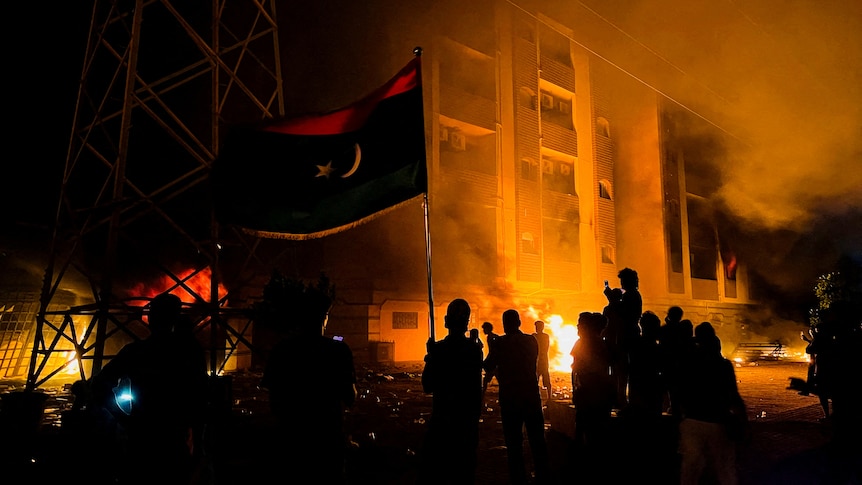
Protests have intensified in Libya’s capital, Tripoli, as residents launch a civil disobedience campaign over prolonged electricity outages, rising power costs and declining public services.
The demonstrations, which spread to several districts, saw protesters block roads, shut public facilities and gather near power stations. Some demonstrators burned tyres and closed access to the Ministry of Foreign Affairs and offices of state telecommunications company Libyana.
The campaign, led by the Souq Al-Jumaa Movement, is demanding accountability over alleged corruption and calling for the dissolution of Libya’s existing political institutions, including the Government of National Unity led by Prime Minister Abdul Hamid Dbeibah.
Protesters in Tajoura also announced a boycott of state institutions, citing worsening electricity, water, education and health services, as well as fuel shortages, liquidity challenges and medicine scarcity.
The unrest follows renewed power cuts in Tripoli and other areas, with blackouts lasting up to 10 hours a day. The outages have added to public frustration over inflation, economic instability and Libya’s prolonged political crisis. The Government of National Unity has not issued an immediate response.