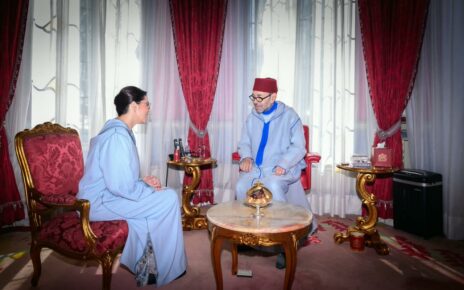
The appointment of Fatima Ezzahra El Mansouri as Morocco’s first female Head of Government is not an isolated breakthrough but the latest chapter in a long-standing tradition of women holding senior roles in government, institutions, and the palace.
King Mohammed VI’s decision places a woman at the apex of the executive for the first time.
Yet it builds on decades of continuous progress in which Moroccan women have steadily taken on high-level responsibilities under the reign of King Mohammed VI.
A notable early milestone was the appointment of Zoulikha Nasri as the first woman royal adviser in the kingdom’s history.
Named by King Hassan II in 1998, she continued to serve under King Mohammed VI, overseeing key economic and social dossiers and leading major foundations including the Mohammed V Foundation for Solidarity.
In the years since, women have occupied strategic positions across the state. Amina Benkhadra has led the National Office of Hydrocarbons and Mines (ONHYM) since 2003 and previously served as Minister of Energy, Mines, Water and Environment.
Zineb Adaoui became the first woman appointed Wali (governor) in 2014, breaking new ground in territorial administration and became in 2021the first woman to head Morocco’s Court of Auditors.
Latifa Akherbach has headed the High Authority for Audiovisual Communication (HACA) since 2018, shaping media regulation.
Amina Bouayach has been at the helm of Morocco’s national human rights council since 2018.
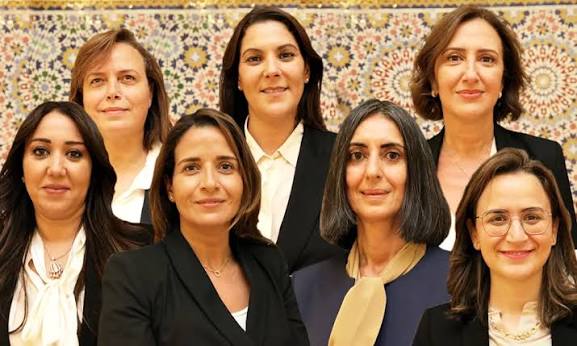
In the current and recent governments, women have held some of the most sensitive portfolios. Nadia Fettah Alaoui has served in the outgoing cabinet as Minister of Economy and Finance, one of the most powerful economic posts in the kingdom. Leila Benali has driven energy transition and sustainable development policy. Other prominent figures include Fatima Ezzahra Ammor, tourism minister and Amal Seghrouchni in digital transition and administrative reform.
El Mansouri’s elevation to Head of Government therefore crowns a continuum rather than marking an abrupt rupture. It underscores how successive generations of competent women – from royal advisers like the late Zoulikha Nasri to institutional leaders such as Benkhadra, Adaoui, Akherbach, Benali, Fettah and others – have prepared the ground for this historic step.