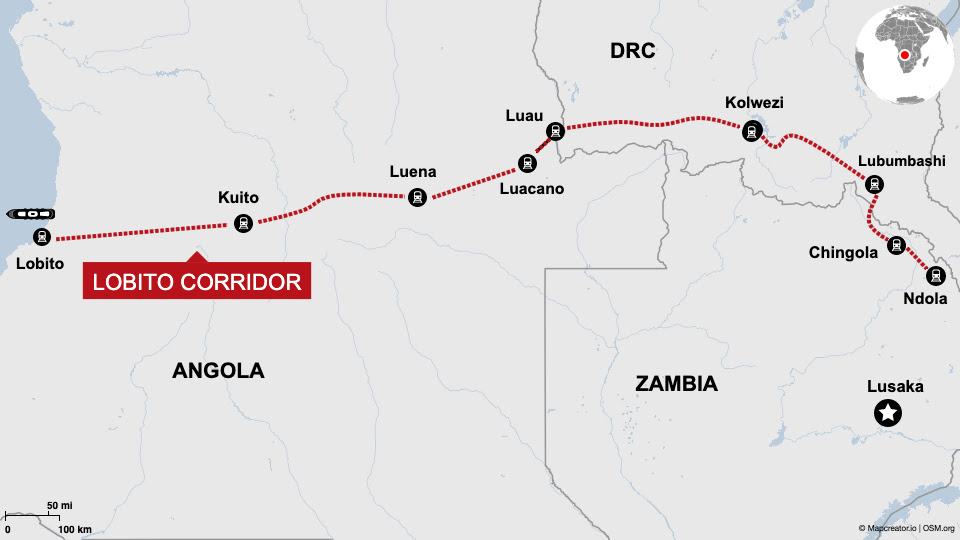
The revival of the Lobito Corridor, a 1,300 km railway linking Zambia’s copper belt to Angola’s Atlantic coast, captures a profound change in Europe’s approach to Africa from development aid to transnationalism.
Once a colonial-era route for mineral extraction, the line is now the centerpiece of the EU’s 2 billion euro investment under its Global Gateway strategy.
The goal is clear: secure critical minerals for Europe’s clean-tech industries while projecting influence in a continent where China and the US are already entrenched.
EU officials frame the project as sustainable development, combining transport with agriculture, logistics, and vocational training. But Commissioner Jozef Síkela was candid: “I will not hide that we are getting copper.”
By 2030, the corridor is expected to carry 1 million tons of copper annually, feeding Europe’s energy transition. Washington has pledged up to $5 billion, underscoring the West’s pivot to resource-driven partnerships.
Critics argue this marks a shift from aid to transactionalism. NGOs warn that Lobito risks replicating old patterns if extracting wealth while offering little local value.
“It’s not clear how this will favor economic opportunities for local development,” says Frank Vanaerschot of Counter Balance told the Financial Times. Concerns include human rights risks in mining and neglect of community priorities like schools and hospitals.
Global Gateway, launched in 2021, was billed as Europe’s answer to China’s Belt and Road. But as EU budgets tighten and migration pressures mount, aid is increasingly tied to strategic goals: energy security, supply chains, and border control.
The bloc remains the OECD’s largest donor, yet its funds are being redirected toward projects that serve European interests first.
For Africa, the question is whether Lobito will become a corridor of opportunity or a new form of extraction. Unless local processing, governance safeguards, and community benefits are prioritized, Europe’s “new model” risks looking like an old story of colonial logic dressed in green.